

Relapse prevention therapy aids individuals in identifying triggers for relapsing that could involve thoughts, emotions, situations, and habits that may increase the likelihood of returning to the use of substances or other unhealthy behaviors. The approach of WellMind Therapy Center focuses on teaching practical skills, self-awareness, and ongoing support to clients to equip them with strategies for facing challenges and ongoing development.
What is Relapse Prevention Therapy?
Relapse prevention therapy is a behavioral support plan that helps to raise awareness of the factors that can lead to relapse and what steps to take in advance of that. It isn’t only about the use of substances and consumption, but also it helps a person recognize the situations that trigger substance use and helps the person develop healthier responses to these situations. It is not just about substance use and consumption in the past, but also it helps a person identify the substance use triggers and also helps in building healthier responses for the person.
If a person relapses, it does not mean he has failed. There can be relapses to recovery, and noticing early on when something is going wrong can help to be able to respond before it goes back to the bad habits.
The aim is to make people feel more equipped, confident and able to manage stress, needs and cravings, challenging feelings, and situations.
How Does Relapse Prevention Therapy Work?
The therapist will first start by helping you to recognize patterns related to past drug use or other behaviors. This may mean people, places, feelings, thoughts, situations, stress, or changes in your routine.
Therapy can then begin to address practical response patterns when these patterns become more apparent. These may include:
- Identifying own relapse situations
- Coping with cravings and intense feelings
- Challenging unhelpful thoughts
- Improving communication skills
- Developing healthier lifestyle habits
- It is important to create a good support system in place.
- Being prepared for risky situations
- Building coping plans to deal with failures
Relapse prevention therapy isn’t about trying to get a person to avoid every challenging circumstance. Rather, it provides tools to face difficulties without resorting to negative behaviors.
Common Relapse Triggers
Triggers vary from individual to individual. It is important to understand what their personal trigger is.
Stress, loneliness, conflict, relationship tension, money worries, social situations (substance use, boredom, or reminders of past experiences) may be common triggers.
Emotional triggers can be strong as well. Anger, sadness, anxiety, shame or frustration can lead to a feeling that it is time to get back to old coping strategies.
A therapist can help you see these patterns in a non-judgmental way. It’s easier to make a healthier choice when you know the reason behind a trigger that’s impacting you.
Relapse Prevention Strategies
Relapse prevention strategies are individual and viable. Some might need a change in behaviour, while others may require increased social support or improved stress management.
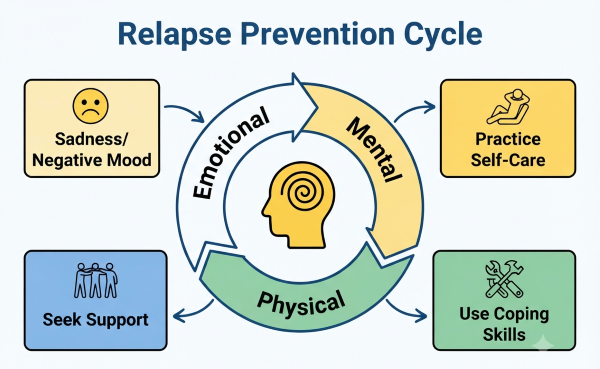
A relapse prevention plan might include warning signs, who to call during a difficult time, what situations and things to avoid and keeping healthy activities in the daily routine.
It can also be helpful to have a plan for cravings. The feeling of the craving is strong, but it does not have to control the next step. Pause, change, talk to a supportive person or use coping skills to make a healthier choice.
Building a Relapse Prevention Plan
A useful plan should be so easy to follow when it is needed, when life becomes stressful. It can pinpoint individual triggers, early warning signs, coping strategies, supportive people and what to do if things go wrong.
The plan can be updated as time goes on. As you learn more about yourself and your recovery, your strategies may need to change as well.
Who Can Benefit From Relapse Prevention Therapy?
Some individuals who are striving to stay in recovery from substance use or who hope to gain assistance with behaviors that have been problematic in their life may benefit from relapse prevention therapy.
It can be helpful for individuals who know what they want to achieve in their recovery but don’t feel at ease when they are tempted by drugs, stressed, or subjected to emotional situations or circumstances related to their past addiction.
Therapy can also be a secure outlet to talk about failures. If you catch a setback early, you could be able to avoid making it a bigger pattern.
Relapse Prevention and Mental Health
Mental health and mental well-being are frequently related to recovery. Some may find coping more difficult due to depression, anxiety, trauma, stress and other emotional issues.
Relapse prevention treatment can be combined with responding to these issues to create a more comprehensive recovery strategy. Therapy can assist people in recognizing emotional triggers, boost coping strategies, build connections, and acquire healthier coping mechanisms.
At WellMind Therapy Center, we’re not about to give a one-size-fits-all treatment; we are about to know you and your person.
You don’t need to take on recovery problems by yourself. Call WellMind Therapy Center at (682) 432-1571 if your cravings, stress, emotional triggers or fear of relapse are making things more difficult. Talk to a professional about mental health support and next steps.
What Happens If a Relapse Occurs?
If someone has relapsed, it can cause pain and discouragement, but it doesn’t mean that no progress has been made. It can assist them in becoming aware of things that activate them, things that they struggle to cope with, or things that they may need additional support with.
After relapsing, it’s important to seek help and not feel bad or ashamed. A therapist can assist in reviewing what happened, understanding warning signs and revising the relapse prevention plan.
The aim is not perfection. It’s about the learning and the change and the going forward.

Get Support for Relapse Prevention
Having supportive resources and support can make it easier to recover. Relapse prevention therapy can help you learn to recognize your own triggers, how to deal with the difficult emotions that can arise, how to think ahead for high-risk situations, and how to find more helpful coping strategies.
If you are concerned about the possibility of relapse or need to keep going on your recovery journey, WellMind Therapy Center is here to help! Call (682) 432-1571 to find out what services are available and to take a step towards sustainable progress.’
Frequently Asked Questions
What is the main goal of relapse prevention therapy?
The main goal is to help people recognize triggers, manage cravings and difficult emotions, develop healthy coping skills, and create practical plans for handling situations that could increase the risk of returning to harmful behaviors.
Can relapse prevention therapy help after a relapse?
Yes. Therapy can help someone understand what contributed to a relapse, identify warning signs, strengthen coping strategies, and adjust their recovery plan. A relapse can become an opportunity to learn and improve future prevention efforts.
How long does relapse prevention therapy take?
The length varies based on individual needs, recovery goals, challenges, and progress. Some people need short-term support, while others benefit from ongoing therapy. A mental health professional can help determine an appropriate approach.
What are common relapse triggers?
Common triggers include stress, loneliness, relationship conflict, difficult emotions, social pressure, certain environments, cravings, and reminders of past substance use. Identifying personal triggers can make it easier to prepare for challenging situations.
Is relapse a sign that recovery has failed?
No. Relapse does not erase previous progress or automatically mean recovery has failed. It can signal that additional support or new coping strategies are needed. Seeking help early can support renewed progress and stability.