

Burnout and work-related issues may impact your thinking, feelings, work, and relationships. Stress, a lot of work, long hours, conflict at work or hurried deadlines can make you feel overwhelmed and exhausted. Stress is a part of life, and at WellMind Therapy Center, we want to educate people about these stressors and teach them practical strategies to cope with them and to find more balance in daily living.
What are Burnout and Work-Related Issues?
Burnout is a condition of physical, mental and emotional tiredness that may result from stress over time. It frequently occurs when workloads are high and time to rest, recover, and restore balance is scarce.
Some work-related issues that can occur include:
- Ongoing workplace stress
- Feeling emotionally drained by work
- Difficulty maintaining work-life balance
- Workplace conflict or poor communication
- Pressure to meet demanding expectations
- Loss of motivation or job satisfaction
- Trouble concentrating during the workday
- Stress related to job changes or job insecurity
These worries can impact not just your work output but also your health. They can also affect sleep, relationships, mood, feelings of self-confidence, and enjoyment of activities outside of work.
Signs of Burnout
Burnout isn’t necessarily the same for everyone. Others may feel perpetually frustrated or even unable to slow down, or they may become withdrawn.
Symptoms include ongoing fatigue, irritability, loss of motivation, difficulty focusing, sleep disturbances, feeling overwhelmed, and loss of enjoyment of activities.
It’s possible you’ll discover that small work problems look more difficult to address than ever before. You may find that you cannot get up and start work in the morning, that you are not emotionally engaged with the work, or that you push your thoughts on to your work even after you’ve left the office.
It is easier to respond to the underlying stress if you notice these changes early on before it starts to impact other parts of your life.
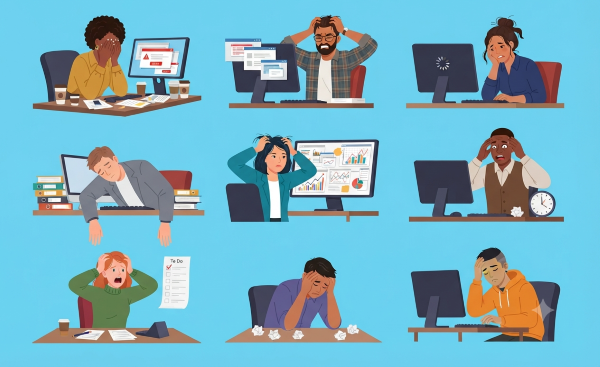
What Causes Work-Related Stress?
There are numerous reasons why work-related stress can begin. The stress isn’t always caused by a job. Sometimes it is the structure of work or lack of support around you that puts pressure on you.
This can be caused by too much work, too short of a time to finish, not having enough control over what you do, not being able to agree with others at work, not feeling valued, not knowing what is expected, and not being able to easily distinguish between work and leisure time.
Working remotely also comes with its difficulties. It can be challenging to set up boundaries when home is the place of work. Late-night checking and night work is a slow process that can decrease time for rest.
Workplace stress can also be heightened by the individual’s personal situation. Regular work demands may be more challenging due to financial pressures, family obligations, significant life changes or ongoing anxiety.
How Burnout Can Affect Mental Health
Burnout and work-related issues may include anxiety, depression, sleep issues and more mental health factors. If you are feeling stressed at work, this doesn’t necessarily mean you have a mental health problem, but if symptoms last for a long time, it’s important to be aware of them.
If stress persists over a prolonged period, you may find yourself less patient, less motivated, or less effective at handling routine tasks. You might also start to stay away from social events or relationships due to feeling too exhausted.
The support is offered to help you to better understand what is causing your distress and how to respond healthily.
How Therapy Can Help With Burnout and Work-Related Issues
Therapy creates a safe environment to discuss work stress in an honest yet nonjudgmental way. With the assistance of a therapist, you can determine if there are recognizable patterns that are making you feel stressed and learn about ways to manage those feelings.
The focus of support can be on stress management, emotional regulation, communicating, setting boundaries, self-care, coping, and work-life balance.
Therapy can also assist you to acknowledge unhelpful thinking styles. You might think that you are required to be productive all the time or that you are behind if you’re taking a break. Responding to these beliefs can help you to be more balanced in your approach to work and personal responsibilities.
If there is an association between burnout and anxiety and depression or other mental health problems, then treating anxiety and depression can be a critical component of your treatment plan.

When Should You Seek Help?
Burnout doesn’t have to be an extreme feeling to ask for help. If work stress is impacting your sleep, mood, relationships, concentration, motivation, or the ability to enjoy life, consider reaching out.
If you have made your routine changes but are still feeling overwhelmed and/or emotionally exhausted, it may also be helpful to seek professional support.
Are you looking to advance your career? Call WellMind Therapy Center at (682) 432-1571 to talk to a professional mental health provider about your concerns and how they can help you manage the stress that’s affecting your work performance and help you find a better balance in your life.
Building Healthier Work-Life Boundaries
Ongoing work stress can be lessened by healthy boundaries. The first step is to determine the start and end times for your workday. If possible, do not check work messages in personal time and provide a transition between work and home.
Some breaks throughout the day can help, too. Taking a break from work, going for a walk, having dinner without the television, or spending time with loved ones can help you get a break from your mind.
Sleep is not a wasted time. Your brain requires rest to keep you focused, energized, and emotionally balanced.
Being aware of what you can and cannot control is also important. While you can’t control who you work with, your co-workers, or your work policies, you can control how you react, how you communicate, and how you ensure that you get some personal time.
Support for Burnout and Work-Related Issues
It’s okay to not deal with constant stress at work. With the right support, burnout and work-related issues can be more easily understood and dealt with.
WellMind Therapy Center is home to mental health professionals who assist those who are grappling with stress, emotion, and challenges that can be interfering in their daily lives. We pay special attention to your particular concerns, and we work to help you develop skills that can help you attain a long-term healthy lifestyle.
If work stress is impacting your mental health or quality of life, give WellMind Therapy Center a call at (682) 432-1571 to schedule an appointment and discuss resources to support you.
Frequently Asked Questions
What are the common signs of burnout?
Symptoms are persistent fatigue, irritability, decreased drive, difficulty focusing, sleep disturbances, emotional numbness, and overburdened responsibilities. Sometimes relationships suffer and activities outside work become less pleasurable during a period of burnout.
Can work-related stress cause anxiety?
Yes. Anxiety may also be a symptom of chronic stressors in the workplace, particularly when the stress is not relieved in a timely fashion. If you are worried, restless, unable to sleep or unable to concentrate, it may be useful to get more mental health assistance.
How can therapy help with work stress?
Therapy can help you recognize the causes of your work stress, how you feel when you are stressed, healthier coping strategies, and setting boundaries. Can also offer support when work-related issues add to anxiety, low mood, or challenges in relationships.
How do I know if I am experiencing burnout?
Burnout can be a worry if you feel overwhelmed at work and no longer have the enthusiasm to work, are emotionally drained and unable to rest or recover, or if you feel a disconnect from your work. A mental health professional will be able to help you understand the symptoms better.
Can burnout affect life outside of work?
Yes. Burnout may impact sleep, relationships, mood, focus, and interest in activities outside of work. Stress at work can often spill over to other aspects of the day, such as evenings, weekends, or other important activities.