How to Choose the Right Intensive Outpatient Program (IOP)
Finding a suitable treatment that “takes care of” an addiction or mental health problem would seem like a perplexing puzzle, especially one that attempts a balance of treatment and work, family, or school. If you are going to complete your treatment with an Intensive Outpatient Plan (IOP) that is going to be suitable for long-term care, then you have actually taken the really important initial step towards long-term healing.
There’s a way that care can be delivered that is structured and teaches a course; it doesn’t isolate the patients at home, but they can do the things that they should be able to do, which is the Intensive Outpatient Program or IOP.
WellMind Therapy Center understands there isn’t a typical process for healing on the part of the beneficiary. Choosing the correct treatment isn’t about choosing what has the most timetables and is the least costly. It is a behavior that embodies (and seeks to achieve) kind caring and evidence-based care, and a treatment climate is created physically, emotionally and mentally.
Key Takeaways
- As a way of treating addiction and mental diseases, an Intensive Outpatient Program (IOP) is a systematic procedure that does not require people to stay in an institution overnight.
- Flexibility of work, school and home duty is possible with IOP.
- If an Authorized IOP is used, support and/or encourage the incorporation of clinically certified clinicians, customized IOP(s) and utilization of evidence-based interventions.
- Insurance can help those who will utilize IOP treatment to considerably lower the costs involved.
What is an Intensive Outpatient Program (IOP)?
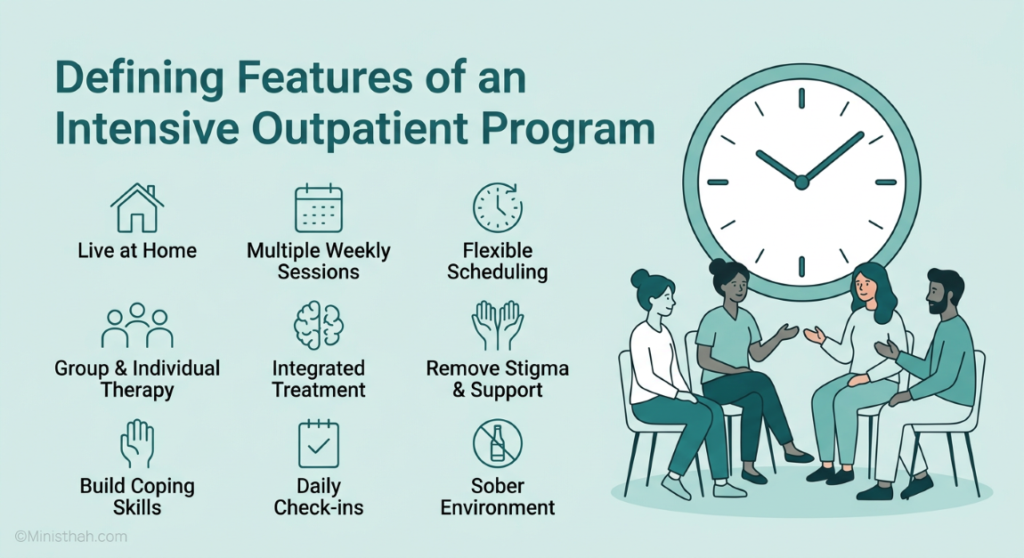
An Intensive Outpatient Program (IOP) is a part of treatment that is structured and organized to assist in helping individuals cope with a co-occurring disorder, mental health disorder or drug dependency. Unlike residential rehab, the client will enter into rehab sessions several days each week however, will live at home.
Generally, IOPs feature one-on-one counseling sessions, frequent sessions tailored to learning how to avoid a relapse, and mandatory sessions that are mandatory, and often shared with other treatment facilities, including American Addiction Centers, as well as group therapy, family support and mental health therapy. The programs can stay together during the day or in the evening when it gets “done” so that it all “fits” in everyone’s schedule
For individuals who require more than the usual outpatient counseling, higher levels of care work; even though they may not have to be 24 hours or supervised.
IOP vs. Inpatient Treatment: Key Differences
One of the most significant parts of knowing the way to select the Right Intensive Outpatient Program (IOP) is to know how IOP is different from inpatient rehab.
An inpatient treatment entails a method whereby people physically relocate to other treatment centers and live there for an extended period. It’s also extremely prescribed for excessive addictions, medical detox requirements or even when a person does not have a stable homeland.
There is such a degree of flexibility that there’s an IOP. Clients receive a series of therapy sessions that are structured and clients are able to engage in more than a specified, limited set of activities. This ensures that parents and/or professionals, as well as students, can continue with their activities and be attended to.
The following are some of the key differences:
| IOP Treatment | Inpatient Treatment |
| Clients live at home | Clients stay at the facility |
| Flexible scheduling | 24/7 supervision |
| Lower cost in many cases | Higher level of care |
| Best for stable environments | Best for severe conditions |
What to Expect During an IOP
The majority of the IOPs give a mix of therapies and other recovery services which are oriented at a one-on-one level. Quality programs focus on addiction recovery and their emotional well-being.
Treatment often includes:
- Individual therapy
- Group counseling
- Cognitive behavioral therapy (CBT).
- Relapse prevention planning
- family therapy
- When necessary, control medication.
- Mental health support
- Life skills development
The type of treatment that most people go through is 3/5 days a week and several hours per day. Checked on the progress occasionally during the treatment and modifications in treatment were made based on the person’s progress and frightening situations.
The program will also assist the clients to reach healthy coping mechanisms and to come up with effective communication mechanisms as well as strategies regarding how to cope with stress without drugs.
Need Flexible Addiction Treatment That Fits Your Life?
It isn’t even necessary to adopt it as part of your time management recovery plan. WellMind Therapy Center is an evidence-based, compassionate and very patient-centered mental health center.
Call now and talk to our admissions people and discuss individual treatment, which is recommended.
Who is a Good Candidate for IOP Treatment?
Inpatient care is not needed by everybody. There is a chance that a good fit is that of an IOP, which may be good for individuals who:
- Has low to moderate addiction with drugs and/or alcohol.
- Despite having completed inpatient rehab, they still require a follow-up treatment.
- Be good neighbors and live in nice homes.
- Want to be handled in a more organized manner, yet have freedom to work or have access to school.
- Are encouraged to be active in Recovery.
People tend to be very withdrawn, they have medical conditions and unsafe living conditions and may require a higher level of services regarding care before making a transition from inpatient to outpatient care.
A skilled care assessment professional can aid in determining the best level of care that is required when pain medicine may need to be administered.
IOP as a Flexible Treatment Path
Flexibility is one of the significant pros of IOP treatment. Where people are able to return to their daily life, activities of daily living, they may be able to find ways to cope in the future, with the healing process being more sustainable
When they visit IOP they may find themselves often:
- To keep working temporarily and/or regularly.
- Be in contact with family.
- Apply skills of Recovery Practice.
- Take admission to classes at school/college.
- Maintain personal responsibilities
This kind of viability blending is beneficial not just for the majority of individuals to obtain confidence, but also to eradicate that kind of trend in the long run’s perspective.
There is no correlation between flexibility and less responsibility. Quality outpatient programs exist, but the little structure, therapy, monitoring and emotional support which would be provided in these programs is given.
IOP Price and Insurance Coverage
Another aspect that you have to consider when you’re searching for treatment programs is cost. Fortunately, outpatient services will cost much less as there is no housing or residential cost applied.
There are a number of insurance programs available that will assist in financing services for the Intensive Outpatient Program. This coverage can be subject to:
- Medical necessity
- Insurance provider
- Program accreditation
- Treatment duration
- Individual policy details
Ask the treatment provider before you start the treatment any insurance, payment and out-of-pocket questions.
At our WellMind Therapy Center, our staff of professionals strive to help patients calculate what’s best for their insurance coverage and treatment options so they can focus on treatment, not financial concerns.
How to Choose an IOP
Remembering and focusing on marketing offers put forth more than quality, personalization or professional care would be a great consideration when choosing the Right Intensive Outpatient Program (IOP).
The following are some important factors to be considered:
Qualified & Experienced Workforce.
Locate programs which have certified therapists, addiction counselors, psychiatrists and other certified professionals. Experienced clinicians can come up with effective treatment strategies as well as meet any arising demands.
Evidence-Based Treatment Approaches
Quality programs are established based on programs with clinical studies; and consist of:
- Cognitive Behavioral Therapy
- Dialectical Behavior Therapy
- Trauma-informed care
- Motivational interviewing
- Personalized Treatment Plans
The recovery concept does not apply as a “one size fits all”. The most useful are where the mind’s past and present have been adapted to the patterns or families and goals for the recovery of each person.
Dual Diagnosis Support
Anyone with a problem related to addiction commonly experiences big-ordeal anxiety, depression, PTSD or any other psychological health problems. For lifelong recovery to happen, treatment is key, and it needs to be permanent.
Family Involvement
This can enhance outcomes for those who have been impacted by giving them healthy family support. Other programs that incorporate family therapy/compatibility can sometimes be helpful with restoring trust and understanding within the family, where both the therapy and education is provided to the family.
Relapse Prevention Planning
It’s all about the continuation of recovery when treatment ends. An effective IOP will teach your client several different types of sobriety tools to help keep them sober and will guide them to other relapse prevention services.
Excellent Reviews and Accreditation
Online research is done on accolades and testimonials. Trusted programs are “open” programs with regard to the services and credentials they provide.
How to Find an IOP in Fort Worth, TX
The first step to getting a treatment for your locality is knowing what the treatment needs will be for your recovery. Take into account such factors as:
- Location
- Scheduling flexibility
- Insurance coverage
- Specialized therapies
- Mental health support
- Family involvement
- Transportation access
One of the first things that you can do is talk to a healthcare provider, therapist or treatment admissions specialist.
Building the right compassionate outpatient addiction center in Florida, WellMind Therapy Center can offer customized treatment approaches that help someone shed their feelings and recover so they can reach this success.

Start Your Recovery Journey Today
Treatment is a major decision to make, and the best possible treatment support can help make the right choice. We must note that WellMind Therapy Center needs to realize we are here to help you or your loved one reach for help and recovery in loving, unique ways!
Call us today for more information about our Intensive Outpatient Programs and see how we can help you on your journey to recovery!
Disclaimer
This article is for informational and educational purposes only and should not replace professional medical advice, diagnosis, or treatment. Always consult qualified healthcare professionals regarding addiction treatment and mental health concerns.
FAQ
What is the 60% rule in rehab?
The 60% rule generally refers to Medicare guidelines requiring certain rehab facilities to maintain a percentage of patients with qualifying medical conditions to receive specific reimbursement classifications.
What should you look for when choosing a rehab facility?
Look for licensed staff, evidence-based therapies, individualized treatment plans, mental health support, family involvement, positive reviews, and insurance acceptance. A strong rehab center should prioritize long-term recovery rather than quick fixes.
What are the requirements for inpatient rehab?
Requirements vary, but inpatient rehab is usually recommended for severe addiction, medical detox needs, unstable living conditions, or mental health concerns requiring 24-hour supervision and structured care.
What should I bring to a rehab facility?
Most rehab facilities recommend bringing comfortable clothing, identification, insurance information, prescribed medications, hygiene products, and approved personal items. Always check the facility’s guidelines before admission.
What is the 3 a.m. rule?
The Medicare 3-midnight rule generally requires a patient to stay in a hospital for three consecutive inpatient nights before qualifying for certain skilled nursing facility coverage benefits.
References
- American Addiction Centers – Intensive Outpatient Program Resources
- Substance Abuse and Mental Health Services Administration (SAMHSA)
- National Institute on Drug Abuse (NIDA)