Intensive Outpatient Programs for Adults: Tailored Treatment for Lasting Change
In the case of mental health and recovery from addiction, there is seldom a linear path. Many people need help, in an orderly way, they have families and have lives to live. This is where intensive outpatient treatment for adults can help. Full-pro care and therapy without full-time living, it’s accountability. Sometimes balance can help individuals get more sustainable on their way to recovery and stability, because when an adult is in recovery, they can often balance their recovery with their real-world obligations.
Therapy is customized to meet the emotional, mental and practical needs of people. With no basis in quick fixes and no one-size-fits-all prescriptions, the focus will be on each adult being supported and helping them to regain their confidence to return to good habits and move forward in sustainable change. Intensive Outpatient Programs (IOP) for adults offer intensive mental health and addiction care without having to move out of their homes.
These will typically include individual sessions, group sessions, relapse prevention/coping skills training sessions, and/or family support sessions. One reason that a lot of adults choose to obtain IOP treatment is that it’s a mix of clinical treatment and versatility.
WellMind Therapy Center programs can help you overcome anxiety, depression, trauma, substance abuse, and emotional difficulties with unique treatment plans that emphasize long-term healing and development.
Key Takeaways
- Intensive outpatient treatment may be a type of treatment where an individual receives structured treatment without the need to reside at a treatment center.
- Adults are able to maintain employment, school or family responsibilities during treatment.
- IOP programs generally consist of therapy, coping skills training, relapse prevention and emotional support.
- One falls on one’s own and personal treatment plans, and then the outcomes for long-term recovery are better.
- There is a community of peers and family to support accountability and healing. Outpatient addiction or outpatient mental health care can be covered using insurance.
What are Intensive Outpatient Programs?
IOPs, also generally referred to as Intensive Outpatient Programs, are a concentrated style of therapy intended for people who need additional help than simply once-a-week counseling but do not need to go into a hospital inpatient facility. Arguably, the signature programs for Adults with Mental Health, Substance Use disorders, emotional distress, traumatic experiences or concerns of Relapse.
The intensive outpatient programs for adults usually have various therapy sessions each week. Group counseling, individual counseling, psychiatrist support, education and skill building can be used for treatment. The aim is to encourage and help sustain participation in activities, as well as consistently support them in the activity
This level of care is especially helpful if being used by adult men and women who are transitioning out of residential treatment or if additional structure is needed during difficult times.
Why Adults Choose Intensive Outpatient Care
Now, let’s take a look at some of the reasons why adults choose intensive outpatient care. Let’s take a look at some of the reasons adults choose to go to intensive outpatient care. Many adults and adults-to-be do not require assistance because they believe that the therapy will ruin party time.
While a residential program is an effective model, it may not be viable because people have work commitments, parents or the family setting may place other demands, and/or the funds for attending may not exist. That is why adult intensive outpatient programs are a more popular choice for many. The participant is able to receive treatment at set times and still live at home and hold on to important routines.
The equilibrium can help to make the recovery experience much easier and a lot more manageable. Adults get the chance to practice coping skills in everyday life, and also receive help to develop those coping strategies from professionals.
Conditions Commonly Treated in IOP Programs
The conditions that are typically addressed by IOP programs consist of:
IOP treatment can assist adults encountering a variety of psychological health and behavior problems. Typically, programs are tailored to the needs and goals of the individual(s).
Common problems which are addressed during outpatient treatment are the following:
- Anxiety disorders
- Depression, Trauma and PTSD, Bipolar disorder
- Substance use disorders
- Stress-related conditions
- Emotional dysregulation
Eating disorders can be accompanied by other mental health disorders. People at WellMind Therapy Center understand that they are dealing with more than just symptoms; they strive to understand the whole picture.
It is a personalized method which allows the individual to create patterns of healthy thinking, emotional strength and improved coping.
What to Expect During Treatment
While every individual has a different treatment plan, most adult intensive outpatient programs (IOPs) do have a set schedule for the week. Appointments can be made during the daytime or evening to fit in with working or personal plans.
Programs often include:
Group Therapy
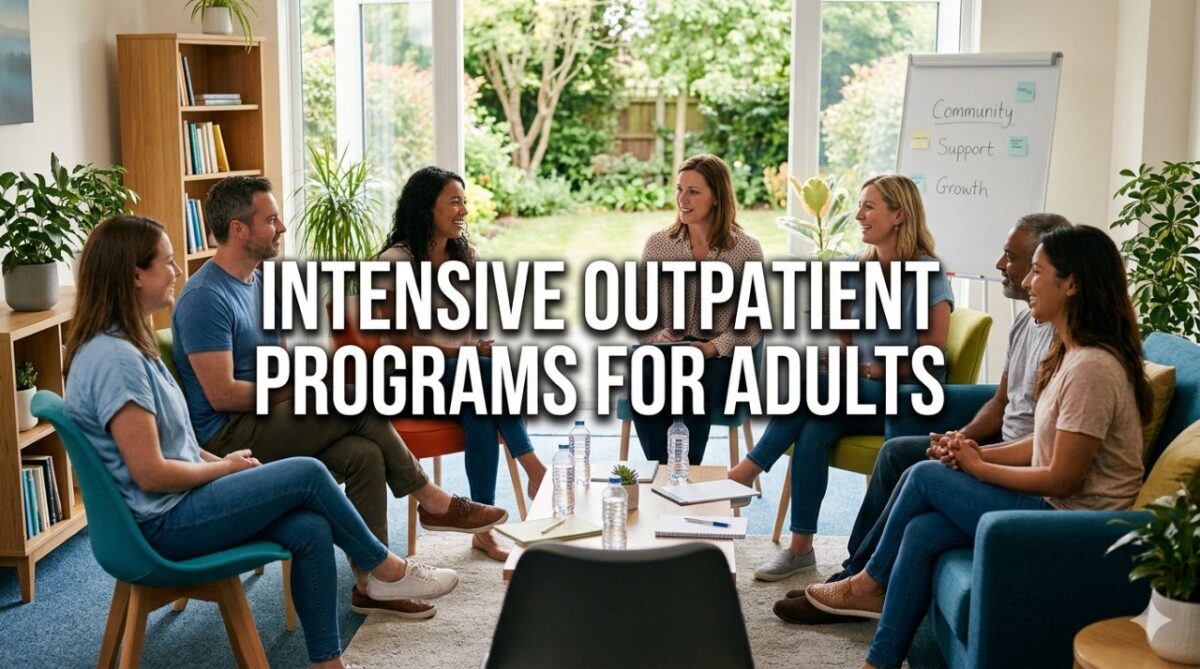
Group counseling is community building for grown-ups who meet other people who might have similar problems. If they all have an experience, they will not feel so alone, and there will be greater accountability.
Individual Counseling
One-to-one therapy sessions also provide an opportunity for the individual to explore in greater depth the nature of his or her condition, emotional triggers and treatment goals.
Skill Development
This practical application of coping skills is found in many program areas such as stress management, emotion regulation, communication and relapse prevention.
Family Support
Recovery can be enhanced through healthy family involvement. There are also various outpatient centers offering family counseling or other measures to increase understanding and communication.
Ongoing Evaluation
Treatment plans are constantly reviewed and adapted to progress, setbacks, and changing needs. Different forms of individualized treatment can be the source of plenty of advantages.
The Benefits of Personalized Treatment
Each journey to recovery is unique. One may have a primary interest of anxiety, another may be into drug abuse and others may have trauma and may have both.
Individual treatments enable therapists to customize therapies to fit certain emotional, behavioral and practical needs. It is because of this that an intensive outpatient program for adults can be so effective.
Flexible, customized treatment plan for the realization of a target of improvement with targeted support.
Benefits often include:
- Increased emotional awareness
- Better stress management
- Improved relationships
- Reduced relapse risk
- Stronger coping strategies
- Greater self-confidence
- Getting to remain separate to treatment
Adults are more involved with a “feet-on-the-ground” approach to treatment and not so “faceless” and “generic.”
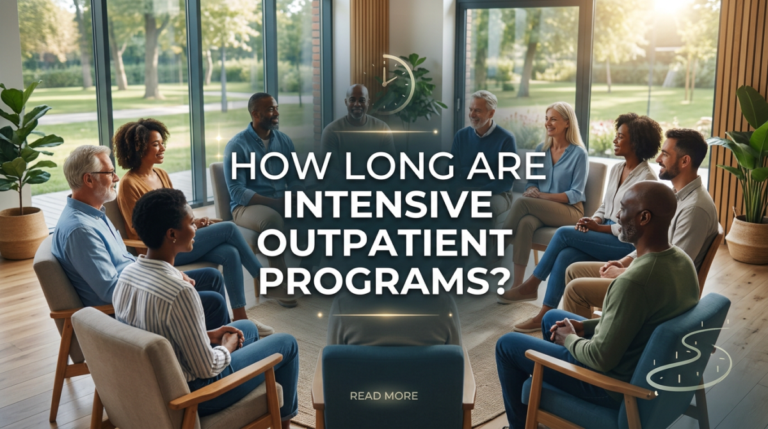
How Long Does an IOP Last?
Treatment may be as long as the individual’s need for improved mental health, recovery objectives and progress. Some of the adults’ outpatient visits can last for several weeks and of some of the adults visits can last for several months.
Most programs have a few times a week that include sessions of therapy, and programs will be reduced over time as evidence of stability and confidence in recovery emerges.
Consistency is important. Recovery does not just mean the decrease in symptomatology; it means building new, effective habits; understanding emotional sensitivities; and having healthy supports that will last beyond treatment.
Signs Someone May Benefit From an IOP
There are sometimes people who require a more extensive therapy or support than therapy can offer and who do not require inpatient hospitalization. If you are an adult, you may require outpatient treatment if you:
- Worry too much or feel depressed
- Have a difficult time not drinking or using drugs
- Has lots of ups and downs in emotional upsets
- Post-inpatient treatment needs structure
- Prepare inadequately to deal with stress and/or relationships
Become withdrawn, unable to “hear” and “see” the world/people around you emotionally.
Looking to professional help from home. Taking early action can help to avoid exacerbating emotional issues.

Recovery Happens in Real Life
Another advantage to intensive outpatient programs for adult drug users is that their treatment takes place in addition to, not apart from, everyday life. Adults are able to use communication skills and coping and emotional tools immediately in the real world.
The individual can often feel a sense of success and long-term viability from this option in gaining familiarity with the life/career tricks and stresses without having to depend on the professionals.
It’s very typical in recovery to own a bit of the concept of perfection. It’s a change, continuity and development, and it’s a new way of coping with the demands of life.
Start Building a Healthier Future Today
If you’ve experienced psychological health problems or addiction and dependency problems, it could be time to reach out to professionals for help. Adults who are experiencing instability can regain their confidence and emotional well-being with the individual, caring and customized treatments provided by WellMind Therapy Center.
To learn more about intensive outpatient options and whether or not it’s right for you and your road to recovery, contact WellMind Therapy Center today.
Disclaimer
This blog is for informational and educational purposes only and should not be considered medical advice, diagnosis, or addiction treatment. Always seek guidance from a qualified mental health and addiction treatment professional regarding personal mental health concerns or treatment decisions.
Frequently Asked Questions
What does an intensive outpatient program mean?
An intensive outpatient program is a structured treatment option that provides several therapy sessions weekly without requiring overnight stays. It helps adults receive consistent mental health or addiction support while continuing daily responsibilities like work, school, or family commitments.
How much does an intensive outpatient program cost?
The cost of an intensive outpatient program varies depending on treatment length, services provided, and insurance coverage. Many facilities accept insurance plans that can significantly reduce out-of-pocket expenses for therapy, counseling, psychiatric care, and recovery support services.
What are the alternatives to an intensive outpatient program?
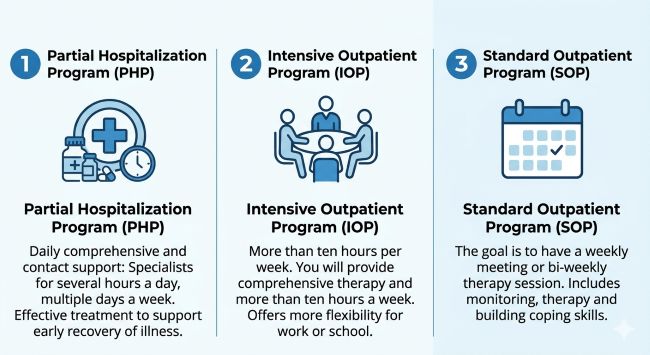
Alternatives include inpatient hospitalization, partial hospitalization programs, standard outpatient therapy, residential treatment, and support groups. The best option depends on symptom severity, safety concerns, recovery goals, and the amount of structure or supervision a person currently needs.
How long do IOP programs last?
Most IOP programs last between eight and twelve weeks, although some individuals continue longer based on personal progress and clinical recommendations. Sessions usually occur several times weekly and gradually decrease as emotional stability and coping skills improve.
Does insurance cover IOP programs?
Many insurance providers cover intensive outpatient treatment for mental health and substance use disorders when medically necessary. Coverage amounts vary by plan, so individuals should verify benefits, copays, deductibles, and approved providers before starting treatment services.
What is the 3-month rule in mental health?
The three-month rule often refers to the idea that meaningful emotional and behavioral improvements typically require consistent treatment over several months. This timeframe allows individuals to build routines, strengthen coping skills, and create healthier long-term behavioral patterns.
References:
- Outpatient programs for adults – Recovery.com
- Intensive Outpatient Program IOP – Texas Health Account
- Intensive Outpatient Program (IOP): Find IOPs Near Me – American Addiction Centers
- National Institute of Mental Health (NIMH)
- American Psychological Association (APA)