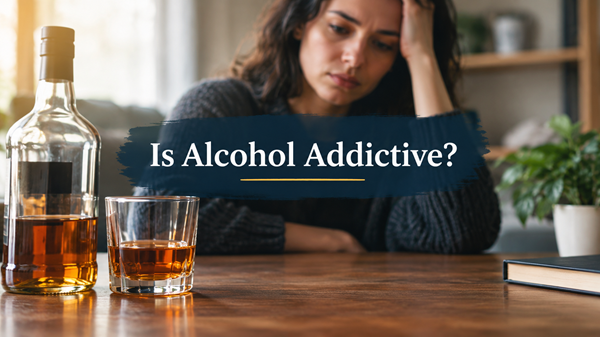
Is Alcohol Addictive?
If you’re ever asked if alcohol is addictive, the answer is yes. Drinking alcohol can become addictive, particularly if it is more frequent, harder to control and is causing harm to health, relationships, work or day-to-day living. Alcohol use disorder (AUD) is the medical term for a problem with alcohol use and can be mild or severe.
Wherever you go, you’ll find alcohol is legal and socially acceptable, but not risk-free. Some individuals are able to consume alcohol on an occasional basis without becoming dependent or addicted, whereas others become dependent, tolerant, addicted or have a compulsion to drink over time. The signs can help a person get help before the situation gets worse.
Key Takeaways
- Is alcohol addictive? Yes. Drinking alcohol can lead to addiction and alcohol use disorder.
- Alcohol disrupts reward, stress, judgement and self-control processes in the brain.
- Excessive drinking, heavy cravings, tolerance and withdrawal symptoms may indicate a problem.
- Alcohol dependence and alcohol addiction are related but there is no direct equivalence between the two.
- Risk factors include genetics, drinking habits, age of first use, stress, trauma, and mental health issues.
- Addiction to alcohol is treatable. Services such as behavioral support, medication, mutual-support and other services can help.
- Heavy drinking may lead to dangerous alcohol withdrawal if you suddenly stop drinking.
Is Alcohol Addictive? Understanding Alcohol Addiction
Does alcohol have to be addictive to everyone who drinks it? No, just because you drink alcohol doesn’t mean you’re going to become an alcoholic. Alcohol is an addictive substance, however, though, and frequent or excessive drinking can heighten the risk of AUD.
Alcohol addiction is frequently the term for someone who feels helpless to control his or her drinking of alcohol. They might continue to drink even when it leads to issues with family, friends, work, physical or mental health.
The National Institute on Alcohol Abuse and Alcoholism (NIAAA) defines AUD as a condition in which a person has trouble stopping or controlling drinking, and experiences harmful effects from it. AUD is a continuum, and a person can have mild, moderate or severe symptoms.
So, does alcohol become addictive when you drink it occasionally? It can be. The key thing is not just social drinking, but an important issue is whether someone drinks socially. It’s how often they drink, how much, if they can control it, and what happens if they try to drink less.
Why is Alcohol Addictive?
Does the brain lead to the addiction of alcohol? Yes. The effect of alcohol on the brain works through multiple systems that impact pleasure, relaxation, stress, decision making and behavior.
Initially, alcohol might make people feel relaxed, happy, or less stressed. The brain can start to link these positive feelings to drinking. Those connections can grow stronger with repeated drinking.
With time some individuals begin to develop:
- Intense urges for alcohol.
- Increased tolerance
- Difficulty controlling drinking
- Using an alcoholic beverage to deal with stress and/or anxiety/emotions that are not comfortable
- Drinking despite problems or consequences continuing to occur.
- During a withdrawal period: when the alcohol has been removed.
Even repeated drinking of alcohol creates changes in the brain, which can lead to cravings and dependence, according to NIAAA.
This is why it’s not always possible to just say, “Just stop drinking. Addiction is not just about the lack of willpower – it is a behavioral change and a change in brain function.
How Alcohol Affects the Brain and Body
The brain is the fastest organ to be affected by alcohol. It may cause delayed reaction time, coordination loss, poor judgment and difficulty with concentration.
Repeatedly using it can make its effects more serious. Alcohol use is linked to physical health issues, injuries, exacerbation of mental illness, interpersonal issues, and workplace or school issues.
Alcohol can also affect:
- Brain: Memory, judgment, attention, mood and coordination may be impaired.
- Liver: Heavy drinking over a long period may lead to liver disease.
- Heart: Drinking too much alcohol may lead to a number of heart-related issues.
Digestive system: Alcohol can have adverse impacts on the stomach, pancreas and digestive system.
Mental health: Using alcohol can help to temporarily distract from unpleasant emotions, but over time can increase anxiety, depression, sleep disturbances, and mood swings.
This is yet one more reason that the question is addictive matters to alcohol. Addiction doesn’t have to be limited to alcohol abuse.
Signs and Symptoms of Alcohol Addiction
When a person is unable to control their drinking is alcohol addictive? One of the red flags is difficulty controlling drinking.
AUD is diagnosed based on 11 symptoms. If you experience two or more symptoms in a 12-month period, you may have a diagnosis of AUD, and the more symptoms you have, the more severe the diagnosis.
Common signs include:
- Drinking more or longer than planned.
- Trying to cut down but being unable to do so.
- Drinking or recovering from drinking for a long time.
- Experiencing strong cravings.
- Disturbing work, school, or family responsibilities with alcohol.
- Drinking even when there are issues with the relationship.
- Losing activities due to drinking.
- Drinking in physically dangerous situations.
- Not stopping drinking despite having physical or mental issues.
- Building up a tolerance and/or craving for alcohol.
- Withdrawal of alcohol.
Not having all the signs does NOT mean you don’t have a drinking problem. If you have any symptoms, even a few, it’s an opportunity to speak with an educated individual.
Why Do Some People Become Addicted to Alcohol?
Are people addicted to alcohol just because of their genes? No addiction is a result of any single factor, but rather a combination of biological, psychological and environmental factors.
Others may be more susceptible due to family history or genetics. Other factors may involve:
- Starting to drink at a young age
- Too often or too much drinking.
- Family history of alcoholism or other issues with drinking alcohol
- Chronic stress
- Trauma
- Depression or anxiety
- Social pressure
- Alcohol easily available
- Using alcohol to cope with difficult emotions
NIAAA states that there is a genetic and environmental component to a person’s liability for AUD.
This implies that there isn’t one reason behind why an individual may become addicted to alcohol, while another may not.
Is Alcohol Dependence the Same as Alcohol Addiction?
Alcohol is addictive – and addiction is a dependence? The terms are comparable but are not synonymous.
Alcohol dependence is typically associated with the body’s adaptation to the repeated use of alcohol. Withdrawal symptoms may occur when a person withdraws from alcohol.
When people come to the term “alcohol addiction,” they typically mean that they are an addicted drinker, meaning that they are compelled to drink and find it difficult to regulate their drinking behavior even when it results in harmful effects.
Someone may become physically dependent but not meet all the criteria for AUD. Similarly, there are numerous symptoms with addiction to AUD other than physical dependency.
Alcohol use disorder is the term used by healthcare professionals today, in place of the older terms “alcoholism” and “alcohol abuse.”
Risk Factors That Increase the Chance of Alcohol Addiction
Do people with certain risk factors have a tendency to become addicted to alcohol? It’s higher for individuals with other vulnerabilities and those who drink heavily regularly.
Factors that are important and to watch for are:
- A family history of AUD.
- Exposure to alcohol in early childhood
- Binge drinking
- Frequent heavy drinking
- Trauma, long-term stress
- Some mental health issues
- Social settings which encourage heavy drinking
- Using alcohol as a way to manage emotions
- Having problems controlling drinking after it starts
Risk does not translate to addiction. It just suggests that additional awareness and support early on is helpful.
When Does Drinking Become a Problem?
Drinking doesn’t become a problem at one time. Often the signs are not sudden, but gradual.
When a person drinks, there are signs that it may be a problem when you:
- Drink more than intended frequently.
- Add alcohol to your thoughts often.
- Requires alcohol to feel normal or to relax.
- Minimize or hide quantity of drinking.
- Misses work or duties due to drinking.
- Have repeated arguments related to alcohol.
- Attempt to avoid, but resume consumption of fluids.
- Experience withdrawal symptoms.
- Continue drinking even though alcohol is harming your health.
If someone drinks every day is it addictive? Frequent drinking can raise risk, but doesn’t necessarily indicate AUD. It matters when, where, what, and how much alcohol is being used, and if the user is able to control these factors.
Need Help With Problem Drinking?
When alcohol is starting to be difficult to control, it doesn’t have to escalate into a crisis. WellMind Therapy Center can help you to learn about your drinking pattern, understand the factors that impact your drinking habits, and discuss options for recovery support.
Contact WellMind Therapy Center today to talk about your concerns and start making your choices for a healthier life.
Can Alcohol Addiction Be Treated?
Does alcohol get addictive and is it treatable? Yes. Addiction to alcohol is curable and recovery is attainable.
Treatment can be customized for the individual. Care can involve behavioral techniques, counselling, drugs, or group support, or a mix of services.
Common goals include:
- Learning about what makes you thirsty.Knowing what makes you drink.
- Building more positive coping mechanisms
- Managing cravings
- Improving relationships
- Addressing Mental Health Co-Morbidity Issues
- Building relapse-prevention strategies
- Before the structure is destroyed, a long term recovery plan should be developed
Treatment can be different for different people. Others may require a more intensive level of care, and some people might be able to receive outpatient care.
First and foremost, addiction is not about any lack of character. NIAAA stresses that AUD is a medical condition and that with the right help, people can recover or greatly improve.

When to Seek Help for Alcohol Addiction
Is alcohol really addictive enough to seek help? An evaluation is warranted if alcohol is having a negative impact on your health, relationships, responsibilities, or the ability to control your behavior.
If you have attempted to cut down on your drinking but have not been able to, if you have cravings or withdrawal symptoms, if you drink more than you intended, and/or if you drink alcohol despite serious consequences, consider professional help.
However, one piece of important safety advice is often forgotten: Avoid stopping heavy alcohol use without medical supervision. Sometimes withdrawal from alcohol can lead to severe or life-threatening symptoms such as seizures and delirium tremens.
A competent health care provider can decide which is the best course of action.
Take the First Step Toward Recovery
Help is available if you or a loved one is battling with alcohol. WellMind Therapy Center offers evidence-based mental health and addiction services that are compassionate and empower individuals to learn more about the underlying cause of the drinking and develop healthier coping mechanisms.
Call WellMind Therapy Center today to get information about the support available and what the next step would be for recovery.
Frequently Asked Questions
How addictive is alcohol?
Alcohol can be highly addictive, but addiction risk varies from person to person. Frequent heavy drinking, cravings, tolerance, withdrawal, genetics, and continued drinking despite consequences can increase the likelihood of developing alcohol use disorder.
Why is it so hard to quit drinking?
Quitting can be difficult because repeated alcohol use can change brain systems involved in reward, stress, habits, and self-control. Physical withdrawal may also occur, making professional guidance important for people who drink heavily.
What is Gen Z addicted to?
Gen Z is not universally addicted to one substance or behavior. Some young people struggle with alcohol, cannabis, nicotine, or behavioral concerns, while many do not. Substance-use patterns vary widely by person, age, and environment.
Can you be physically addicted to alcohol?
Yes. Regular heavy alcohol use can lead to physical dependence, meaning withdrawal symptoms may occur when drinking stops. Withdrawal can sometimes become dangerous, so people with heavy long-term use should seek professional guidance before stopping suddenly.
What are the 10 signs of being an alcoholic?
Common warning signs include drinking more than planned, failed attempts to quit, cravings, tolerance, withdrawal, neglecting responsibilities, relationship problems, unsafe drinking, lost activities, and continued drinking despite health or emotional problems.
Disclaimer
This article is for general educational purposes and is not a substitute for professional medical, psychiatric, or psychological advice, diagnosis, or care. Alcohol withdrawal can be dangerous. If you or someone else has severe withdrawal symptoms, confusion, seizures, or another medical emergency, seek emergency medical assistance immediately.
References and Content Sources
- National Institute on Alcohol Abuse and Alcoholism (NIAAA) — Alcohol Use Disorder: From Risk to Diagnosis to Recovery.
- NIAAA — Understanding Alcohol Use Disorder.
- NIAAA — The Cycle of Alcohol Addiction.
- NIAAA — Understanding Alcohol Drinking Patterns.
- NIAAA — Treatment for Alcohol Problems: Finding and Getting Help.
- Centers for Disease Control and Prevention (CDC) — Alcohol Use and related public health information.