
Make Stress Management a tool to cope with the stress of daily life, to lessen emotional stressors, and to develop more positive methods of reacting when life gets too stressful. Stress is a natural part of life, but chronic stress can impact sleep, relationships, concentration and well-being. Using the support provided you can learn practical skills to start to feel like you are in balance and in control.
What is Stress Management?
Stress Management: Awareness of stress, awareness of the triggers and healthy response to them. The aim is not to get rid of all of your stressors. Rather, it’s about how to rise to the occasion without being consumed by stress in your daily living.
Stress is a different situation for each person. Stress can be caused by work demands, family responsibilities, financial worries, relationship issues, life changes, and health issues. If stress persists for a prolonged period, it can be difficult to relax, concentrate or enjoy meaningful activities you once took for granted.
What Are the Signs of Too Much Stress?
Stress can affect both your mind and body. Common signs include:
- Worry, tension or feeling overwhelmed
- Trouble sleeping or staying asleep
- Rising to irritability or being easily changed in mood.
- Trouble focusing or making decisions
- Headache, muscle tension
- Changes in appetite
- Feeling tired even after resting
- Stay away from others or from activities that might infect you.
- Drinking more alcohol or drugs to deal with stress and anxiety
Early identification of these signs may help you take action. If stress is impacting work, relationships, sleep and daily responsibilities, professional help may be needed.
How Does Stress Management Help?
Effective Stress Management is about making simple, real and life-friendly changes. A mental health worker can assist you to recognize patterns that cause stress and figure out more healthy reactions.
Support can consist of:
Learning Healthy Coping Skills
Practical strategies for dealing with challenging emotions, pressure and stress. These can consist of breathing exercises, relaxation techniques, problem-solving, and better communication.
Improving Daily Habits
Emotional wellbeing can be supported through sleep, regular exercise, eating a healthy diet and time spent on pleasant activities. But simple tweaks can have a big impact if they’re carried out regularly.
Changing Unhelpful Thought Patterns
Stress can cause problems to appear larger than they are. Through counseling, you can become aware of negative thinking patterns and learn to think more even-handedly about challenging circumstances.
Setting Healthy Boundaries
Saying “Yes!” to anything can wear you down. Establishing healthy boundaries can save time and energy and help to maintain healthy relationships.
Building Long-Term Resilience
Stress will be there. The aim is to get better prepared to deal with it. As time goes on, healthy coping skills can help you bounce back from stressful events better.
When Should You Seek Professional Support?
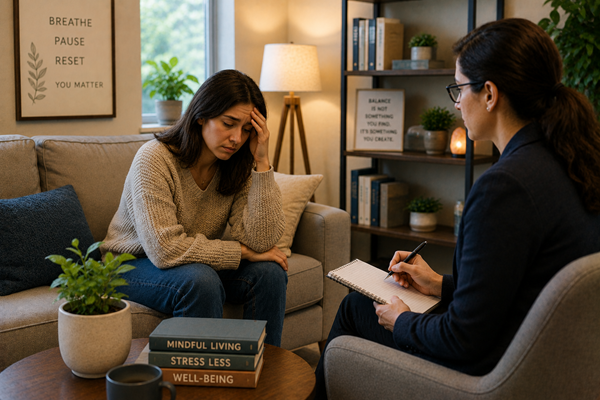
Don’t wait until things get bad before seeking help. If stress persists for several weeks, it seems out of control, causes difficulties in sleep, or disrupts relationships, work, school or daily living, it may be time to consult a mental health professional.
Professional assistance may also be helpful if there is stress along with anxiety, depression, drug or alcohol abuse, panic symptoms or other emotional issues. A qualified professional will be able to help you understand what sort of support can be provided.
Get Support for Stress Today
It doesn’t have to be you who cope with the stress. S. mental health experts at WellMind Therapy Center offer customized support to aid you to understand what is causing your stress, enhance coping mechanisms, and achieve emotional balance.
Looking to go even further? Call WellMind Therapy Center to get more information about the mental health services that are available and to find a mental health service that works for you.
Simple Stress Management Strategies You Can Try
A few small habits can help you begin managing everyday stress:
- Take time to breathe: Take a few slow breaths before responding to stress.
- Divide tasks into smaller ones: Concentrate on what you can do at this time.
- Minimize disruption of sleep: Establish a routine sleep schedule as much as possible.
- Get more exercise: Walking and other physical activity can help relieve tension.
- Keep in touch: Talk to someone you trust rather than keeping it to yourself.
- Take time for yourself: Plan time for relaxation and recharging.
- Know your boundaries: Set boundaries when you are overcharged.
While these can be effective for day-in-day-out stress, the strategies are not a means of self-treatment for more persistent or severe symptoms.
Frequently Asked Questions
What is Stress Management?
Stress Management is the understanding and learning of healthy coping mechanisms to respond to stress. May incorporate relaxation techniques, lifestyle modification, problem solving, emotional support and professional counseling as indicated.
What are the best ways to manage stress?
These include establishing healthy lifestyle habits, practicing relaxation techniques, social support, set realistic limits, exercise, and regular sleep, as well as professional advice. Depending on the source of your stress and the impact on your life, the best strategy is to determine that beforehand.
Can stress affect mental health?
Yes. Persistent stress can lead to poor sleep patterns, feelings of anxiety, low mood, irritability, poor concentration and emotional exhaustion. Talking to a qualified mental health professional can be helpful if stress becomes a problem or starts to impact daily functioning.
When should I seek help for stress?
Seek professional help if stressors become unmanageable, if the stress continues for several weeks, if it interferes with sleep, if it interferes with relationships or work, or if it causes unhealthy coping. Properly managing stress during early stages can prevent the condition from becoming more difficult.
Can Stress Management help with anxiety?
Stress Management can provide skills training for coping with stress and emotional distress, which may help alleviate some symptoms of stress. If your anxiety becomes a constant, though, you may need a professional assessment and an individualized treatment plan.