What is Mental Health Counseling?
Key Takeaways
- Mental health counseling helps individuals to be able to handle emotional, psychological and behavioral challenges.
- It is performed by trained and professional people, including therapists or licensed counselors.
- Counseling guarantees the growth of the individual, coping and improvement of relationships.
- It can address anxiety, depression, trauma, and addiction.
- The early assistance will assist in preventing the issues and complicating them.
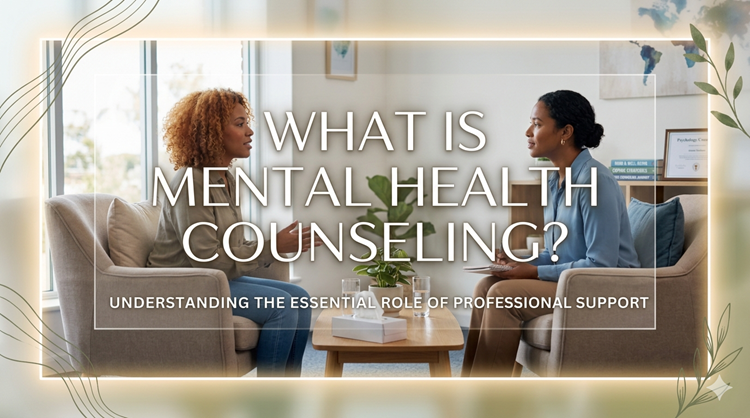
What is mental health counseling? And you are not alone in wondering what mental health counseling is. The majority of the population has heard the word but is not quite clear of what it is and how it can help. Principally, mental health counseling is a supportive and guided process in which the individual assists a licensed professional to understand his/her thoughts, feelings and behaviors and learn better coping strategies.
Emotional conflicts are not so uncommon in our busy world as we would admit. It may be stress, anxiety, addiction, trauma or relationship issues; mental health counseling is a secure environment to discuss, ponder and develop. Think of it as an intentional conversation, which can help you to make sense of what you are going through and find effective answers to it.
Understanding Mental Health Counseling
Mental health counseling is a collaborative process involving a licensed therapist who assists individuals, couples or groups to overcome emotional, behavioral and psychological problems. It encompasses talk therapy to identify a diagnosis, coping mechanisms, and enhanced mental health and solve issues such as anxiety, trauma, and relationship issues.
Being a professional therapist, I would put it as follows: imagine that you are a person who has a heavy backpack on his or her back, which is full of stress, fears, and unprocessed emotions. Counseling helps you to put off that burden, to organize it and what to keep and what to get rid of.
The range of issues to which mental health counseling is applied is very broad and includes:
- Panic and anxiety attacks.
- Depression and mood disorders.
- Drug abuse and rehabilitation.
- Trauma and PTSD
- Relationship conflicts
- Grief and loss
How Mental Health Counseling Works
This normally begins with an initial interview where the counselor familiarizes himself with your problems, background and goals. On the basis of it, there are meetings held in the format of open discussion, evidence-based practice, and individual approaches.
It can be performed in many different ways, such as:
- Cognitive Behavior Therapy (CBT)
- Talk therapy
- Motivational interviewing
- Trauma-informed care
It is not about immediate positive feelings but building resilience and coping strengths in the long term.
The Role of a Mental Health Counselor
A mental health counselor is also trained to listen without making judgment, ask questions and seek answers to them in ways that you might not recognize on your own. They do not overwork you, and you are not ill. Instead, they guide you to enlightenment and self-awareness.
The collaboration with clients is likely to be the foundation of the work of counselors in
WellMind Therapy Center to:
- Identify triggers and emotions.
- Develop coping strategies
- Improve communication skills
- Have realistic, meaningful goals.
Who Can Benefit from Mental Health Counseling?
One of the greatest misunderstandings is that counseling is not to be administered to people who are not in crisis. In fact, mental health counseling is accessible to all people who want to improve the quality of their lives.
- You can serve in case you
- Be feeling down or emotionally frozen.
- Struggle with relationships
- Always stressed or burned out.
- Are you overcoming addiction?
- Want better self-understanding
The little problems can also mature over time, and one should never hesitate to seek help.
Mental Health Counseling and Addiction Recovery
As a seasoned individual in the sphere of addiction counseling, I can certainly state that mental health counseling is a significant part of addiction recovery. Substance use is often a consequence of emotional pain, trauma or unresolved mental disorders.
Counseling helps individuals:
- Learn about the reasons behind addiction.
- Discover new healthy coping strategies.
- Prevent relapse: formal assistance.
- Mend broken self-image and relationships.
Recovery is not just the process of giving up the use of the substances but it is a rehabilitation of the mind.
Common Myths About Mental Health Counseling
To dispel some of the myths:
Counseling is only to be done in case of serious mental illness.
Not true. It is also in the common lot.
Talking is no use.
Actually, guided discussions could lead to the revelations that could make a difference and real change.
I should solve my problems alone.
Seeking help is a virtue and not a vice.
Benefits of Mental Health Counseling
Counseling practitioners are likely to experience:
- Improved emotional regulation
- Better relationships
- Reduced anxiety and depression.
- Increased self-awareness
- Stronger coping skills
These transformations can add significantly to the welfare and life satisfaction in the long run.
When Should You Seek Help?
There is no perfect time to start counseling. The question is, when something is getting in the way of your day-to-day life, relationships or even peace of mind, then it is time to explore.
Symptoms that might tell you that you need help include:
- Persistent sadness or anxiety.
- Difficulty concentrating
- Change of sleep or appetite.
- Feeling out of place or numb.
- Dependence on substances.

Take the First Step Toward Better Mental Health
You need not go through the issues of life alone. You will be offered caring and competent employees who will help you in every step of WellMind Therapy Center.
Call today to engage in a confidential session and start your path to clarity, healing and emotional balance.
Getting a glimpse of what mental health counseling is can open a gap that can be occupied by the change. Knowing it all is not the matter but rather being open to asking about the questions. With the right support, recovery is possible, maturity can be attained and life will be made easier.
Frequently Asked Questions (FAQs)
What is the meaning of mental health counseling?
Mental health counseling is a professional service that helps individuals manage emotional, psychological, and behavioral challenges through guided conversations, coping strategies, and evidence-based techniques to improve overall well-being and daily functioning.
What is the difference between mental health counseling and therapist?
Mental health counseling refers to the process, while a therapist is the trained professional providing it. Counselors often focus on specific issues and goals, while therapists may explore deeper emotional patterns and long-term psychological concerns.
Does talking about your problems actually help?
Yes, talking helps you process emotions, gain perspective, and reduce stress. With a trained counselor, conversations become structured and solution-focused, leading to meaningful insights and healthier coping mechanisms.
How do psychiatrists diagnose?
Psychiatrists diagnose by evaluating symptoms, medical history, and behavior patterns. They may use diagnostic criteria, interviews, and sometimes medical tests to understand mental health conditions and recommend appropriate treatment.
What are the 4 types of counseling?
The four common types include individual counseling, group counseling, family counseling, and couples counseling. Each type focuses on different dynamics but aims to improve communication, emotional health, and problem-solving skills.
What is the 3-3-3 rule in mental health?
The 3-3-3 rule is a grounding technique used for anxiety. It involves naming three things you see, three things you hear, and moving three parts of your body to help refocus and calm your mind.
Disclaimer
This content is for informational purposes only and does not replace professional medical or psychological advice. Please consult a licensed mental health professional for personalized care.
References
- American Psychological Association (APA)
- National Institute of Mental Health (NIMH)
- Substance Abuse and Mental Health Services Administration (SAMHSA)
- Mayo Clinic Mental Health Resources