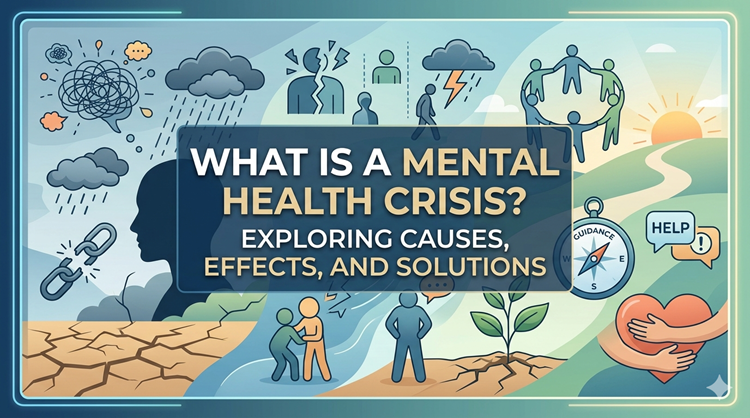
What is a Mental Health Crisis? – Exploring Causes, Effects, and Solutions
Key Takeaways
- What is a mental health crisis? It is an extreme episode of feelings and behaviors that disrupts a person’s life.
- These can occur with trauma, stress, mental health issues, substance misuse, change and transition.
- This can include feelings of panic and hopelessness, social withdrawal, confusion and suicidal thoughts and plans.
- Early intervention can prevent escalation.
- Their response offers relief, skills and recovery.
A mental health crisis is any event when someone’s thoughts, emotions, and/or behaviors are so extreme or unpredictable that they result in self-harm or harm to others, or they cannot manage life activities. It’s a point at which they cannot cope with the stresses of life and need support.
At WellMind Therapy Center, we believe we all should be able to regulate our feelings. And this can be avoided by supporting, paying attention and intervening as needed.
To the health-mindful and mental health professionals, it’s a state of elevated mental distress that affects one’s level of functioning or safety. This may involve feeling hopeless, suicidal, or very anxious; experiencing psychosis; or being unable to perform everyday activities. It may be treated with crisis counseling, psychotherapy, medication, and/or programs like an outpatient treatment program. Early treatment is important for a better outcome.
What is a Mental Health Crisis?
A mental health crisis is when someone’s thoughts, feelings, and/or behaviors are extreme and are causing them to be distressed, unable to function, or at imminent risk of harming themselves or others, or compromising their ability to meet their basic needs. It’s an emergency situation and can result from an overwhelming level of stress or trauma.
Some people also refer to a state of extreme distress as “nervous breakdown.” It is not an official medical or psychological term, but it can refer to a period when people are feeling stressed and are unable to cope, and their functioning is affected. This can be due to a mental health crisis.
Common Causes of a Mental Health Crisis
It may be a result of emotional, social and physiological factors.
Major Stressful Life Events
- End of marriage or relationship
- Loss of a person close to you, by death or otherwise
- Loss of a job or other pressures
- Legal or housing problems
- Academic pressure
Mental Health Conditions
Acquiring & exacerbating pre-existing conditions such as:
- Depression
- Anxiety disorders
- Bipolar disorder
- PTSD
- Schizophrenia
Trauma and Abuse
Recent and past trauma may affect your emotional state.
This could include feelings of distress if someone is hurt, abused, neglected or had an accident.
Substance Use
Drug or alcohol abuse may cause mood swings, symptom flare-ups and poor judgment abilities
Isolation
Being isolated can make life’s challenges seem insurmountable.
Effects of a Mental Health Crisis
In looking at what a mental health crisis is, it’s helpful to keep in mind what happens next.
Emotional Effects
- Extreme sadness
- Panic or terror
- Anger or irritability
- Hopelessness
- Emotional numbness
Physical Effects
- Trouble sleeping
- Racing heart
- Fatigue
- Appetite changes
- Headaches or stomach issues
Behavioral Effects
- Withdrawing from the family and friends
- Absenteeism from school or work
- Risk-taking behaviors
- Increased substance use
- Suicidal ideation/behaviors
Cognitive Effects
- Confusion
- Difficulty concentrating
- Racing thoughts
- Negative thinking patterns
Get Help Today
If someone you know is in distress, seek help sooner rather than later. You will be heard, understood and treated at WellMind Therapy Center. If you or a loved one is in distress, don’t wait for things to get worse; call today.
How to Recognize Warning Signs Early
Getting information about what a mental health crisis means will help you get support quickly. A crisis doesn’t come “out of the blue.”
Here are the top 10 Warning Signs of a Mental Health Crisis:
- Persistent hopelessness
- Severe mood swings
- Panic attacks
- Being easily fatigued or having insomnia
- Isolation from others
- Feeling hopeless
- Trouble focusing
- Increased substance use
- Thoughts of self-harm
- Feeling they can’t cope
When there are two or more, it’s time to talk to someone.
What Happens in a Mental Health Crisis?
When people ask what a mental health crisis is, they are asking what happens in a mental health crisis. Everyone’s experience is different. Some may find themselves feeling easily distressed and start to cry or feel frightened. Some can feel impatient, irritable, or frustrated, or even feel that they’re unable to relate to the world.
In the most severe cases, someone can feel unsafe, suicidal or stop taking care of themselves. Here’s when someone may need acute mental health care.
Three Types of Mental Health Crises
While not dissimilar, crises are often defined as:
- Situational Crisis
The result of a stressful event such as loss, relationship break-up, unemployment or trauma. - Developmental Crisis
Caused by life transitions such as parenting, puberty, old age or retirement. - Existential Crisis
Involves meaninglessness, identity confusion, hopelessness or despair.
The 5 Stages of a Crisis
The 5 Stages of a Crisis show what a mental health crisis is:
- Exposure to Stressor
This is a new phase of crisis. - Rising Tension
Stress is heightened, and skills become unhelpful. - Disorganization
Emotions are intense, cognitive performance declines and functioning is poor. - Active Crisis
The person feels overly euphoric, terrified or hopeless. - Recovery and Stabilization
Feeling safe, things improve.
Solutions and Treatment Options
Here’s a definition for “mental health crisis”: it’s not hopeless and there’s a solution.
Therapy
Therapy can help to identify what is stressful and upsetting, stay positive and cope with situations.
Medication Support
Medications can help ease symptoms and anxiety (with supervision from a healthcare professional).
Intensive Outpatient Programs (IOP)
Treatments for all who live at home
Crisis Intervention
Crisis care can promote homeostasis and offer support.
Lifestyle Changes
Healthy sleeping, exercise, support and structure support recovery in time.
How to Help Someone in Crisis
If you are concerned about someone:
- Be supportive and accepting
- Encourage professional help
- Take away any potential dangers
- Don’t question or disregard emotions
- Call an ambulance in an emergency
Sometimes the best help is by listening sympathetically: it’s a mental health crisis.
Why Early Support Matters
Mental health crises only get worse. Early support can minimize the distress and disruption and stop crises. Many can recover with treatment.
WellMind Therapy Center provides targeted therapy for anxiety, depression, trauma, mood disorders or emotional distress. Don’t wait until it’s too late.
Get Healing at WellMind Therapy Center
Ask for help if life is stressful. Individualized and compassionate care is a call away from WellMind Therapy Center. A simple phone call can be a start to a more peaceful existence.
Disclaimer
This content is for educational and informational purposes only and does not constitute medical advice, diagnosis, or treatment. If you or someone else is experiencing a mental health emergency, suicidal thoughts, or immediate danger, call local emergency services or go to the nearest emergency room immediately. Always consult a licensed mental health professional or physician for personalized guidance.
References
- National Institute of Mental Health – Mental Health Information
- Substance Abuse and Mental Health Services Administration – Crisis Care Guidance
- American Psychological Association – Stress and Crisis Resources
- World Health Organization – Mental Health Resources
- Mayo Clinic – Mental Health Conditions and Treatment
FAQ Section
How do I know if I am in a mental health crisis?
If emotions feel unmanageable, daily tasks seem impossible, or you feel unsafe, you may be in crisis. Severe anxiety, hopelessness, panic, or suicidal thoughts are signs to seek immediate help.
What are the three types of mental health crises?
The three common types are situational crisis, developmental crisis, and existential crisis. Each involves overwhelming distress caused by life events, transitions, or loss of meaning and emotional stability.
What happens in a mental health crisis?
A person may experience panic, intense sadness, confusion, anger, withdrawal, or unsafe thoughts. Functioning often drops, making work, relationships, and self-care much harder to manage.
What are three signs of mental health crisis?
Three common signs are hopelessness, inability to cope with daily tasks, and sudden emotional or behavioral changes. These symptoms suggest it may be time for professional support.
What are 10 common warning signs of a mental health crisis?
Warning signs include panic, mood swings, insomnia, isolation, substance use, hopelessness, poor concentration, appetite changes, risky behavior, and thoughts of self-harm or suicide.
What are the 5 stages of a crisis?
The five stages are exposure to stressor, rising tension, disorganization, active crisis, and recovery. Early intervention can shorten the crisis and improve healing outcomes.