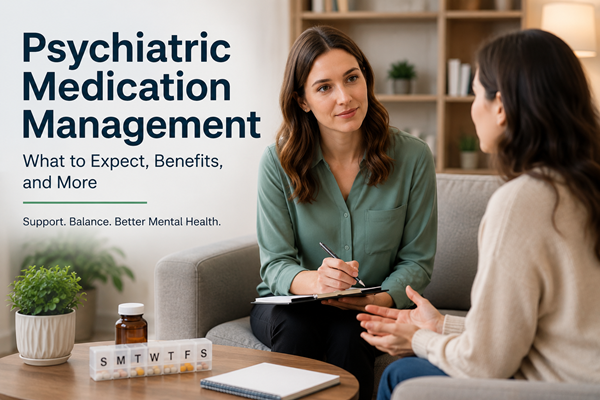
Psychiatric Medication Management: What to Expect, Benefits, and More
If symptoms like depression, anxiety, mood swings or difficulty with concentration start to interfere with daily life, medication management by a psychiatrist may be helpful to learn about medications and monitor their impact on you. The medications that are used at WellMind Therapy Center are based on a variety of factors including your symptoms, your history, your goals, your current medications, and how you’ve responded to medications over time.
Not all people need medication. For some, it can be a critical component of a larger mental health care program that can involve counseling, lifestyle changes, family support or other programs. It’s not a simple thing of pills. The challenge is to find a safe, valuable and suitable method.
Key Takeaways
- Psychiatric medication management involves the review, adjustment and monitoring of mental health medication(s).
- Medications employed will depend upon the symptoms, diagnosis, medical history, other medications and the patients needs.
- Follow-up visits can be used to track for benefits, side effects and symptom changes.
- Some medications might require a couple of weeks for improvement.
- Never discontinue or change psychiatric medications without consulting your prescriber.
- Medication may be provided as part of psychotherapy or other types of support as a standalone treatment.
- Follow-up care can help to improve medication safety and medication adherence.
What is Psychiatric Medication Management?
Treatment with psychiatric medicines is an ongoing process of assessment by a competent mental health professional of the effectiveness of psychiatric medicines and adjustment of doses as required.
It may include:
- Reviewing current symptoms
- Talking about your mental health past
- Checking on existing medicines and dietary supplements
- Starting medicines at an appropriate time.Starting medicines when they’re needed.
- If required, dose change (from the medication’s booklet)
- Changing medicines not for much advantage or when it causes problems
- Monitoring your reaction and response with time
- Discuss drug interactions and precautions
- Supporting patients’ compliance with their prescribed medication regimen.
This differs from individual to individual. Some people may not experience the same results with a drug as another. Individuals may show different reactions to psychiatric medication and the medication that works best for them can sometimes require more than one trial to determine.
Good communication is another way to help with psychiatric medicine management. You need to feel at ease in talking about what’s worked, what hasn’t changed, and what you are concerned about.
How Does Psychiatric Medication Management Work?
The first assessment is usually carried out when a person begins psychiatric medication management through a initial clinical evaluation or formal psychological evaluation. Your provider may ask about your symptoms, sleep, mood, concentration, appetite, energy, prior diagnosis, prior medications and family history.
The provider can also check on medications provided by other health care providers. It’s important since some medicines may interact or have side effects when taken together.
If a medicine is suitable, the provider might consider starting, continuing, changing or adjusting a prescription.
Follow-up visits then help to address practical questions:
- Do the drug is effective?
- Are symptoms improving?
- Do there exist side effects that are not desired?
- Is the dosage and amount right?
- Are there other medicines that are having an impact on the findings?
- Should the medicines be still given?
- Is there anything new that should be worked on?
For example, certain antidepressants may have an optimum effect after weeks. It can take 4–8 weeks for antidepressants to be effective, but some symptoms might improve sooner, according to the National Institute of Mental Health (NIMH).
Follow up is important, that’s why. Prescription management typically is not a single appointment.
Who Can Benefit From Psychiatric Medication Management?
Psychiatric medication management can be helpful for individuals experiencing persistent, some very intense, recurrent or disruptive symptoms and/or who are having difficulty functioning in work/school, relationships, sleep or daily life.
May be recommended for people who have:
- Ongoing depression
- Often feeling anxious or panicky (anxiety disorders)
- Bipolar disorder
- ADHD symptoms
- Obsessive-compulsive symptoms
- Severe mood changes
- Psychotic symptoms
- To troubleshoot sleep problems due to mental health problems
- Medications may be necessary for other psychiatric disorders, such as epilepsy, bipolar disorder, schizophrenia, and other mood disorders.
There is no need to have an idea of the medication you need before your appointment. A licensed mental health professional will spend time with you to determine if medication is needed and can be a part of your plan of care.
Just because you have a diagnosis, it’s also not mandatory to take medication. Treatment options should be based on your symptoms, preferences, history and goals.
What Conditions Can Psychiatric Medications Help Manage?
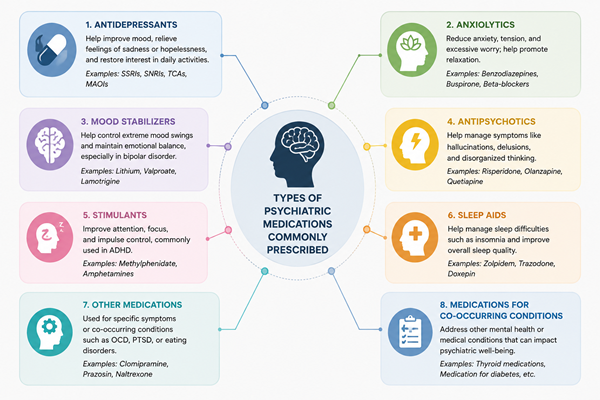
Various psychiatric drugs are used to treat various disorders. Other medicines might be effective for more than one health problem.
Depression
Depression is a condition that is treated with common drugs called antidepressants. Providers may try various types of antidepressants, depending on the person’s situation, and track their benefits and side effects.
Anxiety Disorders
Antidepressants, anti-anxiety drugs and other drugs can be helpful at controlling anxiety symptoms. It’s up to the individual and the type of anxiety disorder.
Bipolar Disorder
It’s significant not to mistake BD for borderline personality disorder (BPD) or narcissistic personality disorder (NPD). It’s important to consider the pattern of symptoms, the length of time they’ve been present, their triggers and the overall history to distinguish bipolar disorder from borderline personality disorder, rather than one symptom
ADHD
Medications that affect the nervous system, such as stimulants and non-stimulants can be used for ADHD. Where appropriate, providers are keeping an eye on effectiveness, sleep, appetite, blood pressure and other pertinent factors.
Psychotic Disorders
In diseases with psychosis, antipsychotics can be used to alleviate symptoms like hallucinations or delusions. They can have side effects and continue monitoring is key.
How Providers Monitor Psychiatric Medication
Periodic monitoring is one of the important components of psychiatric medication management.
Your provider might want to know about changes to:
- Mood
- Anxiety
- Sleep
- Energy
- Concentration
- Appetite
- Daily functioning
- Thoughts or behaviors
- Medication side effects
Other monitoring may be physical monitoring or lab testing as appropriate for the medication. For instance, individuals who are taking lithium have to be monitored for lithium levels and kidney and thyroid function, NIMH says. Other times, monitoring for weight, glucose, or lipids may also be necessary with some antipsychotics.
Let your provider know if you have any past problems with medications or if you are allergic to any prescription or over-the-counter medicine, vitamins or herbal supplements. This information can be taken into account in reducing unnecessary risk.
Benefits of Psychiatric Medication Management
One of the best things about managing psychiatric medications is there’s a standard procedure for determining if your medications are still appropriate.
Potential benefits include:
- Better symptom monitoring
- A decision based on information about medicines.
- Early detection of side effects.
- Adjustments to medications as needed.
- Checking for any possible drug interactions.Checking for possible interaction with drugs.
- Better knowledge of taking medicines.
- More uniformity of follow-up care
- Support when a medicine is not providing the results that are desired
Chemotherapy can also be used in combination with psychotherapy. The NIMH states that there are two popular mental health care services – psychotherapy and medicine, and some individuals may want to use both.
Ready to Review Your Medication Options?
If medicines don’t work, or have side effects, or it isn’t clear that medicines are needed, professional advice is available.
Schedule an appointment with WellMind Therapy Center and consult with a professional regarding your mental health, current medication and what you would like to do next. It’s not necessary to know all the answers before contacting us.
Common Side Effects of Psychiatric Medications
The side effects are different for each medicine, dose, age, health background and person.
Other common side effects may include:
- Headache
- Nausea
- Upset stomach
- Drowsiness
- Difficulty sleeping
- Dry mouth
- Restlessness
- Changes in appetite
- Weight changes
- Sexual side effects
- Dizziness
Not all people get side effects and some can get better as the body gets used to the medicine. Others may require a change in the medication or dose through dedicated medication management.
If you see any concerning reaction, talk to your prescribing provider. Avoid suddenly stopping a medicine, unless told not to by a health care provider. NIMH recommends discussing medication changes with a provider as some medications can cause issues if they’re terminated too quickly.
The U.S. Food and Drug Administration (FDA) is an official source of medication information and updates regarding medicines.
When Should You Consider Medication Management?
If you think about asking for details on psychiatric drugs, you should do so if:
- Symptoms are getting in the way and disrupting your life.
- You’ve tried your current medication and it is not effective for you.
- Can have difficult side effects.
- You have stopped taking drugs because of worries.
- Have multiple psychiatric medications and wish for review.
- You have had an improvement but it is now followed by return of your symptoms.
- You are not certain if the dose you are taking is correct.
- You desire expert advice when beginning or altering your medicine.
It’s okay if you are not experiencing symptoms at first. An appointment may be an opportunity to reflect on yourself and your situation; to find out what options are available to you.
It is important also to keep in mind that medication can be just one aspect of mental health services. Treatment, behavior management, healthy lifestyle and family therapy might be part of the right plan.
How to Prepare for a Psychiatric Medication Appointment
But your appointment can be more productive if you plan a bit.
List or take a list of:
- All current medications – prescription, over-the-counter, vitamins and/or supplements.
- Antidepressants – what helped, what didn’t and any side-effects you experienced.
- Existing symptoms – Record the change and when it started.
- Your questions – Don’t have to memorize all of your questions during an appointment.
- Your goals – what you would most like to improve.
- Information that is relevant to your health – Allergies, medical conditions and significant changes to your health.
May also be used to keep an easy track of medications, missed medications, symptoms and side effects between clinics.
It’s important to be honest. Let your provider know if you have difficulty taking your medicines regularly. When your provider knows what is really going on with you, not what they think you’re supposed to tell them, he or she can better help you manage your psychiatric medications.
Get Support With Your Medication Plan
It may take some time to find a course of treatment. You might also want to ask questions about side effects, dosage, effectiveness, interactions or whether medication is appropriate for you or not.
Psychiatric medication management can offer a formal way to share these concerns and come to a conclusion regarding your mental health care at WellMind Therapy Center. Remember that your symptoms and experiences are important, and your medication plan should be discussed with your individual needs in mind.
Looking to go further? Call WellMind Therapy Center today to talk about your psychiatric medication needs.
Frequently Asked Questions
What is the difference between psychiatric medication management and medication therapy?
Psychiatric medication management involves the assessment, adjustment, and monitoring of psychiatric medication(s). Medication therapy can be interpreted more broadly as medication counseling, educating patients about medication, assisting with medication adherence, and medication-related care that is delivered by a pharmacist.
How do I know if I may need psychiatric medication?
If symptoms persist, are significant, frequent or interfere with activities of daily living, you may benefit from an evaluation. A trained practitioner can assess your symptoms and history and decide whether medications are necessary.
Can a psychiatrist manage multiple psychiatric medications at once?
Yes. If clinically indicated, multiple medications may be used by a psychiatrist. The provider should check doses, interactions, side effects, benefits, and continuing requirements in order to best assure the medication plan remains as safe and effective as possible.
What happens if I miss a dose of my psychiatric medication?
Action to be taken following an omitted dose will vary by medication. Don’t double your next dose. Please refer to the medication instructions or refer to your pharmacist/prescribing practitioner for specific guidance.
How are psychiatric medications selected for each person?
Providers take into account symptoms, the medical diagnosis, the patient’s medical history, how the patient has responded to medication in the past, side effects to medication, other medications that the patient is taking, personal goals, and allergies. Changes in the dose and/or the type of medication may be made as needed throughout the treatment process.
Can psychiatric medication management help with medication adherence?
Yes. Follow-up can uncover issues like side effects, complex schedules, cost or instruction ambiguity. A provider can talk about strategies and changes that can be made if necessary to make it practical.
Disclaimer
This article is for educational and informational purposes only. It does not provide medical advice, diagnosis, or a substitute for evaluation by a qualified healthcare professional. Psychiatric medications should be used only as prescribed. Do not start, stop, or change a medication or dosage without discussing it with your prescribing provider. If you experience a severe or emergency reaction, seek immediate medical attention.
References
- National Institute of Mental Health (NIMH), Mental Health Medications — information about medication types, benefits, side effects, monitoring, and medication safety.
- National Institute of Mental Health (NIMH), Bipolar Disorder — information about medications and ongoing management of bipolar disorder.
- National Institute of Mental Health (NIMH), Depression — information about antidepressants and treatment options.
- National Institute of Mental Health (NIMH), Psychotherapies — information about psychotherapy and its relationship with medication-based care.
- MedlinePlus, Taking Multiple Medicines Safely — information about medication interactions, side effects, and medication safety.