Signs of Alcohol Addiction: What to Look For and When to Get Help
It can be hard to identify the signs of alcohol addiction, especially since drinking has become a daily habit. Alcohol use disorder (AUD) is a health condition that can impact drinking habits, relationships, work, physical health and emotional well-being. Acknowledging the indicators can help you pick up on the trouble sooner and link in with appropriate assistance.
Alcohol addiction manifests differently for each person. Others may consume alcohol to excess on a daily basis, or may seem to be able to manage their alcohol consumption at work and at home but secretly battle them in private. But it’s not just about the frequency of drinking. It is when using alcohol has become hard to manage and it’s going on even when it has harmful effects.
Key Takeaways
- Physical, behavioral, emotional and psychological signs of alcohol addiction can all be present.
- Binging and purging as well as repeated attempts to reduce drinking can be red flags.
- Alcohol use disorder may be present if you experience tolerance, cravings, withdrawal and spend a lot of time drinking.
- It doesn’t mean that someone is an alcoholic if they drink every day.
- Alcoholism is not a personal failing, it is a medical condition that can be treated.
- Abrupt withdrawal from heavy drinking over prolonged periods of time can lead to dangerous withdrawal, and may need medical assistance.
- Getting professional support early can help with a safer and easier recovery.
According to the National Institute on Alcohol Abuse and Alcoholism (NIAAA), AUD can be mild or severe and is diagnosed if the person experiences the symptoms over a 12-month period.
What Are the Signs of Alcohol Addiction?
The signs of alcohol addiction often begin gradually. A person may first notice that they are Alcohol addiction signs typically start slowly. Someone may initially realize that they are consuming more drinks than usual, more than intended or using alcohol to unwind or deal with stress.
The most common symptoms are:
- Drinking more than or longer than intended.
- Trying to reduce repeatedly, but not being successful
- The urge to drink or eat that intensifies, or becomes stronger, over time.
- Excessive time spent buying, using, or coming down from drinking alcohol
- Failure to keep up with work, school, family or other activities
- Drinking despite relationship or health issues.
- Giving up hobbies or activities because of drinking
- Developing increased tolerance
- The symptoms that occur when you stop using alcohol.
- Drinking in places where it is dangerous to drink
Just because someone has one sign does not necessarily indicate AUD. But if multiple signs are present, this could be a sign that there’s a drinking problem that needs to be professionally assessed. When evaluating AUD, NIAAA uses 11 diagnostic symptoms, and takes both 2 or more symptoms occurring within a 12-month period into account.
Common Physical Signs of Alcohol Addiction
The more obvious physical signs of alcohol addiction may also include changes as well, but they may be different for different individuals.
Examples of physical symptoms may be:
- Having to drink more alcohol to get the same effect.
- Shakiness or trembling
- Sweating when not drinking
- Sleep problems
- Loss of appetite and/or stomach trouble.
- Frequent headaches
- Changes in appetite
- Tiredness or lack of energy →
- A memory loss or blackouts
- Poor coordination
- Rapid heartbeat
- When alcohol wears off there will be withdrawal symptoms.
Some of the most significant signs include tolerance and withdrawal. The symptoms of withdrawal may include anxiety and restlessness, sweating, nausea, insomnia, tremors and, in the very worst cases, seizures or delirium.
Quitting alcohol after a long period of time can be potentially dangerous. Persons may need medical assistance to help them through withdrawal.
Behavioral Signs of Alcohol Addiction
Alcohol addiction can be identified by behavioral changes even if there are no physical signs of addiction.
A person may:
- Keep them away from their drink or make it less visible to them.Take their drink away or hide it from them.
- Store alcohol out of sight;Store alcohol out of sight:
- Make excuses for drinking
- Frequently think about when they can have their next drink
- Miss work or be late due to drinking
- Stop engaging in favourite activities.
- Try to avoid socializing with people who don’t have any alcohol available.
- Spend more than planned on buying alcohol
- Drink and drive or engage in other risky behaviors
- React to a concern raised by others in an uncooperative manner
- Do more one-on-one drinking.
- Rotate drinking activities throughout the day.Rotate daily activities around drinking.
One of the other indicators is when it becomes a habit to not stick to drinking reduction plans. A person might really want to quit, but is struggling due to cravings, habits, or feelings of withdrawal.
Emotional and Psychological Signs of Alcohol Addiction
Alcohol may impact emotions and mood. Drinking can be a coping mechanism for stress, anxiety, sadness, loneliness, trauma and challenging life circumstances for some.
Some emotional and psychological symptoms of alcohol addiction are:
- Strong cravings
- When unable to drink, becomes irritable
- Stress that occurs between drinks
- Guilt or shame feelings
- Mood swings
- Low motivation
- Depression or increased anxiety
- Difficulty concentrating
- Struggling to find a time when it is safe to let go without drinking.Not being able to unwind without drinking.
- Getting away from unpleasant feelings by drinking alcohol
Alcoholism and mental disorders can also be co-occurring. Depression, anxiety-related issues, PTSD and ADHD are conditions that may be linked to an increased risk of AUD, according to NIAAA.
Need Help With Alcohol Use?
If drinking is beginning to impact your relationships, responsibilities, health, and peace of mind, you don’t have to wait for the issue to get really bad.
WellMind Therapy Center can assist you in getting a better understanding of alcohol use, explore its underlying factors, and find a direction to recovery. Please call WellMind Therapy Center today to talk to someone about your concerns and discuss your mental health and addiction needs.
When Does Drinking Become Alcohol Addiction?
Drinking becomes more concerning when a person cannot reliably control alcohol use despite wanting to change or experiencing negative consequences.
For example, someone may recognize that alcohol is affecting their marriage but continue drinking. Another person may promise themselves they will have only one drink but repeatedly drink much more.
The number of drinks alone does not determine whether someone has AUD. Pattern, control, consequences, cravings, tolerance, and withdrawal all matter.
A professional assessment can provide a clearer answer than trying to diagnose yourself or someone else based on drinking frequency alone.
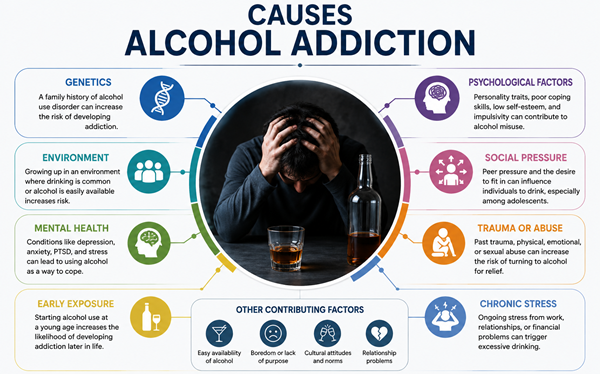
What Causes Alcohol Addiction?
There is no single cause of alcohol addiction. Several factors are involved in the development of AUD, including biological, psychological, social and environmental.
Risk factors can include:
- Family history of alcohol problems
- Genetic vulnerability
- Expose to alcohol early on in life
- Frequent heavy drinking
- Chronic stress
- Trauma
- Depression or anxiety
- Drinking environments that are high in alcohol use.
- Availability of alcohol
- Difficulty coping with emotions
- Certain life circumstances
Having a risk factor does not necessarily mean someone will develop AUD. Similarly, a person who does not have any apparent risk factors may have a drinking problem.
Once the person has figured out the reasons, they can do more than just stop drinking.
How Alcohol Addiction Progresses Over Time
Alcohol problems aren’t always steady and predictable. But over time, drinking may start to increase or become more difficult to control.
An individual might drink socially at first. As time goes on, drinking alcohol can become a daily habit or a method of coping. The amount or frequency of drinking may then increase, followed by cravings or tolerance, and/or problems in relationships or problems with stopping.
A few individuals might experience cycles of binge drinking and then less drinking. Some people may continue to drink for years without any apparent problem and then have a big issue.
Rather the key is that symptoms of alcohol addiction may become evident before the problem becomes serious enough to require alcohol treatment and rehabilitation. It is easier for a person to get help if he or she recognizes them early.
When Should You Seek Help for Alcohol Addiction?
Professional assistance is warranted if the problem with alcohol is hard to manage or alcohol is starting to cause problems in significant areas of life.
Think about contacting if you:
- Regularly drink more than planned
- Have tried unsuccessfully to stop or cut down
- Experience cravings
- Wants to drink alcohol to feel “normal” or “relaxed”
- Have withdrawal symptoms
- Experience blackouts
- Keep drinking when concerned about health.
- Experience issues relating to alcohol and relationships with people.Develop alcohol-related relationship issues with people.
- Be unable to attend work or duties due to consumption of alcohol
- Worry about drinking, but can’t stop it on their own
Family members can also get advice when they are worried about someone they know who drinks alcohol.
Don’t think that quitting alcohol drinks on your own is always safe, if you’ve been drinking heavily for a long time. In certain instances alcohol withdrawal may be a life-threatening condition. A professional evaluation can aid in deciding what is the best course of action.
How Is Alcohol Addiction Treated?
Alcoholism is curable and there are a number of methods for recovery. Treatment should be tailored to the individual’s symptoms, health, drinking pattern, goals and needs for support.
Professional care might involve:
Behavioral Therapy
A counseling program can help a person learn about their triggers, break their unhealthy drinking habits, create coping skills, and change their cravings and make new habits that are better for them. This can range from CBT approaches, motivational approaches, mindfulness-based approaches, and family/couples support.
Medication
There are a number of medications approved to treat AUD in the United States. NIAAA lists naltrexone, acamprosate, and disulfiram as drugs that are approved and can be used alone or in combination with behavioral treatment.
Outpatient Care
Outpatient services enable individuals to get professional help while maintaining most of their everyday routines. Inividuals may receive counseling, medication management, follow-up visits and planning of recovery.
Higher Levels of Care
Others require more formal assistance, especially if drinking is heavy or withdrawal is a risk. Only a qualified professional will be able to assess if outpatient, intensive outpatient, residential, or medically supervised care is suitable.
Ongoing Recovery Support
Recovery doesn’t have to start with the cessation of drinking. Maintaining progress can be maintained through continued counseling, healthy routines, peer support, family involvement and relapse-prevention planning.
NIAAA reminds all that there is not a universal treatment that is effective for everyone. Treatment for these can include evidence-based behavioral care, medications, and mutual-support options.
Take the First Step Toward Recovery
It’s difficult to be uncomfortable, but it can be the start of positive change if you recognize the signs of addiction to alcohol. You don’t have to wait until a crisis, serious illness or relationship breakup to seek assistance.
If you or someone you love is having trouble with alcohol use, talk to WellMind Therapy Center about your concerns and the support options available to you. This allows for a better understanding of what is occurring and what to do next, if necessary, if approached early.
Frequently Asked Questions
What are the four stages of alcoholism?
There is no official four-stage medical model used to diagnose alcohol use disorder. AUD is instead classified as mild, moderate, or severe based on symptoms. Drinking patterns can progress over time, but not everyone follows the same path.
What are the top 10 signs of an alcoholic?
Common warning signs include drinking more than intended, failed attempts to stop, cravings, tolerance, withdrawal, neglecting responsibilities, relationship problems, risky drinking, abandoning activities, and continuing to drink despite harm.
What are 5 warning signs of addiction?
Five common warning signs are strong cravings, inability to cut down, spending substantial time using or recovering from alcohol, continuing despite problems, and experiencing tolerance or withdrawal. Multiple signs may warrant a professional assessment.
What are the six signs of a functioning alcoholic?
The term “functioning alcoholic” is not a formal diagnosis. Possible warning signs include hiding drinking, drinking alone, relying on alcohol to cope, increased tolerance, difficulty cutting down, and continuing to drink despite consequences.
What are 5 warning signs of alcoholism?
Five warning signs include drinking more than planned, unsuccessful attempts to reduce drinking, strong cravings, continuing alcohol use despite personal problems, and experiencing withdrawal or needing more alcohol to feel the same effects.
Disclaimer
This article is intended for educational purposes only and should not replace professional medical or psychological advice, diagnosis, or care. Alcohol withdrawal can be dangerous, particularly after prolonged heavy drinking. Anyone considering stopping alcohol after heavy or prolonged use should speak with a qualified healthcare professional about the safest approach. If someone experiences a medical emergency, severe confusion, seizures, loss of consciousness, or other urgent symptoms, seek emergency medical care immediately.
References and Content Sources
- National Institute on Alcohol Abuse and Alcoholism (NIAAA): Understanding Alcohol Use Disorder and its symptoms, risk factors, and treatment options.
- NIAAA Alcohol Treatment Navigator: Information about AUD, treatment options, and recovery support.
- NIAAA: Treatment for Alcohol Problems: Finding and Getting Help.
- Substance Abuse and Mental Health Services Administration (SAMHSA): Treatment and recovery resources for substance use disorders.