

Psychological Evaluation: What You Need to Know
Key Takeaways
- Psychological assessment is a structured assessment which is evidence-based.
- It is helpful in the identification process of mental health problems, thoughts, and behavior patterns.
- It encompasses the interviews, normal testing and professional testing.
- The results inform the treatment intervention strategy, therapy and self-development.
- It is a serviceable help and not the opinion or examination which you thought you were going to get.
Learning about a Psychological Evaluation may also be a daunting experience, especially with your first evaluation ever. We believe that the minimal anxiety it can be, the better it will be at WellMind Therapy Center. The first time you will give someone a response and when you are the one who is being given a response, you may be better prepared and confident of what to expect.
Psychological assessment is an organizational process, which is strategized by experts and the outlook of appreciating how an individual thinks, feels and acts. Passing or failing is irrelevant so long as we educational learn something, sensitize issues and create a clear vision to improve mental health.
What is a Psychological Evaluation?
The psych assessment (psychological assessment) or psychiatric assessment is an omnipresent process, which is administered by the specialists in the mental health field (psychologists or psychiatrists) and which is used to identify emotional, behavioral or developmental aberrations. It implies interviews, tests, and questionnaires that fill in mental health status and the creation of a certain treatment plan.
Your need for a psychological assessment may have a number of causes:
- Evaluation of mental health problems.
- Awareness of learning or development problems.
- Assessing emotional/behavioral issues.
- Helping with legal, educational or work requirements.
- Personal treatment to be worked out.
Why Psychological Evaluations Matter
The psychological testing is important since it instills precise scientific diagnoses of mental,
cognitive and behavioral problems, culminating in an individual treatment plan and enhanced life performance. Careful inspections by qualified professionals assist in making unclear symptoms (e.g., ADHD, autism, depression) clear, concessions of the law or education, and self-understanding of the learning strengths and weaknesses, allowing people to familiarize themselves with the strengths and disadvantages of the learning process.
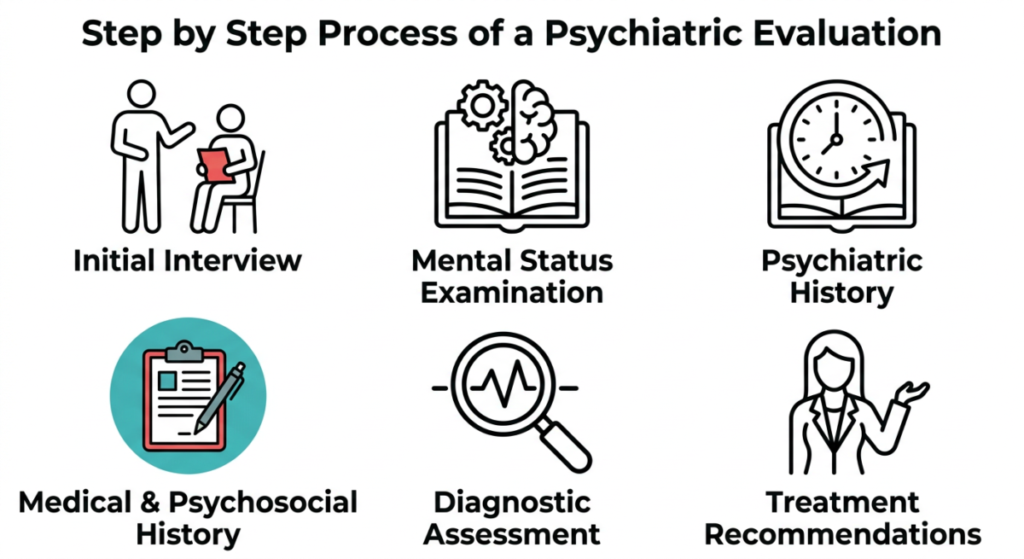
What Happens During the Process?
A mode of proceedings is usually determined by a psychological test. The two tests are both people-centered, but the structure of most of the tests is alike:
Initial Consultation
You will discuss your misfortunes, existence and dreams. This will help the clinician familiarize himself/herself with what the check-up is.
Clinical Interview
In an expanded conversation, behavioral, emotional and cognitive patterns are talked about.
Standardized Testing
There are questionnaires or exercises that evaluate in respect to the cognitive processes of the memory, personality, attention and mood that can be filled in.
Behavioral Observation
The psychologist follows your way of communicating, responding, involving, etc. in the process.
Data Analysis
Data gained is carefully researched and appraised with clinical skills.
Diagnosis (If Applicable)
Diagnosis might be made to provide a treatment on the condition, provided there are appropriate criteria.
Feedback Session
You are provided with a clearly defined description of results and tailored guidelines and instructions.
To have accuracy, relevance and meaningful results, each psychological test is person-specific.
Benefits of a Psychological Evaluation
Mental assessment is a step towards improved mental health. This is because it is commendable.
- Correct Diagnosis: In addition, it minimizes uncertainties and offers unambiguous solutions.
- Individualized Treatment: Offers a tailor-made treatment and intervention.
- Better Self-Awareness: May assist you in gaining a better insight into the way you think and act.
- Better Outcomes: The sooner it is detected, the faster the appropriate care will be provided.
- Other life advice: Provides you with advice about a school, career or law question.
Common Myths About Psychological Evaluations
Lots of individuals are afraid due to stereotypes. We will discuss some:
- Myth 1: The only serious mental illness.
- Reality: 15: The test may also be extended to most routine issues such as stress, attention and emotional issues; utilizing the psychological tests.
- Myth 2: You are able to lose the test.
- The truth: There is no pass and fail and it is nothing more than a test of knowledge and understanding.
- Myth 3: It is intrusive or frightening.
- Reality: It is a noble enough procedure which will remain confidential and will only aim to assist and not to condemn you.
How to Prepare for a Psychological Evaluation
Psychological assessment is simple to do, and a number of steps can be adhered to, resulting in psychological assessment becoming the most useful:
- Be forthright and transparent in responses.
- Have plenty of sleep prior to your session.
- Bring relevant medical/mental history.
- Raise worries or queries prior to the write-up.
- Ask questions to learn about something that he does not understand.
- Remember we are not perfect; we strive to do what is right.

When Should You Consider One?
You might be strongly suggested to take a psychological test when you might be experiencing one or more of the following:
- Persistent anxiety/depression.
- There may be a lack of concentration or memory.
- Noticed changes in behavior or moods.
- Problems with performance at school/work.
- Relationship difficulties
- Unexplained emotional distress
Early screening would not complicate the issues that may arise and render them hard to handle.
👉 Take the First Step Toward Clarity
Your psychological well-being is important. An expert mental analysis is capable of providing you with the vision, a feeling of strength and a notion of direction in which to take off; an attribute that WellMind Therapy Center provides.
Be attractive to us and most able and responsive listeners.
A psychological assessment is among the best methods of getting an understanding of your mental health. Those insights and call us at (682) 432-1571 today. WellMind Therapy Center can provide you with the impetus to take a step forward with confidence and purpose in what to do more or how to do it.
Disclaimer
This content is for informational purposes only and does not constitute medical or mental health advice. A psychological evaluation should be conducted by a licensed mental health professional. If you are experiencing severe distress or a mental health crisis, please seek immediate professional help.
Sources
- American Psychological Association – Psychological Testing and Assessment Guidelines
- National Institute of Mental Health – Mental Health Information and Resources
- Centers for Disease Control and Prevention – Mental Health Basics
FAQs
What is in a psychological evaluation?
A psychological evaluation includes a clinical interview, standardized tests, behavioral observations, and a review of personal history. These components work together to assess emotional, cognitive, and behavioral functioning accurately and provide meaningful insights.
How long does a full psych evaluation take?
A full psychological evaluation can take several hours to multiple sessions, depending on complexity. Some assessments are completed in one day, while others may span weeks to ensure accurate data collection and thorough analysis.
What are the 7 steps of psychological assessment?
The seven steps include referral, intake interview, test selection, test administration, scoring, interpretation, and feedback. Each step ensures the psychological evaluation is thorough, structured, and tailored to the individual’s needs.
What questions do they ask in a psychiatric evaluation?
Questions often focus on mood, behavior, thoughts, medical history, lifestyle, and personal experiences. The goal is to understand emotional patterns and identify concerns, not to judge or test your knowledge.
What would make you fail a psychological evaluation?
You cannot fail a psychological evaluation. It is not a test with right or wrong answers. The purpose is to understand your mental health and provide helpful recommendations, not to measure success or failure.
What are the 10 common warning signs of a mental health crisis?
Common warning signs include extreme mood swings, withdrawal, confusion, sleep changes, substance use, hopelessness, anger, hallucinations, risky behavior, and thoughts of self-harm. Recognizing these early can help you seek timely professional support.