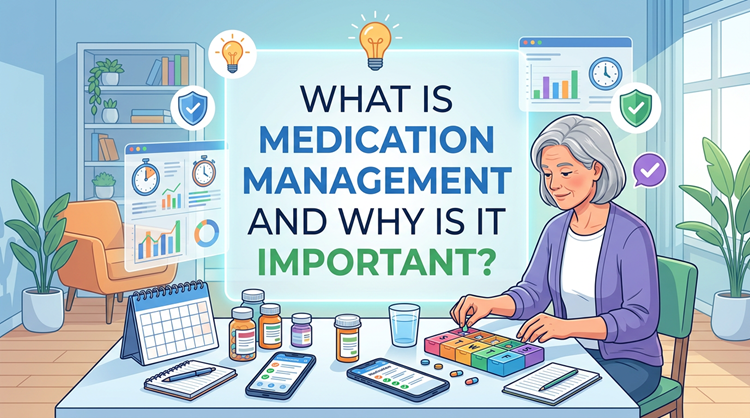
What is Medication Management and Why is it Important?
Key Takeaways:
- Medicine management is a process, an individual process.
- It involves monitoring, adjusting and optimizing drugs.
- It minimizes the risks such as side effects and interactions with drugs.
- It requires success and consistency, coupled with communication.
- Professional advice enhances safety and results.
What is Medication Management?
Medication management is a collaborative process between a patient and a healthcare professional in order to make it simpler. It includes the selection of the appropriate drugs, appropriate dosage and side effects and time alteration.
Medication management, according to the insights modified on the Cleveland Clinic, diminishes risks like incorrect dosing, drug interactions, and missed medications. It offers effectiveness and security of treatments.
This is especially relevant to the area of mental health care that often requires close consideration and individual attitudes to medications. Two individuals will not have the same responses to medication and hence, it is the reason why a continuous review must be conducted.
Why Medication Management Matters
The management of medication is fundamental to enhancing health outcomes. Even the best medicines will not yield results unless they are carefully monitored.
The reason it is important is as follows:
- Enhances the efficacy of treatment: Assures that the medications are effective.
- Minimizes side effects: Controls and prevents early adverse reactions.
- Eliminates drug mistakes: Precludes wrong dosages or combinations of drugs that could be detrimental.
- Improves compliance: Assists patients in remaining on schedule with their therapy.
- Promotes recovery in the long term: Fosters permanence and progressive development.
Medication management is a structured, clear and reassuring form of support to those with mental health issues in the face of what may otherwise seem to be an overwhelming process.
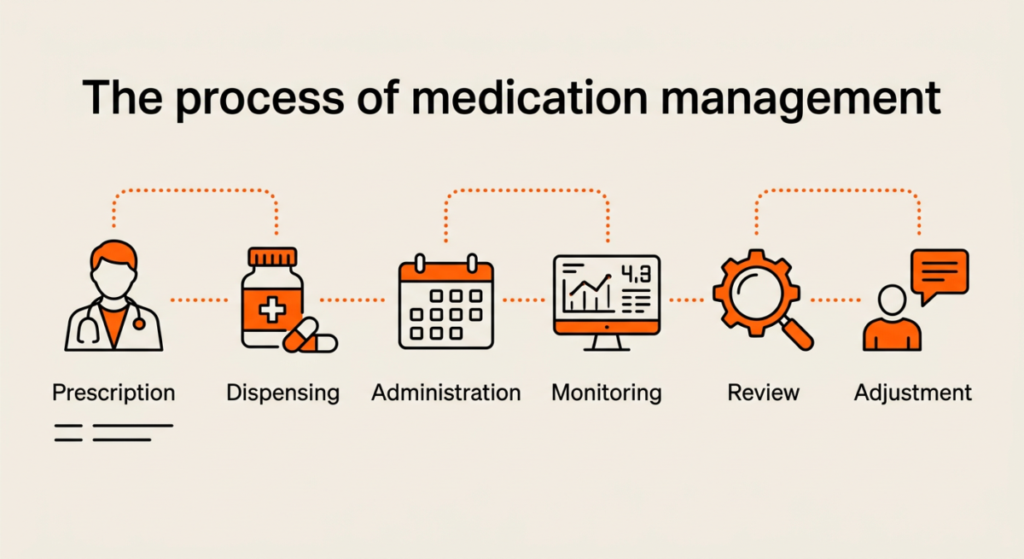
How Medication Management Works
Medication management is typically initiated by an in-depth evaluation. This includes looking into your history related to previous health conditions, symptoms you are experiencing now in presence, the lifestyle and drugs you have had.
Step 1: Assessment
A medical practitioner will check you and determine whether it is appropriate to take some medication or not.
Step 2: Prescription
The correct medicine and dosage is the one which was selected according to your needs.
Step 3: Monitoring
Regular follow-ups will check on progress, side effects and effectiveness.
Step 4: Adjustment
Drugs can be fine-tuned to produce more performance or reduce the unwanted side effects.
Step 5: Ongoing Support
Continued mentoring will ensure sustainability and viability.
This structured procedure will ensure that your treatment will be continuously evolving with regard to what you need, rather than being the same one.
Mental Health Medicine Management
Mental disorders are often associated with a subtle and patient approach towards treatment. Medication management is particularly crucial in treating types of anxiety, depression, bipolar disorder or ADHD.
What distinguishes mental health symptoms, as compared to a physical condition, is that the symptoms may vary depending on stress, the environment, and lifestyle. This thereby necessitates regular check-ins and prompt readjustments.
In WellMind Therapy Center, the providers collaborate with the patients to:
- Track symptom changes
- Gradually and safely adjust drugs.
- Minimize side effects
- Use drugs with therapy as needed.
The result of this integrated approach is more balanced, effective and sustainable results are achieved.
Common Challenges Without Medication Management
- Unless people manage to take medication properly, they can experience a number of difficulties:
Not taking all doses or has overdosed. - Reporting unwanted or untreated side effects (or aggravating ones).
- Using drugs which are incompatible.
- Bad or bad outcomes in the treatment process can lead to loss of faith in the treatment process.
- These problems may slow down healing and even exacerbate symptoms.
This is why it is not merely optional that it is a demand that medication should be managed in some structured way.
Signs You May Need Medication Management
The drug use can assist you if or when you:
- Especially if you feel your medication is not working.
- Has unwanted or long-lasting side effects.
- Have difficulty remembering doses
- Take a variety of drugs at the same time.
- Initiating or switching a mental health treatment.
By understanding these signs at the early stages, it is possible to avoid problems and make treatment a pleasure.
Benefits of Professional Medication Management
Collaboration with a trained provider has a number of benefits:
- Individualized attention: Customized therapy for your needs.
- Periodical testing: Timely warning of possible complications.
- Improved compliance: Coached support to be regular.
- Improved outcomes: Increased probability of relief of symptoms and stability in the long run.
- Such care will guarantee that you are not going through your treatment by yourself.

Take Control of Your Health Today
It is possible that when you are not sure that you are getting effective medication at the moment, perhaps it is time to seek professional help. WellMind Therapy Center has competent members who have been giving individualized medication management to ensure that you feel more in control of your health.
Call us at (682) 432-1571 today and initiate the process of a safer and more effective method of treatment. Professional hands need to be where your better health is concerned.
How to Get Started
Medication treatment can be successfully commenced easily:
- Make a first appointment.
- Give your medical and medication History.
- Talk about your symptoms and objectives.
- Abide by a personalized treatment regimen.
- Attend regular follow-ups
- Communication and regularity will be necessary.
Getting knowledge of medication management will help you realize that you are in control of your health. Medication management can be used as a successful tool of long-term health with the right instructions and regularity, along with support, to be applied to great benefit.
Disclaimer
This content is for informational and educational purposes only and does not constitute medical advice, diagnosis, or treatment. Always consult a qualified healthcare provider before starting, stopping, or modifying any medication or treatment plan.
Sources
- Cleveland Clinic – Medication Management Overview
- National Institute of Mental Health (NIMH) – Mental Health Medications
- Substance Abuse and Mental Health Services Administration (SAMHSA)
FAQs
Why is medication management so important?
Medication management ensures medications are safe, effective, and tailored to your needs. It reduces risks like side effects, incorrect dosing, and drug interactions while improving treatment outcomes and long-term health stability.
What is medication management in simple terms?
Medication management is the process of choosing the right medication, taking it correctly, and regularly reviewing it with a healthcare provider to ensure it works safely and effectively.
What are the 5 R’s of medication management?
The 5 R’s are right patient, right medication, right dose, right time, and right route. These principles help ensure medications are used safely and correctly in every situation.
What does it mean when a psychiatrist is offering only medication management?
It means the psychiatrist focuses on prescribing and monitoring medications rather than providing therapy. They assess effectiveness, adjust dosages, and manage side effects to support mental health treatment.
What is the primary goal of medication management?
The primary goal is to optimize treatment outcomes by ensuring medications are effective, safe, and aligned with the patient’s needs while minimizing risks and improving overall health.
What is the importance of management in simple words?
Management means organizing and overseeing something properly. In healthcare, it ensures treatments are used correctly, safely, and consistently to achieve the best possible results.