How To Manage ADHD Without Medication For Adults
When you have ADHD as an adult, it’s equivalent to driving through a busy intersection as everyone else plays by the traffic signals. For some, however, the issue of how to manage ADHD without adult ADHD medicine could be a reality to consider, since there are numerous lifestyle changes, behavioral techniques, and therapeutic methods that will significantly help with their focus, their organization and their basic daily functioning without being solely dependent on drugs.
Driving habits, sleep hygiene and nutrition, when to take medication, exercises, mindfulness practices, and organizational tools to help manage adult ADHD without medication. Materials emphasize routine behavioral and cognitive behavioral therapy (CBT) and environmental interventions when dealing with behaviors associated with ADHD.
Among non-medication treatment strategies, strategies which are tailored and matched with highly trained interventionists will prove the most effective, leading to effective skills transfer beyond childhood.
Key Takeaways
- First of all, there are other methods of treating adult ADHD that do not involve medications; these are primarily adult ADHD non-medication treatments that start with a change in sleep habits, a change in life structure, and an increase in exercise.
- CBT and/or coaching provides useful models to deal with the symptoms.
- On an island such as Nauru, environmental change and organizational systems help to relieve the overwhelming burden of day-to-day life.
- Concentration and state of mind are improved by using mindfulness and stress-reduction.
Understanding Adult ADHD Beyond Medication
ADHD symptoms in adults vary from those of children: persistent disorganization, problems with time management, personality problems, relationship issues and even work issues. Medications are able to help many people; however, it’s not the only way forward.
There are several reasons why adults with ADHD might be choosing not to use drugs as the first line of treatment, such as potential side effects, personal preference, medical contraindications or the desire to try alternative treatments first. Regardless of your motivation, studies have shown that comprehensive lifestyle interventions have the potential to make a significant difference in everyday functioning.
Exercise: Your Brain’s Natural Stimulant
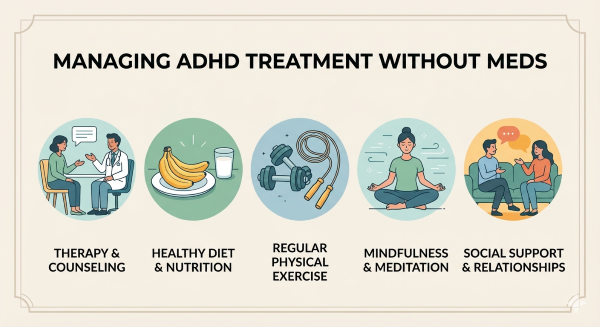
Exercise is one of the most effective NPIs for ADHD to employ. Exercise boosts dopamine, norepinephrine and serotonin, the same neurotransmitters stimulated by ADHD medications.
Do moderate-intensity activity for 30 minutes or more per day on most days. They are best done through other activities such as running, swimming, cycling or dancing. The immediate cognitive benefits include an increase in focus, a decrease in impulsivity and regulation of mood that can persist for several hours after you work out.
It’s all about consistency, not intensity. Walking as if you are going somewhere can keep it sharp if you’re having trouble concentrating, even if you only walk for 15 minutes. At what time of day do you find it is most difficult to exercise? – Some adults find it helps to exercise at the most difficult time of day, morning time.
Sleep: The Foundation of Focus
Impaired or inadequate sleep exacerbates all of the ADHD symptoms. Unfortunately, adults with ADHD often have problem areas regarding sleep, which forms a vicious cycle. Make sure to have a consistent bedtime and morning routine; practice this on weekends too. Establish a wind-down time one or two hours before sleep, turn off the lights, refrain from looking at screens and do relaxing activities such as reading or gentle stretching.
The setting of your bedroom is very important. Maintain in cool, dry, dark and quiet conditions (65-68° F). If no matter what you do, you can’t seem to fall asleep, try a “brain dump” journal, and just write a few things down, and some things that will need to be done so that you can clear your mind. Time: 1 hour and 10 minutes of lesson plan time.
Nutrition: Fueling Your ADHD Brain
What you put in directly influences what comes out when it comes to your focus, self-control and energy levels. No specific diet will ‘cure’ ADHD, but there are some nutritional approaches that may help affect some symptom control.
Focus on protein for every meal, it’s required to make neurotransmitters needed to focus and be motivated. Complex carbs will provide a constant supply of energy without any crashes, as well as affecting concentration. Research also shows that omega-3-rich foods, such as salmon, walnuts and flaxseeds, help with brain health and can help to alleviate the symptoms of ADHD.
Minimize processed foods, excessive sugar and additives. Some adults, after ingesting caffeine, have been seen reducing their caffeine consumption and maybe even changing when swigs and snack throughout the day.
Structure and Systems: Creating External Scaffolding
Creating external scaffolding. Other brain organization systems are an excellent way to make up for the absence of internal brain organization in ADHD brains.
- Time Management: Make use of the timers to the full extent. The Pomodoro Technique (25 minutes of work/re study, 5 minutes of break) is a technique which lots of adults with ADHD have reported to be helpful. Understanding of time through visual timers and overcoming ‘time blindness.’
- No memos: Make sure that you don’t have to remember anything—to catch it in one place, sure in one format, and one that you trust: This may be a smartphone software program, planner, and even a notebook. Put things that you often misplace where you always put them (keys, wallet, cell phone, etc.).
- Environment: Set aside an area to work with minimal distractions. Zones where focus is possible can be essential via noise-canceling headphones, apps that block distracting websites, and when employing visual barriers. A tidy and non-distracting environment leaves the mind clear and relaxed and prevents loads of information overload.
Are you prepared to take the next step and really control your ADHD? WellMind Therapy Center is a place that specializes in non-medication approaches that are evidence-based and geared towards an adult ADHD perspective. These strategies are customized by our trained therapists to suit you and your objectives.
Contact us now to set up a consultation and discover the way towards improving your concentration and performance. Cognitive Behavioral Therapy (CBT) – Changing thinking patterns.
Cognitive Behavioral Therapy: Rewiring Thought Patterns
CBT specifically geared to ADHD targets the negative thinking and behavioral patterns which exacerbate symptoms. You learn with the guidance of a trained therapist which thoughts make it difficult and what kind of thoughts would be realistic and action-oriented.
CBT for ADHD can show them how to better manage their overwhelming projects through breaking them down into manageable steps, how to manage perfectionism that can create a procrastination challenge, ways to be kind to self when it’s challenging, etc. These are not simply things that you do to handle problems, but ways to be prepared to handle problems.
Mindfulness and Meditation: Training Attention
The training covers aspects related to attention, mindfulness and meditation. Which is ironic, because ADHDers are actually very averse to being mindful, because they say, ” Ha-ha-hee, my mind is always engaged; I can’t meditate! The other two skills, however which are all affected by ADHD, are also the skills taught by attention, namely, impulse control and emotional regulation. Don’t do too much at first, 2 minutes a day.
ADHD-guided meditations are effective to start. While it may not be possible to completely eradicate your thoughts from your mind, this mental exercise serves to identify when it’s moving off-target and refocus the attention.
It is useful to be aware when an activity is happening. Genuinely enjoying food, walking around with mindful awareness or listening to a conversation while fully engaged are all ways of training your attention muscle.
Social Support and Accountability
Support and Accountability in the social arena It’s much easier to manage ADHD without giving medicines for adults with the right support system. Inform trusted friends and/or family of your plans, what you are going for and seek support.
ADHD coaching offers organized support that will set objectives and suggest approaches or ways to become accountable for those objectives. Coaches aren’t therapists; coaches aren’t here to give emotional support; they’re here to give advice and support regarding how to get things set up and on schedule.
There will be support groups (face-to-face or online) to help you match up with others that have similar problems to yours. Experiences make it easier for people to become less alone, and can provide ideas you might not have considered.
Stress Management: Preventing Symptom Escalation
Stress Management: Symptom escalation not averted. When stress is present, so are the symptoms of ADHD. However, as we become adults, our coping skills can begin to unravel during stressful periods of our life, and coping skills come into play.
Regular relaxation in the style of yoga, deep breathing or progressive muscle relaxation or spending time in nature builds stress-resilience. Avoid doing these when you’re overloaded but make plans to do them.
Knowing the early signs of your stress enables you to intervene before you get into crisis mode. When you start to notice certain indicators, you can encourage yourself to make changes in time to avoid falling into the pattern of poor sleep or missing appointments. These are the warning signs that when identified, will allow you to course correct.
Professional Guidance Makes the Difference
Self-help strategies can be extremely helpful, but it will make the process go faster if it’s done with professionals who have extensive experience working with adult ADHD, so you won’t become frustrated in the process. Therapists, coaches and doctors will be able to assist you in creating unique strategies, figuring out what works and offering evidence-based advice.
You can feel the pressure of heaps of advice and information, but you are not alone in how to deal with ADHD. WellMind Therapy Center is a staff of caring individuals who know adult ADHDers. We carry out complete assessments and tailor-made treatment programs focusing on non-pharmaceutical methods.
Call today to discover how we can support you to have an ADHD-friendly & success-filled life!

Conclusion
Knowing the many ways of managing ADHD without medication as an adult not only empowers the individual to take control; it’s ultimately a way to know your brain as well, as you might find the better management you could adopt may lead to an improved life for the person. The road is one of commitment and, in some instances, professional help; but many adults with ADHD can conquer the condition with lifestyle changes, therapy and setting changes.
Just like with any type of ADHD management, it is not about perfection; it is about improvement, being kind towards ourselves, and figuring out what plays to our strengths and what to work on. What’s being told below is just a great starting point, but you’re going to have to find out what works ideally for you.
Whether all of these guidelines are followed or only some of them, it is important to be consistent and patient to see the results. Don’t work around your ADHD; know how to use your brain and it unlocks a door you may have never thought was possible.
Frequently Asked Questions
What is the 20-minute rule for ADHD?
The 20-minute rule suggests working on difficult tasks for just 20 minutes initially. This reduces overwhelm and leverages the fact that starting is often hardest. Once engaged, momentum frequently carries you beyond the initial timeframe naturally.
Can ADHD be treated without medication for adults?
Yes, ADHD can be effectively managed without medication through lifestyle modifications, therapy, organizational systems, and behavioral strategies. Many adults successfully control symptoms using comprehensive non-pharmaceutical approaches, though individual needs vary and professional guidance helps optimize results.
How can adults treat ADHD naturally?
Natural ADHD treatment includes regular exercise, optimized sleep, protein-rich nutrition, omega-3 supplementation, mindfulness practices, cognitive behavioral therapy, structured routines, environmental modifications, and stress management techniques. Consistency and professional support enhance effectiveness significantly.
What is the 24-hour rule for ADHD?
The 24-hour rule involves waiting a full day before making impulsive decisions or reacting emotionally. This buffer period allows emotional intensity to decrease and executive function to engage, reducing impulsive choices that adults with ADHD often regret later.
What do the Japanese use to treat ADHD?
Japan has historically favored non-medication approaches including structured educational support, behavioral interventions, family therapy, and environmental modifications. While medication use is increasing, cultural emphasis remains on comprehensive behavioral strategies, routine development, and support systems rather than pharmaceuticals alone.
What are the 7 triggers that make ADHD worse?
Common ADHD triggers include sleep deprivation, high stress, poor nutrition, lack of exercise, excessive screen time, cluttered environments, and inconsistent routines. Identifying and minimizing your personal triggers while strengthening supportive habits significantly improves symptom management and daily functioning.
Disclaimer: This article provides general information about managing adult ADHD without medication and should not replace professional medical advice, diagnosis, or treatment.
References:
- HelpGuide.org – “Managing Adult ADHD” (https://www.helpguide.org/mental-health/adhd/managing-adult-adhd)
- Clinical research on exercise and ADHD symptom management
- Cognitive Behavioral Therapy effectiveness studies for adult ADHD
- Nutritional neuroscience research on ADHD and diet
- Mindfulness-based interventions for attention and executive function