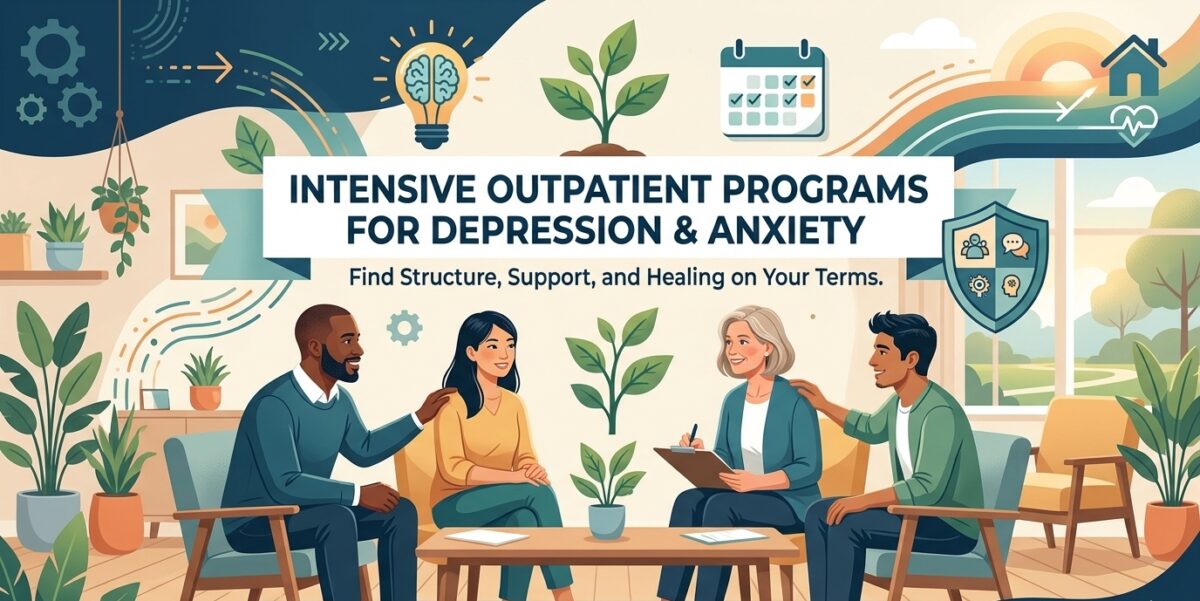
Intensive Outpatient Programs for Depression and Anxiety: What You Need to Know for Recovery
Intensive outpatient programs (IOP) for depression and anxiety provide a higher level of support than weekly therapy without requiring a residential stay. Clients attend several hours of therapy multiple times a week while continuing work, school, and family life.
These programs combine group therapy, individual counseling, and evidence-based approaches like cognitive behavioral therapy (CBT) to build coping skills and manage symptoms. They are ideal for those transitioning from inpatient care or needing structured support without round-the-clock medical supervision. Not sure which level suits you? Exploring PHP vs IOP can help clarify the difference.
IOPs sit between standard outpatient and residential care, offering structured, consistent treatment without requiring you to leave your job, family, or community. Many people searching for mental health treatment near me find that IOPs offer the right balance of flexibility and structure.
Key Takeaways
- Intensive outpatient programs offer a structured therapy time of 9+ hours per week, with the outpatient staying in his or her home and having the same daily routines.
- During depression treatment, treatment for depression and anxiety in an IOP will involve individual counseling, group counseling and proven therapies (CBT, DBT, etc.).
- IOPs will be a step up from traditional outpatient therapy or a step down from an inpatient program, depending on what phase of recovery you are in.
- Most insurance plans will pay for intensive outpatient programs (IOP), although it will depend on the insurance plan.
- Typical weeks to months in length, IOP treatment hours will be reduced the further you progress.
- Inpatient vs. outpatient care alone is not a determinant for success; instead, it’s commitment and the therapeutic fit.
What’s an Intensive Outpatient Program?
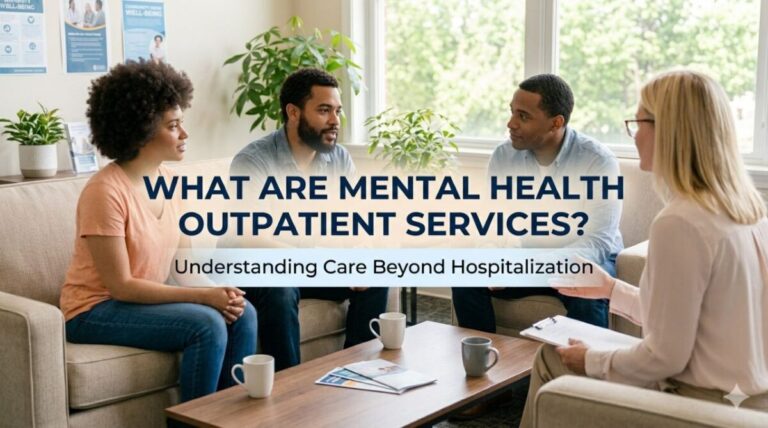
An intensive outpatient program (IOP) offers structured, comprehensive mental health care without requiring a residential stay. You attend therapy sessions, consult clinicians, and join groups for several hours a day, then return home to apply what you have learned in real life.
IOPs typically run 9 or more hours per week across 3 to 5 days, with morning and evening options to fit work or school schedules. It is one of the many services we offer to meet you where you are, without asking you to put your life on hold.
Why Intensive Outpatient Programs Help With Depression and Anxiety
Depression and anxiety never go away with a prescription or once-a-week therapy session. They demand a hard effort; they demand devotion to that effort and that is exactly what these programs provide.
You are treated for your particular conditions, as follows:
- Structured Consistency: Regular contact with your treatment team several times a week creates routine, breaking cycles of negative thinking and avoidance behavior.
- Peer Support: Group therapy reduces isolation and helps you recognize that thoughts driven by anxiety or depression are not facts. Learn more about our approach and why community matters in recovery
- Real-Time Skill Building: You learn coping tools in sessions and practise them at home immediately, creating a feedback loop that accelerates recovery
- Flexibility: You continue work, school, and family life during treatment, applying new skills in the real situations that trigger your symptoms
How Intensive Outpatient Programs are Structured
As you enter a program of intensive outpatient treatment, you may expect to receive treatment sessions for 9 to 20+ hours each week, depending on your needs and the program that you may enter. The typical structure is as follows:
The Daily Schedule: The majority of intensive outpatient programs will function during the day (normally 9 a.m. to 5 p.m.) and offer flexible timing. Some provide after-work or weekend classes exclusively for those that work standard positions. For those balancing work and recovery, understanding coping with workplace stress can be invaluable.
An average week can be:
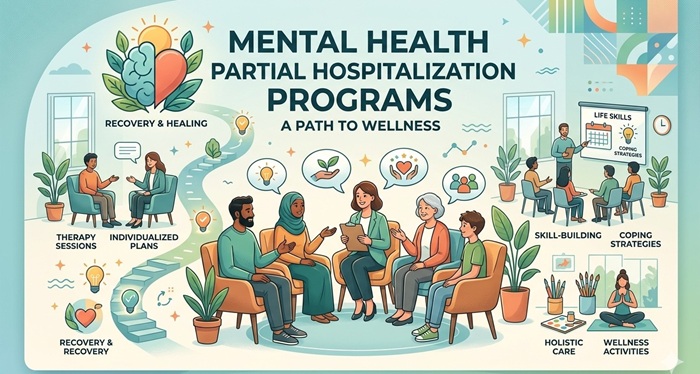
- One-on-one therapy sessions with a therapist.
- Group therapy sessions
- Psychoeducational classes (education on conditions and what triggers a problem or how to manage it)
- Case management (help with insurance, appointments and logistics)
- In some instances, art therapy, Mindfulness training or other additional treatments are used.
Program Duration: IOP programs are not intended to be long-term. These are on your path to recovery. Most people spend anywhere from 4 weeks to 6 months in an IOP, but this depends on the individual and their current level of progress. With progress, the hours tend to taper off and usually move to standard outpatient therapy. If you’re wondering how long intensive outpatient programs are, a complete guide is available.
The Transition Model: Lots of individuals move into an intensive outpatient program after they have stepped down from an inpatient or residential treatment program. Others start off using an IOP, since they might need more assistance than conventional weekly therapy, but not to the level of hospitalization. Either way, it’s about making progress; the bottom line is becoming more independent but supported.
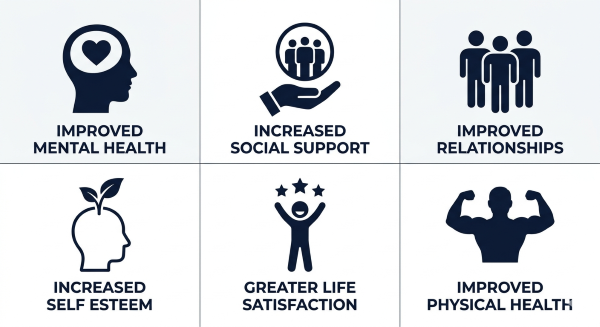
Evidence-Based Treatments Within Your Program
The best intensive outpatient rehabilitation centers provide more than just therapy in general. They apply evidence-based treatments that are known to be effective in treating both depression and anxiety.
Cognitive Behavioral Therapy (CBT): This is the best therapy around for depression and anxiety. CBT enables you to recognize the thought trend behind your symptoms and, little by little, alter those that trigger them. Some of the things you learn are that anxiety is not something that is an indicator of danger, but merely your nervous system overestimating threat. Depression is not reality; it’s a haze through which reality is viewed. CBT provides ways for you to confront these distortions.
Dialectical Behavior Therapy (DBT): This therapy is especially useful when anxiety accompanies intense emotions and/or an urge to engage in self-destructive behaviors; learning mindfulness, distress tolerance, emotion regulation and interpersonal skills has an impact on reducing those feelings. In other words, to be where you are but to change.
Motivational Interviewing: Postulates ambivalence as a normal and natural process of change. A good therapist won’t push you towards wanting recovery but will help you discover why you need it, which is what propels you.
Family Therapy: Depression/anxiety impacts relationships. Family therapy for mental health recovery will assist family members in comprehending your current state, enhance communication, and create an external support network that doesn’t just continue with your treatment program.
How to Know If an Intensive Outpatient Program is Right for You
Consider an IOP if:
- There’s a need for more than one instance of care from time to time, yet not continual care.
- You have been moving out of an inpatient or residential facility
- You are suffering from depression or anxiety that interferes with your functioning
- You can set an agenda to go to several sessions a week
- You want to keep your work, school or family obligations
- You’re motivated to actively participate in your recovery
In an IOP treatment, the following may not be a good match:
- Urgent situation that requires hospitalization
- Does not have stable housing.
- You’re using drugs or alcohol that aren’t in your care
- No hours of practice every week can be guaranteed
- You want a more relaxed and leisurely way to leave
The truth is that everyone’s journey towards healing is unique. Some people require first-time residential treatment. Others will benefit from beginning with an intensive outpatient program. What truly counts is a sincere evaluation of where you are and the real needs that you have. Taking a self-assessment can be a helpful first step in understanding your needs.
Getting Started With an Intensive Outpatient Program

- Step 1: Assessment – A clinician assesses your symptoms, history, and need to help you determine whether an IOP is right for you and the intensity level that is right for you. A comprehensive psychological testing guide can also provide clarity.
- Step 2: Insurance Verification – Major insurance plans most likely cover IOT. Staff confirms your benefits; you know the cost upfront. Many programs have fees that can be determined by a sliding scale or payment plans if there is no insurance.
- Step 3: Orientation – Meet program staff and treatment team, learn about program logistics, and get oriented to group and individual therapy.
- Step 4: Active Treatment – When you start going to sessions, you start meeting with your therapist and peer group, and practicing new skills. You can learn more about the client journey to know what to expect.
- Step 5: Transition Planning – Your team moves you out of inpatient care by assisting you in planning your next step, such as regular outpatient care, support groups or another type of care.
Your Recovery Starts Here
Depression and anxiety are a reality. They’re serious. However, they can also be treated. Rather than hiding out, intensive outpatient programs offer individuals the chance to learn to deal with reality with better weapons, in a proper setting and with real support and hundreds of thousands have found both health and a better way to live. Whether you’re near Fort Worth or seeking mental health treatment near Dallas-Fort Worth, help is available.
That isn’t the question now; it is about whether or not you can recover. What is the amount of assistance you require at present to guarantee that recovery happens and is lasting? Speak with someone about your thoughts regarding an IOP. Talk to someone. Get an assessment. You should have that discussion. Explore our resources to learn more.
We’re here to assist you throughout your recovery journey at WellMind Therapy Center. Contact us today to discover the numerous advantages of intensive outpatient treatment for depression and anxiety. Our team is ready to support you.
Call (682) 432-1571 or visit our website to schedule a consultation with one of our compassionate treatment specialists.
Disclaimer
This article is intended for educational and informational purposes only and should not be considered medical, psychiatric, psychological, or therapeutic advice. Reading this content does not establish a therapist-client, counselor-client, or physician-patient relationship.
Frequently Asked Questions
Does intensive outpatient treatment work for depression?
Yes. Research supports IOPs as effective for depression treatment, particularly when they combine individual therapy, group support, and evidence-based approaches like CBT. Success depends on your engagement and the program’s quality.
When should you be institutionalized for depression?
Hospitalization becomes necessary when you’re experiencing suicidal ideation with intent, severe functional impairment, inability to care for yourself, or when outpatient treatment hasn’t been sufficient. Not everyone needs inpatient care.
What is intensive care for depression?
Intensive care for depression refers to any treatment providing high-frequency, structured support—whether that’s an IOP, partial hospitalization program, or inpatient residential treatment. IOPs represent one form of intensive care.
Does inpatient get people out of depression faster than outpatient?
Not necessarily. Some people recover faster with inpatient care; others do equally well or better with intensive outpatient programs. The best treatment depends on individual needs, severity, and your capacity to maintain stability at home.
What is the 3-month rule in mental health?
This refers to the general guideline that most mental health treatment requires at least 3 months before significant improvement becomes apparent. Recovery isn’t immediate—consistency matters.
What’s the worst month for depression?
Seasonal patterns vary by person, but research suggests winter months see increased depression rates (seasonal affective disorder). However, depression can worsen at any time; seasonal patterns aren’t universal.
Will my insurance cover IOP?
Most major insurance plans do cover intensive outpatient programs, though coverage varies by plan, deductible, and whether the program is in-network. Always verify benefits before starting treatment.
What is outpatient care for anxiety?
Outpatient care for anxiety includes therapy sessions where you attend appointments but live at home. “Traditional outpatient” means weekly or bi-weekly sessions; “intensive outpatient” means multiple sessions per week for several hours daily.
How many hours per day is IOP?
Most intensive outpatient programs require 9 to 20 hours per week, typically spread across 3 to 5 days. This usually translates to 2-4 hours per day on program days, though some programs offer full days and others part-time schedules.
References
- American Psychiatric Association. (2022). Diagnostic and Statistical Manual of Mental Disorders (DSM-5-TR). American Psychiatric Publishing.
- National Institute of Mental Health (NIMH). Depression. Retrieved from https://www.nimh.nih.gov/health/topics/depression
- National Institute of Mental Health (NIMH). Anxiety Disorders. Retrieved from https://www.nimh.nih.gov/health/topics/anxiety-disorders
- Substance Abuse and Mental Health Services Administration (SAMHSA). National Guidelines for Behavioral Health Crisis Care. Retrieved from https://www.samhsa.gov
- American Psychological Association (APA). Clinical Practice Guideline for the Treatment of Depression Across Three Age Cohorts. Retrieved from https://www.apa.org