
Trauma-Focused Therapy Techniques: Effective Approaches for Healing and Recovery
Key Takeaways
- Trauma-Focused Therapy (TFT) is a scientifically proven therapy that helps people to heal and move forward with their lives after trauma.
- Some effective treatments include Trauma-Focused Cognitive Behavioral Therapy (TF-CBT), EMDR, Cognitive Processing Therapy (CPT), Prolonged Exposure (PE), and Somatic approaches.
- Treatment is hinged on the patient’s experiences, aims, age and symptoms. Many children, teens and adults who have experienced trauma can benefit from a trauma-focused therapy.
- Everyone recovers differently, and the appropriate type of therapy can help ease symptoms and improve the quality of life.
Trauma-Focused Therapy is an approach that is one of the most effective ways to aid individuals in healing from trauma. Trauma may be from events that occurred in childhood, abuse, accidents, violence, loss, natural disasters or military service, and may affect emotional, relational, physical and functional health. Fortunately, there are evidence-based Trauma-Focused Therapy strategies that can assist individuals in processing these experiences in a secure and healthy manner, while also fostering more healthy coping skills. Trauma-Focused Therapy does not just talk about what has happened, but it assists individuals to comprehend the impacts of trauma on their brain, body, feelings and conduct. With caring and structured care, individuals can be able to reduce their distress, gain in confidence and move towards healing. We are a therapy center in WellMind and we believe that everybody’s healing journey is unique. Our therapists use evidence-based practices and personalized techniques to help promote long-term emotional wellness in a safe and supportive environment.
What is Trauma-Focused Therapy?
TFTP is a specialized psychotherapy that can be adapted to address the specific needs of trauma survivors to process the trauma and reduce emotional distress and functioning.
Trauma-Focused Therapy is different from other types of counseling because it directly targets trauma’s impact and assists people in:
- Understand trauma responses
- Safely deal with painful memories (2:00)
- Minimize fear and worry,
- Improve emotional regulation
- Develop healthy coping mechanisms.Establish healthy coping skills.
- Strengthen relationships
- Establish trust and fortify.Re-establish faith and resilience. .
Trauma-informed practices have been found consistently to reduce the intensity of the symptoms of post-traumatic stress, depression, anxiety and emotional dysregulation.
Trauma may be caused by:
- Abuse/neglect during childhood
- Rape or sexual abuse: Domestic violence
- Military combat
- Serious accidents
- Medical trauma
- Natural disasters
- Unanticipated death of a loved one.
- Community violence
Trauma is uniquely experienced by each person and that’s why every person needs an individualized plan of treatment.
How Trauma-Focused Therapy Works
The brain’s ability to store memories, emotions, and perceived threats are altered by trauma. A great many people feel unsafe even after the trauma has ended.
Trauma-Focused Therapy aims to facilitate individuals to gradually help them:
Build Safety
Establishing emotional safety and trust with the therapist and client is the first step to therapy.
Learn Coping Skills
Clients will be taught how to develop practical solutions for:
- Managing anxiety
- Reducing panic
- Improving sleep
- Handling emotional triggers
- Managing difficult thoughts
Process Trauma
When stability is restored, individuals begin to begin to process the traumatic memories in a safe manner, instead of avoiding them.
Create New Meaning
People gain more positive perceptions of their experiences, and thus less shame, guilt and self-blame.
Strengthen Daily Life
The last stage focuses on helping to maintain progress, improve relationships and resilience for the future.
Healing doesn’t involve forgetting, it’s about lessening the emotional weight of what has happened.
Ready to Begin Your Healing Journey?
You don’t have to be a victim of trauma. WellMind Therapy Center‘s compassionate therapists deliver personalized Trauma-Focused Therapy based on evidence-based techniques that are unique to your specific needs.
Call WellMind Therapy Center now to get a confidential consultation and start on your journey to emotional healing.
Who Can Benefit from Trauma-Focused Therapy?
Trauma-Focused Therapy can be of assistance to individuals of almost any age that have suffered an overwhelming or distressing event.
It might assist people who are suffering from:
- Post-traumatic stress symptoms
- Anxiety
- Depression
- Panic attacks
- Emotional numbness
- Flashbacks
- Nightmares
- Difficulty trusting others
- Relationship challenges
- Childhood trauma
- Complex trauma
- Trauma related loss and bereavement
Children
Trauma may manifest in children’s behaviors instead of in their words. Specialized Trauma-Focused Therapy approaches are age-appropriate so that children can respond to the difficult experiences.
Teenagers
Educational structured trauma interventions which are encouraging emotional regulation are beneficial to a child’s development when experiencing bullying, violence, abuse and/or family disruption during their adolescent years.
Adults
Treatment can be started many years after trauma. Therapy can help calm down ongoing emotional suffering and enhance functioning in the workplace, family and society.
Families
A trauma can have a significant impact on a whole family. Family involvement could improve effective communication, recovery, and outcomes.
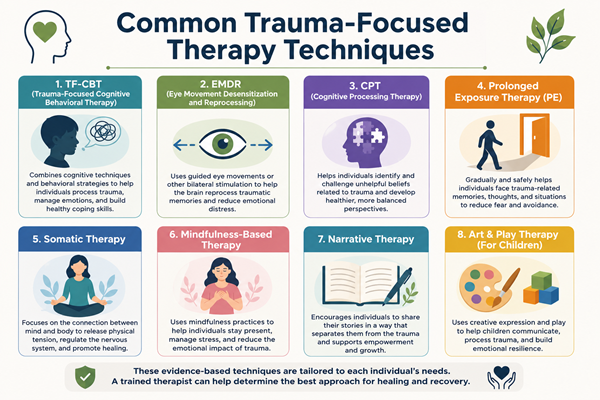
Common Trauma-Focused Therapy Techniques
A few evidence-based Trauma-Focused Therapy practices are well known and are effective.
Trauma-Focused Cognitive Behavioral Therapy (TF-CBT)
TF-CBT is a very well-studied treatment for children and teens and can help many adults, as well.
It combines:
- Cognitive restructuring
- Relaxation skills
- Emotional regulation
- Gradual trauma processing
- Parents/carers participation (where appropriate)
This enables people to shift their negative thinking to positive thinking.
Eye Movement Desensitization and Reprocessing (EMDR)
In EMDR, bilateral stimulation is provided (usually in the form of eye movements) to facilitate the brain’s processing and resolution of the traumatic memory.
Instead of retelling traumatic events over and over again, EMDR is a therapy that assists in decreasing the emotional tone of distressing memories.
Numerous people find that their improvements are in the following areas:
- Flashbacks
- Anxiety
- Nightmares
- Emotional distress
Cognitive Processing Therapy (CPT)
CPT targets trauma-induced beliefs in order to identify and modify them.
Individuals start to be able to challenge thinking, such as:
- “It was my fault.”
- “I am never safe.”
- I can’t depend on anybody.
These beliefs can contribute to emotional suffering, which can be relieved through a balanced way of thinking.
Prolonged Exposure Therapy (PE)
Prolonged Exposure Therapy is a gradual process that takes the individual through trauma-related memories and experiences in a safe environment.
Trauma symptoms can be maintained through avoidance. Exposure over time will decrease fear.
Somatic Therapy
The mind and the body are impacted by trauma.
Somatic work can assist individuals to:
- Notice physical sensations
- Reduce muscle tension
- Tune up nervous system regulation.Improve regulation of the nervous system.
- Develop body awareness
Often these are combined with the standard talking therapies.
Mindfulness-Based Trauma Therapy
Mindfulness helps individuals to remain in the here and now rather than being consumed by painful memories.
Common practices include:
- Deep breathing
- Grounding exercises
- Body scans
- Meditation
- Guided relaxation
These skills can help you relax and regulate your emotions.
Narrative Therapy
Narrative Therapy can be used to bring out the stories in people’s lives that can heal them rather than shame them.
This is where people start to realize themselves that they are not the trauma, they have been impacted by trauma.
What to Expect During Trauma-Focused Therapy
A major concern is that many people are afraid to start therapy since they do not want to experience reliving of painful memories.
Actually, the treatment process goes at a pace that is comfortable.
During the first sessions your therapist will:
- Know what’s going on in your past.Know your past.
- Discuss current symptoms
- Identify treatment goals
- Build trust
- Teach coping strategies
As therapy is worked on, sessions may feature:
- Talking through experiences
- Uses emotional management skills
- Practicing relaxation exercises
- Processing memories gradually
- Tracking progress
The duration of most sessions is approximately 45-60 minutes.
Number of sessions will depend on the individual’s needs, trauma history and treatment goals.
Recovery is seldom straight and narrow. This is a normal part of recovery, and there will be weeks that are easier than others.
How to Choose the Right Trauma-Focused Therapy Approach
To pick the best Trauma-Focused Therapy, take into account:
Your Type of Trauma
Various therapies can be suggested for:
- Childhood trauma
- Military trauma
- Medical trauma
- Abuse
- Accidents
- Grief
Your Age
There are a variety of strategies that can be used for children, teens and adults.
Your Comfort Level
There are other people who might prefer a different type of therapy, such as structured therapy, or body therapy, or mindfulness.
Your Goals
Discuss the thing you’d like to change, such as reduce anxiety, enhance relationships, process memories, or boost confidence.
Therapist Experience
Look for trauma-informed therapists that create a collaborative and supportive environment.
WellMind Therapy Center therapists will assess each person’s needs to decide on the most suitable kind of Trauma-Focused Therapy for them.
Why Choose WellMind Therapy Center?
Compassionate care is the first step to healing.
At WellMind Therapy Center, we provide:
- Personalized treatment plans
- Evidence-based Trauma-Focused Therapy
- Experienced, compassionate therapists
- Services for children, teens and adults.
- One to One support, Assisted Family support.
- Safe, welcoming environment
- For Long-Term care, Long-Term Health outcomes.
We work tirelessly to bring back confidence, resiliency and hope to all of our clients.
Take the First Step Toward Healing
You can be affected by trauma in the past, but not the future.
If you or someone you know is experiencing problems following a trauma, the WellMind Therapy Center team is here to assist you. Our Private Trauma-Focused Therapy services are tailored to meet your individual needs and allow you to heal your trauma at your own pace, in a supportive and confidential environment.
Take the step to make the appointment today with WellMind Therapy Center and make a better brighter future for yourself.
Frequently Asked Questions
What is trauma-focused therapy?
Trauma focused therapy is a type of psychotherapy designed to address trauma by using evidence-based techniques, which can help people reduce the emotional distress that can result from traumatic experiences, develop healthy coping skills, and enhance overall well-being.
What are the most effective trauma-focused therapy techniques?
Examples of evidence-based therapies are Trauma-Focused Cognitive Behavioral Therapy (TF-CBT), EMDR, Cognitive Processing Therapy (CPT), Prolonged Exposure Therapy (PE), mindfulness-based therapies and somatic therapies. The choice is determined based on the individual symptoms, objective and their personal history.
How does trauma-focused cognitive behavioral therapy (TF-CBT) work?
TF-CBT is a therapy designed to include cognitive restructuring, emotional regulation, relaxation strategies, trauma processing, as well as coping skills to help people work through traumatic experiences safely. Caregivers may be involved for children to receive more support and reinforce healthy coping mechanisms.
What is the difference between EMDR and CBT for trauma?
EMDR works through guided bilateral stimulation to reprocess traumatic memories and CBT involves recognizing and altering problem thoughts and behaviors. Both are trauma-informed approaches and they work in different ways to decrease trauma symptoms.
Who can benefit from trauma-focused therapy?
Children, youth, adults, veterans, those who have been victims of abuse, accident victims, and those with a history of trauma-related emotional distress, PTSD, anxiety and depression may benefit from Trauma-Informed Therapy with special emphasis on their unique experiences.
How long does trauma-focused therapy usually take?
The duration of trauma-focused treatment varies depending on the person’s needs, history and desired outcomes. Onset of improvement may occur in a few months for some, or longer for those who have complex trauma, as they may require long-term therapy and support.
Disclaimer
This article is intended for educational purposes only and should not be considered medical, psychological, or mental health advice. Reading this content does not establish a therapist-client relationship with WellMind Therapy Center. If you are experiencing significant emotional distress or believe you may have a mental health condition, seek guidance from a qualified licensed mental health professional or healthcare provider. If you are experiencing a medical or mental health emergency, contact your local emergency services immediately.
References
- American Psychological Association (APA). Clinical Practice Guideline for the Treatment of PTSD in Adults. https://www.apa.org/ptsd-guideline
- National Institute of Mental Health (NIMH). Coping With Traumatic Events. https://www.nimh.nih.gov
- U.S. Department of Veterans Affairs – National Center for PTSD. Treatments for PTSD. https://www.ptsd.va.gov
- Substance Abuse and Mental Health Services Administration (SAMHSA). Trauma and Violence. https://www.samhsa.gov/trauma-violence