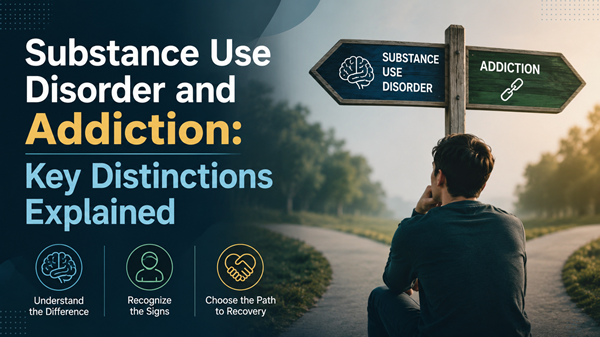
Substance Use Disorder and Addiction: Key Distinctions Explained
One of the most frequently asked questions when unhealthy habits are becoming evident with alcohol or drugs is substance use disorder, and addiction, what is the difference? The two are different and a large number of people who become addicted also suffer from Substance Use Disorder (SUD). Knowing the difference may lead to signs of problems being detected earlier, to receiving the appropriate support and to making recovery choices. WellMind Therapy Center is aware that knowledge and understanding is one of the first steps towards healing and it is important for people to understand these differences so as to decrease the stigma and prompt them to seek professional help.
Key Takeaways
- Substance Use Disorder (SUD) is a medical condition, diagnosed by mental health professionals.
- A person’s addiction is generally defined as an out-of-control use of drugs or alcohol despite any negative consequences.
- People can suffer from mild, moderate or severe SUD.
- Prompt identification results in better recovery.
- There are professional therapy, counselling, medication and support programs which can help people recover.
- Personalized care and support can allow for recovery.
What is Substance Use Disorder (SUD)?
Substance use disorder (SUD) is a medical diagnosis (or mental health problem) in which someone has a problem controlling their use of alcohol, prescription medicine, or illegal drug. It is defined by some criteria in the Diagnostic and Statistical Manual of Mental Disorders (DSM-5), which measure the substance’s effect on a person’s functioning.
Person with a Substance Use Disorder uses drugs/alcohol despite having a problem in any area of life – work, school, relationships, body.
SUD is a continuum:
- Mild
- Moderate
- Severe
Severity will be determined by the number of criteria that are met.
The following are common substances related to SUD:
- Alcohol
- Opioids
- Prescription pain medications
- Cocaine
- Methamphetamine
- Cannabis
- Nicotine
- Sedatives
SUD is not a moral failing or lack of will power. It’s a complex condition that’s affected by genetic, environmental, mental health, trauma and brain chemistry factors.
What is Addiction?
Addictive drug use is frequently called addiction which is defined as the persistent and compulsive use of drugs and alcohol despite the negative consequences of that drug use.
Addiction is a common term but rather than being diagnosed as “addiction,” a health care provider might diagnose what is called a Substance Use Disorder.
Those who have an addiction to a substance or activity are likely to:
- Don’t feel like you can stop using a substance.
- Experience intense cravings.
- Take a lot of time to acquire or consume substances.
- Continue to use even if health, financial or relationship problems arise.
- Develop tolerance.
- Experience withdrawal symptoms.
The brain’s reward system is affected by addiction, which makes it more challenging and more necessary to have professional help to control the use of a substance.
While many individuals who suffer from SUD are also addicts, this is not the same thing.
Substance Use Disorder vs. Addiction: What Is the Difference?
The difference between these two ideas is easier to understand when contrasted to each other: Understanding Substance Use Disorder and Addiction.
| Substance Use Disorder | Addiction |
| A medical diagnosis | A commonly used descriptive term |
| Diagnosed using DSM-5 criteria | Describes compulsive behavior |
| Can be mild, moderate, or severe | Often refers to more severe substance problems |
| Includes different levels of severity | Usually indicates loss of control |
| Used by healthcare professionals | Commonly used by the general public |
Key Differences
Medical Diagnosis
The National Native Addictions Partnership, the leading national nonprofit organization, states that SUD is a medical diagnosis by qualified health care providers.
Severity Levels
Other people with SUD may not have severe symptoms. Others can have mild to moderate SUDs and be responsive to early intervention.
Addiction Represents Severe Patterns
Addiction is usually defined as frequent and excessive drug use with a high level of difficulty in stopping use.
Focus on Function
The assessment of substance use and functioning is carried out rather than focusing on frequency of use.
Understanding the Stages of Substance Use Disorder
Treatment may take a lot of time to build up—usually not a sudden occurrence—due to SUDs.
1. Experimentation
An individual experiences alcohol or drugs as a curiosity or by peer influence.
2. Regular Use
It starts becoming more common to use substances, for instance, on weekends or during stressful times.
3. Risky Use
Some person begins to experience the effects of use, but continues to use.
Examples include:
- Missing work
- Driving while intoxicated.Impaired driving.
- Family conflicts
- Financial problems
4. Dependence
Body becomes accustomed to the substance.
Signs include:
- Tolerance
- Withdrawal symptoms
- Uses more of the substance
5. Severe Substance Use Disorder
Negative substances affect an individual’s life and they are present 24 hours in a day.
At this point, it is crucial to find professional treatment.
Common Signs and Symptoms of Substance Use Disorder
The signs and symptoms of the substance vary depending on the substance used, but are typically:
Behavioral Signs
- Taking more than directed.
- Difficulty stopping
- Spending a lot of time to get substances
- Neglecting responsibilities
- Risky behaviors
- Even though there may be consequences, continued use.
Physical Signs
- Changes in sleep
- Weight changes
- Bloodshot eyes
- Poor coordination
- Withdrawal symptoms
- Increased tolerance
Emotional Signs
- Mood swings
- Anxiety Depression
- Irritability Loss of motivation
- Secretive behavior
Early detection of these signs enables treatment to be started before complications set in.
How Healthcare Professionals Diagnose Substance Use Disorder
The diagnosis of SUD is not made based on a single laboratory test, but by making a comprehensive evaluation.
Typically involves:
Clinical Interview
Providers ask about:
- Substance use history
- Medical history
- Mental health
- Family history
- Lifestyle
DSM-5 Criteria
Based on the experts, all of the following symptoms are possible signs of Substance Use Disorder:
- Intended use overused: Use of products in excess of recommended use.
- Difficulty cutting down
- Cravings
- Neglecting responsibilities
- Using despite issues
- Withdrawal
- Tolerance
Mild, moderate or severe depends on the number of criteria that are met.
Physical Examination
A healthcare professional can give a diagnosis for overall health evaluation and/or medical conditions resulting from drug use.
Mental Health Assessment
A large number of people who have SUD also have:
- Anxiety disorders
- Depression
- PTSD
- Bipolar disorder
Treatment of both conditions is likely to be more effective.
Treatment Options for Substance Use Disorder and Addiction
Everyone’s healing process is different. Physical treatment and emotional treatment should be part of the treatment plan.
Individual Therapy
Therapists help people:
- Develop positive coping strategies
- Improve emotional regulation
- Prevent relapse
Evidence-based approaches include:
- Cognitive Behavioral Therapy (CBT)
Motivational Interviewing (MI)
Acceptance and Commitment Therapy (ACT)
Group Therapy
Group sessions provide:
Peer support
Shared experiences
Accountability
Reduced isolation
Family Therapy
Involving the family in the treatment process has a positive impact on communication and long-term treatment outcomes. Learn more about family therapy for recovery.
Medication-Assisted Treatment (MAT)
For certain people, medications that lessen cravings or withdrawal signs are of help, particularly for opioid or alcohol addiction.
Dual Diagnosis Treatment
If the person has both Mental Health and Substance Use Disorders, then treatment for both is integrated.
Lifestyle Changes
Long-term recovery will include:
- Regular exercise
- Healthy nutrition
- Good sleep habits
- Stress management
- Support groups
- Mindfulness practices
Why Early Treatment Matters
Many people put off getting help because they think “It’s not that serious.Many people put off seeking help until they feel their substance use is “not that serious.”
Early intervention can, however:
- Prevent worsening symptoms
- Improve relationships
- Protect physical health
- Reduce financial problems
- Improve the well-being of the community.Improve community life.
- Increase recovery success
Early intervention can help make the recovery process easier.

Why Choose WellMind Therapy Center?
Each path to recovery is unique and We at WellMind Therapy Center know this all too well. Our highly trained mental health personnel provide caring and evidence-based treatment specific to each person’s goals.
We offer:
- Comprehensive assessments
- Individual psychiatry services
- Family counseling
- Personalized treatment planning
- Ongoing recovery support
- Services for mental health conditions related to co-occurring conditions
With regard to you or a loved one, we don’t judge you and are here to help.
Take the First Step Toward Recovery Today
You are not the only one who has to face the issue of Substance Use Disorder/ addictions. With help, you can change your life or the lives of someone you love by getting them help for drug or alcohol abuse.
Don’t delay; give WellMind Therapy Center a call today for a confidential assessment. Your patients will get a customized treatment plan that will help them achieve long-term healing and our caring staff will be there to explain their choices, address their questions and assist in developing a treatment plan. Explore our higher level of care options such as our intensive outpatient program or PHP and IOP options, and review how PHP vs IOP compares. Learn about how long these programs run in our guide on intensive outpatient program length.
Final Thoughts
Understanding Substance Use Disorder and Addiction: Key Distinctions Explained helps remove misconceptions and encourages people to seek help sooner. While addiction is often used as a general term, Substance Use Disorder is the clinical diagnosis used by healthcare professionals to evaluate and treat substance-related problems.
Recognizing the signs, understanding the stages, and exploring evidence-based treatment options can empower individuals and families to move toward recovery with confidence. At WellMind Therapy Center, compassionate support and personalized care are available to help every step of the journey.
Frequently Asked Questions
Is substance use disorder the same as addiction?
No. Substance Use Disorder is a medical diagnosis based on specific clinical criteria, while addiction is a commonly used term describing compulsive substance use. Severe Substance Use Disorder often includes addictive behaviors, but the terms are not identical.
Can addiction exist without substance use disorder?
Behavioral addictions, such as gambling addiction, can occur without Substance Use Disorder. However, when addiction involves alcohol or drugs, healthcare professionals generally diagnose Substance Use Disorder using established clinical criteria.
Is substance use disorder treatable?
Yes. Substance Use Disorder is highly treatable through therapy, counseling, medication management when appropriate, family support, and ongoing recovery planning. Early intervention often leads to better long-term outcomes and improved quality of life.
What are the first signs of substance use disorder?
Early signs include increasing substance use, cravings, difficulty limiting use, neglecting responsibilities, mood changes, withdrawal from family or friends, and continuing to use despite negative consequences in daily life.
When should someone seek professional help?
Seek professional help if substance use begins affecting health, relationships, work, school, finances, or emotional well-being. Early assessment allows healthcare professionals to recommend appropriate support before symptoms become more severe. Feel free to reach out on our contact page or check our FAQ page for more info.
Disclaimer
This article is for educational and informational purposes only and should not be considered medical advice, diagnosis, or treatment. If you or someone you know is experiencing symptoms of Substance Use Disorder or addiction, consult a qualified healthcare provider or licensed mental health professional for a comprehensive evaluation and personalized care.
References
- National Institute on Drug Abuse (NIDA). Drugs, Brains, and Behavior: The Science of Addiction. https://nida.nih.gov/
- Substance Abuse and Mental Health Services Administration (SAMHSA). Understanding Substance Use Disorders. https://www.samhsa.gov/
- American Psychiatric Association. Diagnostic and Statistical Manual of Mental Disorders (DSM-5-TR). https://www.psychiatry.org/
- Centers for Disease Control and Prevention (CDC). Substance Use and Overdose Prevention. https://www.cdc.gov/overdose-prevention/
- National Institute on Alcohol Abuse and Alcoholism (NIAAA). Alcohol Use Disorder. https://www.niaaa.nih.gov/