What is the Most Effective Treatment for Co-Occurring Disorders?
If a person is suffering from mental health issues and substance abuse that can be answered with one word: Both!If the person has a mental health condition and a substance use disorder, then the question that is natural to ask is, “What is the most effective treatment for co-occurring disorders?” Treatment that is integrated (treatment for both conditions) is best in most instances, rather than treating each condition independently. A custom therapy plan can feature drug and alcohol counseling, medication assistance, family support, and recovery services.
WellMind Therapy Center recognizes the link between mental health and substance use and it is an essential element to designing effective care. Both conditions can be treated and co-occurring disorders can impact thoughts, emotions, relationships, work and daily living.
Key Takeaways
- What is the best treatment for comorbid disorders? A combined mental health and substance use treatment is the preferred treatment.
- Comprehensive assessment allows the identification of conditions and an understanding of the impact they have on each other.
- Treatment options include psychotherapy, medication, behavioral treatment, family support and recovery services.
- Other frequently occurring conditions are depression, anxiety disorders, bipolar disorder, PTSD, ADHD, schizophrenia, and personality disorders.
- The duration of treatment varies from person to person based on symptoms, substance use, treatment objectives, support system, and treatment response.
- There are no universal solutions to recovery. Right plan should be adjusted according to the changes in requirements.
What are Co-Occurring Disorders?
Co-occurring disorders is when someone has a mental health disorder and a substance use disorder. For instance, a person could suffer from depression and alcohol abuse disorder, anxiety and opioid abuse disorder, or PTSD and stimulant abuse disorder.
So, what’s the best treatment for co-occurring disorders? The first step in the answer is to acknowledge that both are important.
Substance use and mental health symptoms can have an impact on one another. A person might use alcohol or drugs to manage feelings of anxiety, depression, trauma or emotional distress. Simultaneously, frequent drug use can exacerbate mood disorders, sleep disturbances, anxiety, thinking problems, and functioning.
According to the National Institute of Mental Health, the link between substance abuse and mental illnesses may include common risk factors like genetics, stress, trauma, and changes in brain function.
People with substance use disorders also may experience common mental health issues such as:
- Depression
- Anxiety disorders
- Bipolar disorder
- Post-traumatic stress disorder (PTSD)
- Attention-deficit/hyperactivity disorder (ADHD)
- Schizophrenia
- Personality disorders
Co-occurring disorders can be made up of a combination of mental health and substance use disorders, SAMHSA points out.
What Causes Co-Occurring Mental Health and Substance Use Disorders?
Typically, there is no single cause. The best treatment for co-occurring disorders is to have a good understanding of why the disorders are occurring and how they interact.
There are multiple factors that can add risk for co-occurrence.
Genetics: Certain individuals may have a greater susceptibility to mental health or drug use issues.
Trauma and stress: Childhood adversity, abuse, neglect, loss, chronic stress or exposure to any other traumatic event may impact emotional health and lead to an increased risk of substance misuse.
Self-medication: Alcohol or drugs used to temporarily stop feelings of anxiety, sadness, fear, intrusive thoughts, or other unpleasant feelings. Unfortunately, this can cause a vicious circle where symptoms of the problem worsen over time due to the use of substances.
Brain and environmental factors: Mental health and substance use disorders may have biological, psychological, social and environmental factors.
That’s why the question is not just about the most effective treatment for co-occurring disorders, but also beyond substance use. Effective care takes a whole person approach instead of a narrow, single diagnosis approach.
What are the Signs of Co-Occurring Disorders?
Co-occurring disorders can be tricky to identify due to overlapping symptoms. It may not be obvious to a person that mood or behaviour changes relate to mental health and substance use.
Possible signs include:
- Constantly sad and discouraged
- Excessive worry or panic
- Significant mood changes
- Irritability or anger
- Social withdrawal
- Sleeplessness or loss of appetite.
- Difficulty concentrating
- Increased substance use
- A failed attempt to discontinue drug or alcohol use.An unsuccessful attempt to quit drug or alcohol use.
- Using in spite of the negative consequences.
- Issues at work, school or home
- Relationship difficulties
- The act and tendency of doing things that are dangerous or reckless.
- Believing that they cannot function without alcohol or drugs
It is crucial for a professional assessment to be completed as substance-related symptoms may mimic symptoms of a mental health disorder. Due to overlapping symptoms, the diagnosis of this condition can be difficult, NIMH suggests that comprehensive assessment be made.
If you are aware of multiple signs you or someone you know exhibits, it may be an important first step to get an evaluation.
WellMind Therapy Center can help you and your loved one consider suitable care options if you are experiencing mental health symptoms and substance use. Please call our staff to speak with them about your concerns and to find out what options may be available for treatment.
What is the Most Effective Treatment for Co-Occurring Disorders?
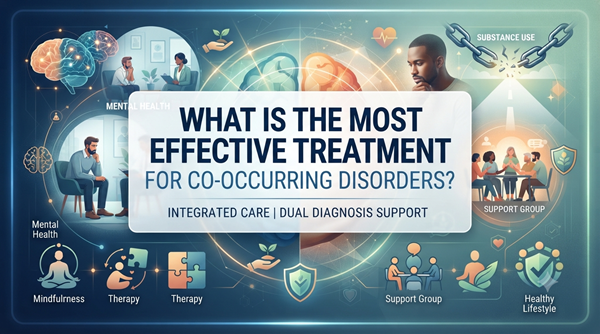
Therefore, what is the best approach to the treatment of co-occurring disorders? For many, it is integrated treatment; that is, treating mental health and substance use issues together in a single coordinated plan.
If one condition is treated and the other isn’t. For instance, overemphasizing on substance use and not paying attention to serious depression can cause long-term recovery to be more difficult. Similarly, if the anxiety is not treated while continuing to use the substance, it may not be completely cured.
SAMHSA supports an integrated approach to the treatment of individuals with co-occurring mental health and substance use disorders. Coordinated care can ensure screening, assessment, mental health services, substance use treatment, medications and supportive services are all integrated.
Which would be the most effective treatment for co-occurring disorders? It varies based on the person’s diagnosis, substance use history, medical requirements, symptoms, risks for harm and goals.
A customized plan can consist of the following:
- Full assessment to gain insight into the condition.
- Cognitive-behavioural psychotherapy for thinking, emotional, behavioural and coping patterns.
- Medication, as appropriate, for mental health and/or substance use disorders.
- Strategies that can be used to decrease substance use and support healthier behaviors.
- Family support when family relationships and family context impact recovery.
- Care co-ordination in a multi-professionals/service scenario.
- Ongoing support to minimise risk of relapse and support progress.
Integrated treatment for co-occurring substance use and mental disorders has also been shown to generally produce superior outcomes to treatment of these two groups of disorders separately, according to NIDA.
How Does Dual Diagnosis Treatment Work?
Co-occurring disorders is also known as dual diagnosis. What is the best treatment for co-occurring disorders? In a dual diagnosis setting, it is important to recognize and also treat both conditions instead of forcing upon a person to resolve their issue first.
This process may start with an assessment. A mental health provider might inquire about symptoms, medications, medical history, daily functioning, trauma, relationships, sleep and drug use.
The treatment plan is then designed to meet the person’s needs.
For instance, a person with depression and alcohol abuse might require help with their depression symptoms, as well as learn healthier coping mechanisms for alcohol cravings and emotional triggers.
When indicated, another individual with PTSD/OD may require trauma-focused therapy, as well as appropriate substance use treatment and medication.
The objective is not to just suppress the symptoms for a short period of time. It is to support the person to learn safer coping, enhance functioning, improve relationships and to establish sustainable recovery.
What Therapies are Used for Co-Occurring Disorders?
Often, the best treatment for co-occurring disorders involves psychotherapy and other services that are appropriate for the disorder, such as medication or other treatment.
Depending on the individual’s needs, various therapies may be helpful.
CBT is a kind of therapy that assists individuals recognize negative thoughts and behaviors and change them with more productive responses.
MI can be a tool to help individuals understand their ambivalence and to empower their own desire for change.
Trauma-focused therapy could be helpful if trauma is a significant factor in a individual’s symptoms.
Dialectical behaviour therapy (DBT) can assist for emotional regulation, withstanding distress, interpersonal issues and impulsiveness.
Family therapy can be helpful for the family to understand co-occurring disorders, to communicate more effectively, and to find healthier ways to support recovery.
Care can include medication management as well. Some medications can help treat mental health symptoms and some medications are also available for treating some SUDs.
NIMH considers behavioral interventions, like contingency management, motivational interviewing and CBT, to be methods that may be effective for managing co-occurring conditions.
It will rely on the person. No single therapy is effective for all people.
How Long Does Treatment for Co-Occurring Disorders Take?
When symptoms are present for months or years, another usually asked question is what’s the very best treatment for co-occurring disorders? The answer is that good care might need to be ongoing care and not just a set number of sessions.
Others make good progress in a few months. Others require more chronic care, particularly those who experience more frequent drug use, trauma, unstable living situations, lack of support, multiple diagnoses, or have more severe symptoms.
Treatment can occur in a variety of facilities based on the person’s needs, such as outpatient, intensive outpatient, residential or other treatment facilities.
Change can take place in steps, too. Early care may be directed at safety and stabilization. Future work can involve emotional wellness, coping strategies, relationships, relapse prevention and long term objectives.
The key is not only the speed of treatment termination. Whether the person is progressing steadily and being supported at the appropriate level.

How Can You Find Treatment for Co-Occurring Disorders?
If you still aren’t sure what’s the best treatment for co-occurring disorders, it’s best to get a thorough evaluation from a mental health professional who understands mental health and substance use issues.
Ask potential providers:
- Are you qualified to evaluate for mental health and substance use disorders?
- Is there a way to do so for both concerns?
- What treatments are there?
- Medication Management is available when appropriate?
- What is the process used in the creation of treatment goals?
- What do you do if symptoms or substance use gets worse?
- Are there opportunities for family members to be involved, when appropriate?
- Are there any ongoing supports following initial treatment?
SAMHSA has called for a “no wrong door” strategy, which calls for a universal screen for people seeking assistance for mental health or substance use issues, and providing a referral to the appropriate service.
At WellMind Therapy Center, treatment is about the person, not the diagnosis. When looking for help with co-occurring disorders, seeking an assessment will help you understand your options and what’s next.
You don’t need to do it all by yourself. Call WellMind Therapy Center to find out more about therapy services for mental health and substance use and talk about a customized road to recovery.
Frequently Asked Questions
What are some common mental disorders that co-occur with substance abuse?
Other common concurrent mental disorders include depression, anxiety disorders, bipolar disorder, PTSD, ADHD, schizophrenia and personality disorders. This is different for each individual, and an evaluation by a professional expert will help to determine which overlapping symptoms are which.
What treatments would be appropriate when there is co-morbidity between personality and substance use disorders?
Treatment can involve integrated psychotherapy, behavioral intervention, substance use support, medication (as needed), and family involvement. For some personality disorders, DBT can be helpful, and the plan should take both disorders into consideration.
Can you give me some examples of dual diagnoses?
These disorders may include depression with alcohol use disorder, PTSD with opioid use disorder, bipolar disorder with stimulant use disorder, anxiety disorder with cannabis use disorder, and borderline personality disorder with alcohol or drug misuse.
What are the signs and symptoms of dual diagnosis?
These signs may include mood swings, anxiety, depression, irritability, avoidance of social interactions, sleeping difficulties, trouble functioning, heightened substance use, inability to stop using and craving the substance despite its negative impact on health, relationships, work or daily functioning.
What is the new name for dual diagnosis?
The terms “co-occurring disorders” or “co-occurring mental health and substance use disorders” are often used. Although there is widespread understanding of the term “dual diagnosis”, the term co-occurring disorders is more often used to describe both conditions in current professional resources.
What are the top 3 worst mental disorders?
No scientific basis for ranking the “worst” mental disorders. Severity in individuals varies. Some disorders, including schizophrenia, severe bipolar disorder and severe major depression may result in severe impairment, but individuals will experience these differently.
Which personality disorder is most frequently co-occurring with substance use disorders?
Personality disorders may co-occur with SUDs. The rates of overlap, the research on this overlap, and the overlapping diagnosis of borderline personality disorder and antisocial personality disorder are often discussed.
How can I manage co-occurring disorders?
Treatment of co-occurring disorders typically includes assessment, integrated treatment, healthy lifestyle, therapy, medication (if needed), substance use support, social support, and follow-up care. This may be helpful in managing fluctuating symptoms and recovery targets.
References
- National Institute of Mental Health (NIMH): Finding Help for Co-Occurring Substance Use and Mental Disorders — information on causes, assessment, integrated care, behavioral therapies, and medications.
- Substance Abuse and Mental Health Services Administration (SAMHSA): Screening and Treatment of Co-Occurring Disorders — guidance on integrated treatment and coordinated care.
- SAMHSA: Co-Occurring Disorders and Other Health Conditions — definitions, common conditions, and current prevalence information.
- National Institute on Drug Abuse (NIDA): Common Comorbidities with Substance Use Disorders — information on integrated treatment for co-occurring conditions.
- SAMHSA: Substance Use Disorder Treatment for People with Co-Occurring Disorders — evidence-based approaches for integrated care.
Medical Disclaimer: The information provided here is meant for education purposes only and is not intended to be medical advice. An individual’s mental health and substance use disorders may need to be evaluated and treated separately. Seek immediate professional and/or emergency help if you or someone you know is in a mental health or substance use crisis.