

How to Choose the Right IOP Program: A Practical Guide
When it comes to battling depression, or anxiety, getting mental health care can be intimidating, especially when you need more care than you can receive in weekly therapy, not in the hospital. When deciding on how to choose the right intensive outpatient program, take into account the level of care offered, treatment method, treatment schedule, cost, and the credentials of the treatment team. The ideal intensive outpatient program (IOP) should provide a framework of support and allow you to keep up important parts of your life.
Key Takeaways
- An IOP offers less intensive therapy than partial hospitalization programs (PHP) but more intensive than traditional individual therapy, allowing you to live in your own home.
- The best program should be fitted for your mental health needs and goals, schedule, and level of support.
- Ask questions before you get admitted – what kind of therapy is offered, individualized care, who is staffing the facility, crisis intervention, hospital hours, and insurance.
- Some benefits and out-of-pocket costs may vary; please review coverage and out-of-pocket costs prior to starting.
- A quality IOP should have a clear transition pathway and measure of progress pathway to the next level of care.
- You need to know the right IOP to choose or you won’t know if you will make a good decision simply by location or price.
What is an IOP Program
Structured outpatient mental health treatment is a form of mental health outpatient services called an intensive outpatient program. It offers more support compared to weekly therapy, and does not involve a stay in a facility.
IOP may include individual therapy, group therapy, psychiatry services, medication management (if applicable), skills education, and care coordination. Specific services and time of delivery are dependent on the program.
According to CMS, IOP is a coordinated level of outpatient behavioral health services for those who require more services than those provided by standard outpatient behavioral health services, but less than inpatient services. If you want to know what IOP program you should look into, it’s crucial that you understand what an IOP is and how it works.
When Should You Consider an IOP Program?
If mental health issues are affecting a person’s functioning and they do not seem to be benefiting from weekly therapy sessions, then an adult intensive outpatient program may be a good option.
An IOP is suggested by a mental health practitioner when anxiety and depression levels are very high, mood-related problems are present, emotional distress is occurring, and/or there are other problems that require frequent therapy.
A higher level of care may also warrant the use of IOP, especially when evaluating PHP vs IOP to choose the right level of care. IOP can also be offered when someone is prepared to engage in intensive outpatient treatment.
Treatment options will vary based on the severity of your symptoms, your safety, your ability to function, the support you have in your life, and your doctor’s professional judgment. Not everyone will need an IOP, particularly if they need urgent emergency or inpatient care during a mental health crisis.
If unsure, please see a mental health practitioner before deciding.
How to Choose the Right IOP Program
The decision of which iop program to choose should be based on fit and not on proximity or price.
Start with the following questions:
- Does the program address your specific needs?
Check for experience in the issues you need assistance with, such as an intensive outpatient program for depression and anxiety. - Is the care personalized?
A key aspect of a good program is to understand that people have different goals, barriers and contexts. - What services are included?
Inquire if the program offers individual and group sessions, psychiatric or medication management and other services. - Who provides the care?
Talk about the therapist and the other professionals working with them, clinical supervision and team experiences. - How is progress measured?
The programme should be clearly defined and be updated regularly. - Does the schedule work for you?
Consistency matters. It may be difficult to maintain a program that is incompatible with work, school or family needs and/or transportation. - What happens after the program?
Inquire about the team’s ability to assist you in the transition to long-term outpatient treatment or other suitable level of help.
The following questions will help you to make a decision on which iop program to choose and not just a guess.
Does the IOP Program Offer Personalized Care?
Treatment goals should be based upon your goals and objectives, and not a checklist. The best program starts with a comprehensive evaluation of your concerns, history, strengths, challenges, and goals, which may include a formal psychological evaluation.
As you progress, your care plan may alter. For instance, you might require frequent visits at first, and then fewer over time or transition to standard mental health counseling.
NIMH recommends that you inquire with your providers about their experience with your concerns, how they will treat you, how many treatments you will need, and how they will monitor your progress.
What Therapies and Services Are Included?
When considering an IOP, find out specifically what it entails.
Services can be provided such as:
- Individual psychotherapy
- Group counseling
- Psychiatric evaluation
- Medication management
- Skills for coping and emotional regulation to build resilience
- Stress-management education
- Relapse prevention/recovery planning
- Engagement of family/carer through family therapy for mental health recovery
- Care coordination
- Planning for discharge and aftercare
Therapeutic interventions may be utilized to gain insight and modify challenging thoughts, feelings, and actions. According to NIMH, psychotherapy may be done in a group or on an individual basis and may be administered in addition to other treatments, like medication, which are part of an individual’s treatment plan.
As with services, not only do you want to know what services are offered but you also want to know why the services would be recommended to you.
How Often Do You Attend an IOP Program?
IOP will be on a different schedule for each individual and for each provider. Learn details regarding how long intensive outpatient programs last to understand what to expect. Several programs offer multiple hours of structured care daily, and multiple days of care per week.
CMS believes that at this time, the services provided in an applicable setting for at least 9 hours per week are considered to be IOP services for Medicare-covered services. Please refer to the programme details with the programme provider and insurance company as there may be differences between private programmes and insurance specifications.
It is important that there is a regular pattern. When selecting which IOP program to enroll in, keep in mind that you may not be able to attend all the sessions.
Ask the following questions: What are the start times? How long are the sessions? Is there an evening schedule? What happens if you miss a session? Will there be telehealth options available through telehealth psychiatry?
What Should You Know About Cost and Insurance?
Prior to enrollment, cost should be discussed.
Ask the program:
- Do you want to take my insurance?
- Do I have you as a provider?
- Will there be a need to obtain authorization for my plan in advance?
- What is the deductible that I have?
- What will be the copay or coinsurance?
- How many times will the visit/service take place?
- Are there services that could be not be covered?
The terms of insurance can differ based on the terms of the policy. In general, federal mental health parity laws mandate that mental health and substance use disorder benefits be provided through a plan that have financial requirements and treatment restrictions that are not more stringent than those applied to medical and surgical benefits. This does not mean that all plans need to cover all mental health and substance use disorder services, but that a plan’s coverage for mental health and substance use disorder services does not extend beyond medical and surgical care.
Benefits could change, please check with your insurance company and provider.
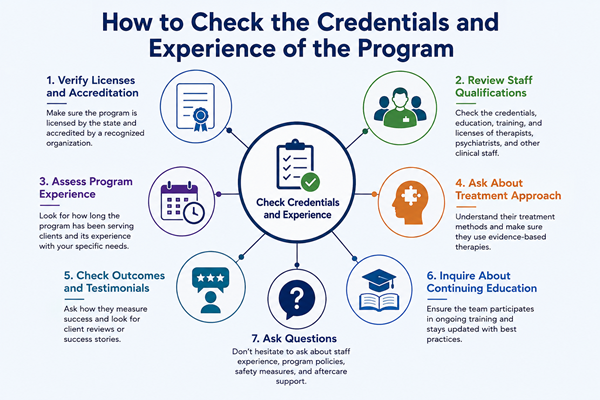
Why Location and Schedule Matter When Choosing an IOP
It may be an outstanding program that is not a good fit because it’s hard to attend regularly.
Consider travel time, transportation, work/school or childcare responsibilities, family responsibilities, and preferred session times.
If available, ask if some services can be provided via telehealth, if clinically appropriate. Outpatient services can be provided face-to-face or via telehealth psychiatry, depending on the program, says SAMHSA.
In considering the selection of the most appropriate IOP program, select your schedule and not the one you think you want but can’t keep up.
Questions to Ask Before Enrolling in an IOP Program
When making a decision ask:
- What are some problems/issues/considerations that your program tackles?
- Who will be caring for me?
- What kind of treatments do they offer?
- How many days of the week will I be at school?
- What is the length of each session?
- How do I get marked on my achievement?
- At what point will my care plan be reviewed?
- If my needs change, what then?
- Do they have anyone they can seek psychiatric or medical assistance from, if necessary?
- Will you be charging me for the insurance?
- How much is it going to cost me?
- What are the consequences of the program at the end of the program?
- If I need more or less care, what care options are there?
Make confident comparisons with clear answers.
Ready to Explore Your Options?
If you’re considering an intensive outpatient program but don’t know where to start, WellMind Therapy Center can help you learn about your options and if a structured outpatient program is a viable option for you.
If you or your loved one is struggling with mental health issues, please reach out via our contact page today, discuss any concerns, and ask questions about the IOP services that we offer, to take a step towards the right type of mental health assistance.
How to Know If an IOP Program Is the Right Fit for You
The right IOP will seem organized, respectful, and relevant to you.
You may be a good candidate if individual therapy is not enough, if living out of the hospital is safe for you, and if you are able to participate in the therapy on a consistent basis at scheduled times.
It is also significant to feel comfortable to communicate with the treatment team during your client journey. You have the right to ask questions, have concerns addressed, and know your care plan.
There is no single best program—it depends on individual needs and professional advice. Hence, it is crucial to begin with your needs when making decisions on how to choose the right intensive outpatient program and not rely on a program’s marketing promises.
What to Expect After Completing an IOP Program
A person’s mental health issues may not be completely resolved after an IOP is complete. However, it could be a part of a more extended care program.
Depending on your progress and needs, your next step may be traditional outpatient treatment, psychiatric aftercare, medication management, group therapy, alumni support, or another level of care.
A responsible program will have an aftercare discussion prior to departure. Inquire if you can find out what the transition is, and whether your providers will possess the details needed to continue your care.
A thoughtful transition plan is important when choosing the right IOP program, as recovery and mental wellness needs often continue after the structured IOP.

Take the Next Step Toward Recovery With the Right IOP Program
While the decision to enter an IOP is a big one, you don’t need to do it without help. First, you need to know what you are looking for, what questions to ask, the schedule and cost, and what type of care the program is providing to meet your goals.
If you are still not certain about choosing an IOP program, begin by discussing this with a licensed mental health practitioner. They can let you know if it’s a good idea for you to use an IOP or if another level of care—such as a partial hospitalization program or specialized PHP and IOP—may be more suitable.
WellMind Therapy Center is here to assist you in making that next step. Contact our experienced staff members for additional information about IOP, questions about treatment, and to find out how we can be of assistance.
Frequently Asked Questions
How do I know if IOP is right for me?
IOP is recommended when the need for more structured support is felt than weekly therapy, but not warranted for inpatient level. A trained mental health provider can assess your symptoms, functioning, safety and support network to determine the right level of care.
How do I know which type of therapy is right for me?
The appropriate therapy will depend on your concerns, goals, preferences, and clinical needs. A qualified mental health professional can explain the options, how they work, and which option might be right for you.
How many hours per day is IOP?
IOP schedules differ with each program, provider and insurance needs. Some programs offer several hours of activity daily, several days a week. Please consult the specific provider for hours of operation, attendance requirements, and scheduling requirements prior to enrollment.
Are IOP programs worth it?
An IOP can provide benefits when an individual requires greater support than can outpatient therapy. Usefulness will vary depending on person’s needs, level of involvement, program quality and the fit of the level of care to the individual’s clinical situation.
What is the success rate of IOP therapy?
The rates for success among all IOP programs will vary as there are differences in the programs, conditions, treatment methods and outcome measures. Inquire from a provider how they monitor progress, what results they are monitoring, and how individual goals are checked.
How much is an IOP program with insurance?
This will depend on the insurance plan, deductible, copay, coinsurance, network, authorization procedures, and coverage for the services rendered. Before beginning treatment, get a written estimate from both your insurance company and the IOP provider.
Will my insurance cover an IOP?
Services and coverage may differ based on the plan. IOP services can be covered under some plans as long as eligibility and medical-necessity are met. Verify benefits, authorization, network coverage, exclusions and out-of-pocket costs prior to enrolling.
Disclaimer
This blog is for general education and information only. It is not intended to replace a professional mental health evaluation, diagnosis, medical opinion or emergency treatment. IOP may not be appropriate for every person. If you feel you are in an immediate mental health crisis or in immediate danger contact emergency services or appropriate crisis services in your area.
Details regarding insurance, program requirements and cost may vary. Please get specific benefits and eligibility information from your insurance company and IOP provider.
References
- National Institute of Mental Health (NIMH), Help for Mental Illnesses and Psychotherapies. NIMH: Help for Mental Illnesses NIMH: Psychotherapies
- Substance Abuse and Mental Health Services Administration (SAMHSA), Treatment Types for Mental Health, Drugs and Alcohol
- Centers for Medicare & Medicaid Services (CMS), Mental Health Parity and Addiction Equity Act. CMS: Mental Health Parity and Addiction Equity Act
- Centers for Medicare & Medicaid Services (CMS), 2026 Hospital Outpatient Prospective Payment System – Intensive Outpatient Program. CMS: 2026 IOP Information