Mental Health Partial Hospitalization Programs: A Pathway to Improved Emotional Well-Being
Key Takeaways
- Partial Hospitalization Program settings offer mental health treatment that exceeds outpatient services but is not as intensive as inpatient treatment.
- Structured therapy, psychiatric and skills-building services are provided to the participants.
- PHPs are typically a step-down from an inpatient program or a step-up from a standard outpatient treatment program.
- Treatment is tailored to people’s specific needs.
- Symptom improvement, improved emotional stability and improved coping skills are many experiences.
- Ongoing family support and involvement can help to make a difference in the long term.
Mental health partial hospitalization programs offer the right balance of intensity between weekly outpatient therapy and full-time hospital treatment, especially for people who require greater assistance than what they get from weekly counseling yet can’t invest the cash in a 24-hour program. The structured treatment programs provide intensive mental health treatment during the day and then home treatment in the evening.
For people struggling with anxiety, depression, trauma, mood disorders, and other underlying conditions, mental health PHPs are a valuable pathway toward emotional equilibrium, healing, and wellness.
We recognize, at WellMind Therapy Center, that mental health issues can impact all aspects of life. Finding the right level of care can be crucial when it comes to healing and mental health partial hospitalization programs can help foster sustained progress.
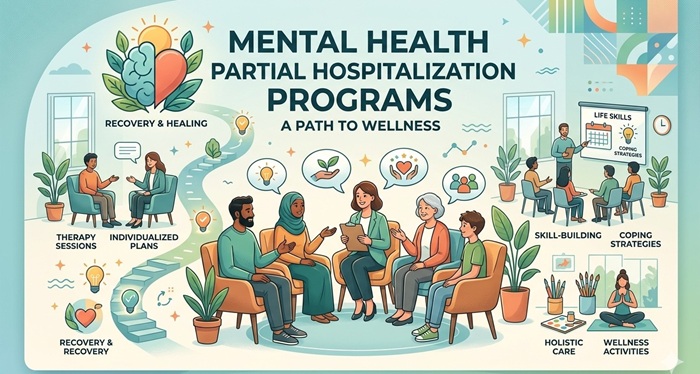
Partial hospitalization programs (PHPs) for mental health are less intensive outpatient treatment programs that provide intensive levels of therapeutic support, but don’t require overnight stays. These programs usually consist of one-on-one therapy, group meetings, psychiatric services, drug supervision, and learning new skills.
Evidence and clinical experience suggest that use of PHPs can contribute to controlling symptoms, avoiding hospitalization, and improving emotional functioning in a person’s life without jeopardizing family and community involvement.
What is a Mental Health Partial Hospitalization Program?
A Mental Health Partial Hospitalization Program (PHP) is a mental health or substance use intensive day treatment program designed for those who have severe mental health or substance use disorders. It is often referred to as a “day program” as it offers a full day of psychiatric services, and then the patient goes home in the evening.
Partial hospitalization programs can deliver an integrated mental health system of care including general psychiatric evaluation, medication management, family support, and therapy, according to guidance from the American Academy of Child and Adolescent Psychiatry (AACAP). These programs may be employed in cases of symptom stabilization and to prevent inpatient hospitalization if patients and providers are appropriate for them.
To create a theme-based therapeutic atmosphere and opportunity to practice coping skills in the real world.
Who Can Benefit From a Partial Hospitalization Program?
Partial hospitalization programs for mental health might also work for people with the following:
- Depression
- Anxiety disorders
- Bipolar disorder
- Trauma and PTSD
- Emotional dysregulation
- Suicidal ideation (thoughts of hurting oneself or taking one’s life) when there is no apparent risk and no need for hospitalization.
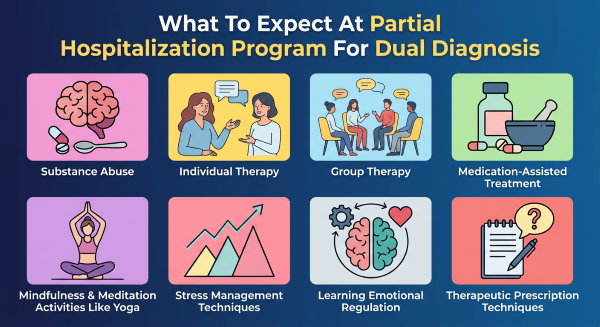
- Concurrent psychiatric and substance use disorders
- Significant stress-related disorders
As a therapist and addiction counselor, I frequently instruct my patients that PHPs have their greatest usefulness when symptoms start to negatively impact work, school, and/or relationships or daily functioning.
Mental health partial hospitalization programs can also be used as a step-down after an inpatient treatment program for those who have recently finished their treatment.
How Partial Hospitalization Programs Work
Most treatment programs for mental illnesses are available on a partial hospitalization basis and are available every day of the week for several hours each day of treatment.
Services may include:
Individual Therapy
Individual counseling sessions are available to reflect on personal issues, set up treatment objectives and establish healthier coping mechanisms.
Group Therapy
Group sessions provide opportunities for individuals to learn from others who are experiencing similar situations and practice their communication, emotion management and problem-solving skills.
Psychiatric Care
Psychological partial hospitalization programs frequently will provide psychiatric evaluation and medication management as clinically warranted.
Family Involvement
There are benefits to family education and counseling for communication, greater support systems and recovery outside treatment.
Skills Training
Common tools learned by participants include emotion management, stress reduction, relationships and mental wellness.
The Benefits of Mental Health Partial Hospitalization Programs
Patients can receive intensive treatment at mental health partial hospitalization programs without giving up their independence or total compensation. Mental health partial hospitalization programs continue to be popular because they provide intensive care without the loss of independence.
Here are some of the important advantages:
Structured Support
Participants are provided with consistent therapeutic support the whole week, avoiding exacerbation of symptoms.
Real-World Application
People look forward to putting into practice what they’ve learned in their real world at the end of the day.
Reduced Hospitalization Risk
Some studies indicate that numerous patients in the mental health community may not need to have an inpatient admission while on a PHP.
Continuity of Care
Treatment teams can involve family, primary care providers, therapists, and psychiatrists in mapping out a treatment plan.
Greater Flexibility
Mental health programs that fall short of full hospitalization offer patients a few outpatient privileges without letting them leave the hospital.
What Research Says About Partial Hospitalization Programs
Mental health partial hospitalization programs for different psychiatric illnesses continue to be supported with clinical research.
Structured PHPs have been shown, in recent studies posted on the National Center for Biotechnology Information (NCBI), to help significantly improve patients’ symptom management, emotional functioning, and overall quality of life. The need for personalized treatments, collaboration among teams of health care experts and research-based treatments is also underlined.
Many people argue that using a PHP can help them to better regulate their emotions, to cope, and to function in their daily lives, although this differs from person to person.
Signs You May Need a Higher Level of Mental Health Care
Many people are unsure as to whether the regular therapy is sufficient or if they require more intensive help.
Mental health partial hospitalization programs can be beneficial for you if:
- I don’t think it’s helping even when being treated at home.
- Working day to day is too much.
- Relationship problems are being affected by emotional distress.
- There are mental health symptoms which interfere with work or school.
- More structure and accountability is called for.
- New hospitalization has happened in the last few days.
- Prior to admission, patients need to be closely monitored as safety concerns arise.
The most effective level of care will be decided by a qualified mental health practitioner.
Ready to Take the Next Step?
WellMind Therapy Center is here to assist in overcoming depression, anxiety, trauma, mood disorders or emotional issues if you or someone you love is suffering from these symptoms. We offer individualized mental health care for healing, resilience and future healing through our caring staff.
Give WellMind Therapy Center a call today to determine if a partial hospitalization program is right for you and your mental health.
What to Expect During Treatment
First-time entrants to mental health partial hospitalization programs can be stressful but most adjust to the program within a short time.
Usually, treatment starts with a thorough evaluation. Providers then create an individualized care plan that includes symptoms, goals and strengths, along with the needs for support.
During treatment, the participants attend therapy sessions, psychiatric care, wellness sessions and skill-building exercises throughout. Patients’ progress is reviewed regularly so that treatment is effective and adapting to patients’ evolving needs.
The larger picture is that the overwhelming goal is to empower individuals to continue to do so after the program’s completion.

Why Early Intervention Matters
Untreated mental health issues can make them even harder to deal with. Early intervention can avoid escalation of symptoms and minimize occasions of crisis.
In this way, mental health partial hospitalization programs offer a beneficial chance to someone to be treated thoroughly before symptoms are severe enough to warrant inpatient mental health care.
An early diagnosis can lead to better resolution, build resilience and get emotional regulation back sooner.
Begin Your Journey Toward Emotional Wellness
Don’t have to go through mental health issues by yourself. If supported, it is possible to make significant recovery. As experts in our field, our therapists at WellMind Therapy Center are committed to empowering people with healthier coping skills, improved mental health, and changes they can feel for the rest of their lives.
Please call WellMind Therapy Center today for a confidential evaluation and to discover the potential of partial hospitalization services for healing and recovery.
Frequently Asked Questions
What is a mental health partial hospitalization program?
A mental health partial hospitalization program provides intensive outpatient treatment for individuals needing more support than weekly therapy. Participants attend structured therapy and psychiatric services during the day while returning home each evening.
How long do partial hospitalization programs usually last?
Most partial hospitalization programs last several weeks, although treatment duration varies based on individual needs, symptom severity, progress, and treatment goals. Providers regularly assess progress and adjust recommendations throughout the recovery process.
Are partial hospitalization programs effective?
Research indicates that partial hospitalization programs can effectively reduce psychiatric symptoms, improve emotional functioning, strengthen coping skills, and decrease the need for inpatient hospitalization when clinically appropriate and consistently attended.
Can I continue working while attending a PHP?
Because PHPs typically involve several hours of treatment each day, maintaining full-time employment may be challenging. However, some individuals continue part-time work or adjust schedules while participating in treatment.
How do I know if a PHP is right for me?
A licensed mental health professional can assess your symptoms, safety concerns, treatment history, and support needs to determine whether a partial hospitalization program offers the appropriate level of care.
Disclaimer
This article is intended for informational and educational purposes only and should not be considered medical advice, diagnosis, or treatment. Always consult a licensed mental health professional, psychiatrist, physician, or qualified healthcare provider regarding any mental health concerns or treatment decisions. If you are experiencing a mental health emergency or having thoughts of self-harm, seek immediate emergency assistance.
References
- American Academy of Child and Adolescent Psychiatry (AACAP). “Partial Hospitalization Programs and Intensive Outpatient Programs.”
- National Center for Biotechnology Information (NCBI). Research on Partial Hospitalization Programs and Mental Health Outcomes.
- Substance Abuse and Mental Health Services Administration (SAMHSA).
- National Institute of Mental Health (NIMH).
- Partial Hospitalization Programs (PHPs) and Intensive Outpatient Programs (IOPs)