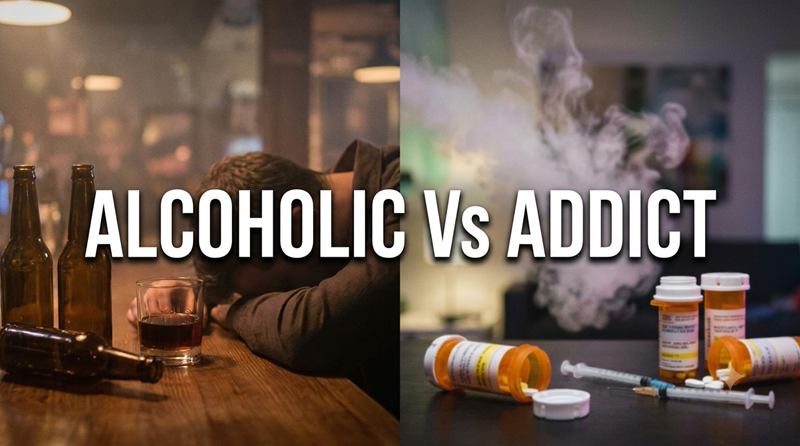
Alcoholic Vs Addict
There are many people who want to find out at the same time, whether these are two distinct problems, or the same problem? “Alcoholic” and “addict” are informal terms and the clinical term for a problematic pattern of alcohol use is “alcohol use disorder” (AUD). AUD can be of varying degrees of severity and can have an impact on an individual’s health, relationships, work and life.
Understanding the difference, can help you determine that there is a problem and without shame or labelling. An alcohol related disorder does not necessarily indicate that the person has to drink every day, lose a job or have any kind of major health problems. Important is the individual’s interactions with alcohol, and the lack of ability to control his or her drinking despite the resulting harm.
Key Takeaways
- Alcoholic” is an informal term which is no longer in use and is not a diagnosis.
- The word “addict” is also used as a general, casual word, and can be used for addiction to alcohol, drugs, or other substances.
- Alcohol use disorder (AUD) is the medical term used to describe alcohol use that is causing problems.
- Alcoholism is an illness that can afflict someone without them drinking every day.
- Depending on its symptoms, AUD can be mild, moderate or severe.
- This may be behavioural support, counselling, medication or peer support or all these supports.
- Chronic Alcoholism can cause injury, especially to that of the brain, which can improve.
- Drinking alcohol for an extended period of time can be dangerous when it comes to alcohol withdrawal.
What Is Alcohol Use Disorder?
Alcohol use disorder is defined by a problem that people have in stopping or controlling their alcohol consumption despite alcohol-related problems. This isn’t only because of a lack of will power.
DSM-5-TR lists 11 symptoms my be used to assess AUD. Some of these include drinking more or for longer than intended, with failed attempts to reduce alcohol intake, extremely strong cravings for alcohol use, spending hours drinking or trying to recover and drinking when dealing with physical, emotional, social or work-related problems.
AUD severity is rated as mild, moderate or severe depending on how many symptoms are experienced in a 12 month period. This is true if both people have an alcohol addiction, and one is a lot more impaired than the other.
AUD causes changes in brain structure, which may result in a permanent change, making it more difficult to control drinking habits, according to the National Institute on Alcohol Abuse and Alcoholism (NIAAA). Meanwhile, treatment can also be effective in helping people quit or cut down on their drinking and in helping people stay sober long-term.
What Does “Alcoholic” Mean?
Many people may use the word ‘alcoholic’ to refer to an advanced issue with drinking. But it isn’t an ongoing medical diagnosis.
The word can also be misleading as it can be linked with a certain image: someone who drinks daily, someone who drinks in the morning or someone who has lost control of all aspects of life. These are not the typical signs or symptoms of an alcohol problem.
An individual without a drinking problem a week before, with a successful career and relationships can have an alcohol use disorder.A person who drinks alcohol during the week or has a network of relationships, or a successful career can suffer from alcohol use disorder.
Hence, mental health practitioners tend to avoid referring to someone as an “alcoholic” and instead use the term problematic alcohol use, alcohol use disorder or alcohol addiction.
Using respectful language will also enable the person to make a request for help.
What Does “Addict” Mean?
What is the definition of the word “Addict”?
An informal (non-medical) term that can be used for anyone who is addicted to a substance. Addiction may involve drugs and alcohol, prescription medications, illegal drugs, gambling and more.
One way an individual can become intoxicated is by saying things such as “alcohol addict” or “alcohol addiction. However, symptoms and severity of alcohol use disorder are a better description of alcohol addiction.
It’s important to recall that addiction is not synonymous with substance use. People can experience fewer drinking episodes, strong cravings, an inability to control drinking, and multiple attempts at quitting, or to continue drinking despite having serious consequences.
Which is why you do not need to make a determination about if a particular person has trouble with alcohol primarily based on solely how frequently they drink.
Alcoholic vs. Addict: What Is the Difference?
The only differences are in the scope and terminology.
Alcoholic” typically means a person that has a specific problem with alcohol. “Addict” is a more generic term and can be applied to an alcoholic and any individual who is “addicted” to any other drug.
Both terms have broad definitions and are not good indicators of an individual’s condition.
For instance, one person might have a lot of alcohol on weekends, and have multiple occasions of not being able to stop drinking. Other may drink on a daily basis, and has been lured into a high degree of physical dependence. The context of both has to be evaluated on a case-by-case basis, and not assume that the problem is due to a label.
Instead, when considering Alcoholic Vs Addict the better question is: “Which of these labels is better to use?” Instead, ask:
Do you have an issue with drinking alcohol – is it becoming a problem or causing any harm or distress?
This question is about behavior, symptoms and well-being; not about stigma.
Signs of Alcohol Addiction
There are different ways that one can come to be addicted to alcohol. Common signs include:
- An urge to heavy drinking.
- Consuming too much water.Excessive drinking of water.
- Each attempt to suppress or to reduce, was also frequently undertaken, but without success.
- Buying, drinking or recovering from alcohol for extended periods of time.
- Consumer when it is impacting on associations
- Avoiding work, school, family and other obligations
- Don’t give up hobbies and pastimes because of alcohol.
- Developing tolerance
- Experiences withdrawal symptoms following the effect of alcohol being gone.
- Risky drinking patterns (drinking situations where there is an increased risk of injury)
- Drinking although there are concerns of anxiety, depression or other health-related issues.
These signs must be thought of in the context of pattern, rather than seen in conjunction with one event. Heavy drinking does not necessarily indicate there is an alcohol use disorder.
Signs of Alcohol Use Disorder
Signs of AUD are similar to signs of alcohol addiction, as the problems are the same.
Loss of control is a big warning sign! One or two drinks may come to mind for a person but continued drinking is ongoing.
Another sign is showing the stubbornness and lack of willingness to quit, despite the negative effects. For example, someone may have problems with family members, at work and with their money, and this person could still be drinking and not experiencing any health, anxiety or financial issues.
Additional symptoms include ‘craving’, ‘tolerance’, ‘withdrawal’ and ‘failed attempts to cease’.
A health care provider can determine if there is AUD from the number and severity of symptoms. If two-three symptoms are present it is considered a mild condition, four-five symptoms a moderate condition, and six or more symptoms a severe condition.
Can Someone Be Addicted to Alcohol Without Drinking Every Day?
Yes. Alcoholism or alcohol use disorder doesn’t mean that the person uses alcohol on a daily basis.
Some drink excessively on the weekends at hard times or in certain situations. The critical factor is if the drinking becomes hard to control and alcohol continues to be a problem.
For example, an individual may be able to go for days without a drink, but then binge-drink on the weekends and wake-up with a hang-over, drive while intoxicated, or neglect his or her relationships and responsibilities.
Hence, asking the number of days of drinking is inadequate and it is better to consider alcohol problems more than that.
When Does Alcohol Use Become a Problem?
If the use of alcohol becomes a concern, it will interfere with the functioning, safety, relationships and behavior of the person using the alcohol.
Alcohol-related symptoms that can let you know you have a problem with alcohol are drinking more than you intended to, attempting to stop or stopping and being successful, craving for alcohol, neglecting obligations, or continuing to drink after you have physical or emotional problem with alcohol.
Blackouts and risky behavior are additional red flags for discussion when considering drinking. Alcohol interferes with the brains communication pathways that are responsible for judgment, memory, coordination and decision-making.
If you feel you aren’t sure if your drinking has become a problem, talking with a qualified mental health care worker may be able to give you a more objective and accurate answer.
When it is getting harder to control your drinking, it’s not a crisis. WellMind Therapy Center will be able to provide you with information about what you are going through and discuss mental health and recovery options. Call (682) 432-1571 to talk with someone about your concern and get some assistance!
How Is Alcohol Addiction Diagnosed?
No one blood test is available to know whether the individual has AUD. Diagnosis is dependent mainly on the alcohol use assessment and the symptoms associated with alcohol use.
A psychiatrist/psychologist or other health care worker may enquire about the following:
- The number and amount of alcohol consumed
- Try to decrease or eliminate drinking.Trying to cut down or to quit drinking.
- Cravings
- Withdrawal symptoms
- Difficulties at work, school or at home.
- Health problems (physical and mental (mental health problems)
- Risky situations related to drinking
- Changes in tolerance
- Past treatments/recovery efforts
Symptoms within the last year are taken into account by professionals when evaluating AUD. The amount of symptoms will be used to gauge the severity.
An adequate assessment is also crucial since there are other mental health conditions like depression, anxiety, trauma etc., that are often found along with an alcohol problem.

Treatment and Support for Alcohol Addiction
There are no one solution for alcohol addiction and it can be treated.
Counselling, behavioural approaches, drug pharmacotherapy, family support, peer support groups or a combination are available to support. For some who have AUD, FDA-approved drugs like naltrexone, acamprosate, and disulfiram might be helpful, says NIAAA.
Treatment should be sensitive to the individual’s needs, symptoms, health, and drinking habits and goals.
For certain individuals it is maybe fitting to have the goal of lowering alcohol consumption. Others may just benefit from coming to a full stop. A trained professional will be able to help with determining a suitable plan.
In addition, keep in mind that an individual who’s been drinking for a longer period is not necessarily safe to quit the alcohol sharply. Withdrawal symptoms are tremors, sweating, anxiety, nausea, seizures and delirium (DTs). Support in the form of medicine may be required.
When to Seek Help for Alcohol Addiction
See a health provider for assistance if you feel you do not know how to reduce your alcohol consumption, have strong urges to drink, or have withdrawal or any of the following: You drink more than you intended to;
When relationship, work, financial, emotional or physical health issues develop due to alcohol use, seeking assistance is also necessary.
Anyone who has experienced seizures, extremely heavy drinking, extreme sickness, confusion or hallucinations due to excess alcohol consumption is medical hazardous and requires immediate medical attention.
But often over a long period of time drinking to excess can also result in serious neurological problems. For example, severe deficiency of B1 has been reported to be associated with AUD, e.g., Wernicke-Korsakoff syndrome. This can cause a person to be confused, or they may have trouble with their coordination, vision and remembering things. It is important to give prompt treatment.
Don’t assume that withdrawal symptoms have to be endured independently, particularly if heavy-drinking has occurred for a lengthy duration. You can avoid a risky journey with the assistance of the professionals.
Frequently Asked Questions
Is there a difference between being addicted to alcohol and being an alcoholic?
There is overlap between the terms, but “alcoholic” isn’t a formal diagnosis. Alcoholism is typically the term applied to alcohol addiction, which is the compulsive use of alcohol, and the term for alcoholism by healthcare professionals is alcohol use disorder.
Are alcoholics considered addicts?
If a person is described as being an “alcoholic,” it is possible that they have an alcohol addiction, but it is not a diagnostic term. Problematic alcohol use is referred to as alcohol use disorder, which can be mild or severe.
What not to say to an alcoholic?
Don’t judge, shame, insult, threaten or say “just stop drinking.” Do not argue with the person while he or she is drunk. Rather, be concerned without judgment, talk about specific behaviors, and seek professional assistance.
What are the key differences between alcoholism and drug addiction?
The term alcoholism is used for alcohol and it is considered a non-medical one, whereas drug addiction may include a variety of drugs. Both can include obsessions, lack of control, tolerance, withdrawal and continued use even when it is harmful.
Can you reverse 20 years of heavy drinking?
Reducing or stopping alcohol may help some alcohol-related damages heal, but not all and it can take time. There might be permanent neurological or organ damage. A health care provider can evaluate health issues and help with a safe recovery.
Is addiction a mental illness?
Addiction is a health problem characterized by alterations in the brain function and behavior. Alcohol use disorder is also considered a mental health disorder, and it can coexist with other disorders, including depression, anxiety, and trauma disorders.
What are the five types of alcoholics?
As of now, there is no official clinical system that categorizes alcohol addiction into five “types of alcoholics. Instead of rigid alcoholic types, modern assessment is based on the signs and severity of alcohol use disorder, the nature of drink consumption, risk factors, and the person’s situation.
What are the first signs of a wet brain?
Wernicke-Korsakoff syndrome is often referred to as “wet brain. Confusion, coordination or balance difficulties, problems with vision or eye movements, and severe weakness are some of the signs and symptoms of early Wernicke. It must be medically assessed and treated urgently.
Disclaimer
This blog is intended for educational and informational only purposes. It’s not intended to replace professional and mental health, medical or emergency services or an individual diagnosis. Withdrawal from alcohol can be severe, especially if someone has been drinking heavily for a long period of time. If withdrawal symptoms are severe, seizures, confusion, hallucinations or other emergency occurs, get medical help immediately.
References and Content Sources
- National Institute on Alcohol Abuse and Alcoholism: Understanding Alcohol Use Disorder — Information about AUD, symptoms, severity, and evidence-based treatment.
- NIAAA: Alcohol Use Disorder — Risk, Diagnosis, and Recovery — Diagnostic criteria, withdrawal risks, and recovery information.
- NIAAA: Treatment for Alcohol Problems — Treatment options and signs that professional help may be appropriate.
- NIAAA: Wernicke-Korsakoff Syndrome — Information about alcohol-related neurological complications and warning signs.